Autumn variety selected by the Southern Ural Research Institute of Fruit and Vegetable Growing and Potato Growing. Obtained by crossing Borovinka with Uralskoye Ribchatoe. Breeders: M. A. Mazunin and P. A. Zavoronkov. Regionally approved and widely grown in the Ural region.
Tree is tall-growing with a round-pyramidal crown. Bark on the trunk and main branches is dark brown. Fruits set on all types of fruit wood, occasionally fruits also set on last year's shoots.
Shoots are brownish, slender. Leaves are large, round-oval, dark green, slightly hairy, with finely toothed edges.
Flowers are large, small-cup-shaped, pinkish, medium-length, slightly hairy stigma column, with stigmas positioned at the same level as the anthers.
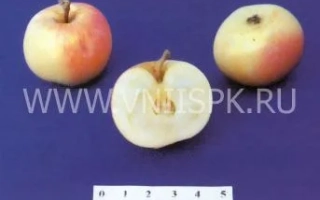
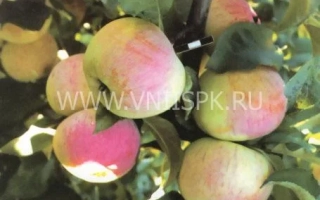
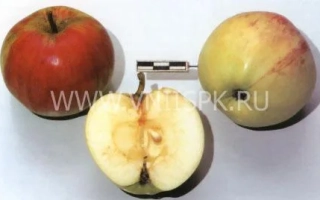
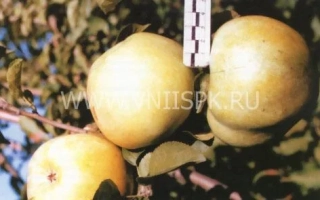
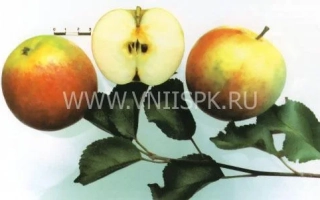
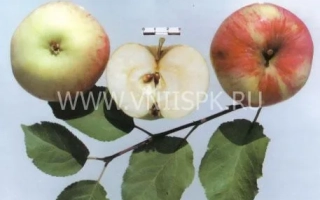
Fruits are medium-sized, flat-round. Skin is delicate, smooth, dry, greenish-yellow with a blurred burgundy blush on most of the fruit. Fruit stalk is medium length and thickness, upright.
Flesh is creamy, medium density, juicy, tangy-sweet, good taste.
Fruits contain 13.8% soluble solids, 10.1% sugars, 1.1% titratable acids, and 27 mg/100g ascorbic acid.
Fruit storage life up to 90 days.
Fruits are consumed fresh and suitable for processing into compotes, jams, jellies.
Best pollinators for this variety: Pamять Zavoronkova, Miasskoye, Anis purpurovy.
Trees begin fruiting on the 5th-6th year after grafting. Fruiting is regular in the first years, then becomes irregularly periodic. Yield up to 85 kg per tree. Cold hardiness of the Nadezhda variety is high. During epiphytotic years, affected by scab up to 2 points.
Advantages of the variety: good ecological adaptability, high yield, good taste and attractive fruit color.
Disadvantages of the variety: under prolonged high summer temperatures and dry air, taste quality decreases, some fruits drop off before reaching edible maturity.