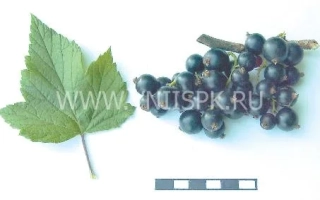
Medium-late maturing variety, obtained at the Far Eastern Research Institute of Horticulture from self-pollination of the Compact variety. Author: A.S. Vavilov. Included in the State Register of Varieties approved for use in the Far Eastern region in 2001.
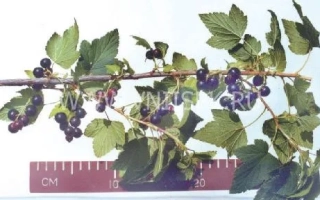
Medium-height, upright, dense bush. Growing shoots are thick and unbranched.
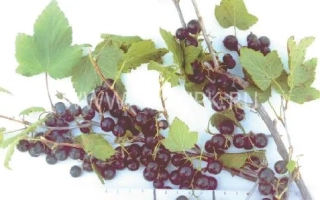
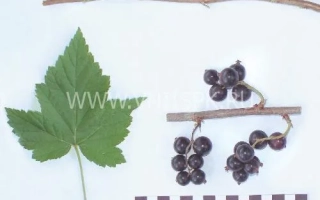
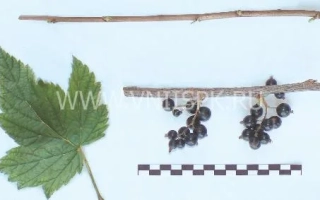
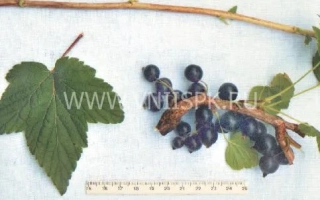
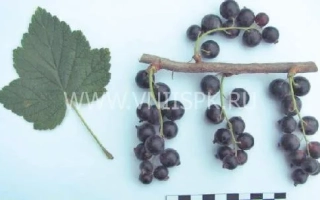
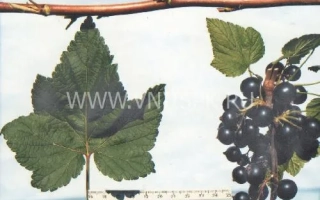
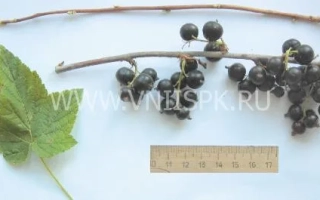
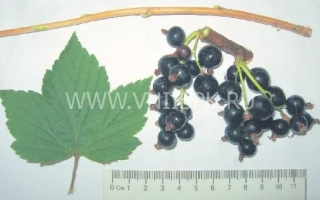
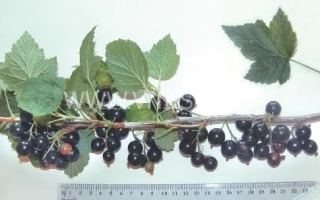
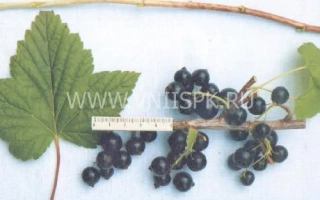
Leaf five-lobed, large, matte, leathery, slightly wrinkled, blade positioned almost horizontally, slightly curved downward at the tip, concave along the central vein. Lobes are broad, pointed, the central lobe significantly exceeds the lateral ones. Lateral lobes are not widely spaced, the angle between their midveins is acute. Basal lobes are poorly developed, barely noticeable. Leaf base is rounded, with a deep notch. Teeth are large, broad, pointed at the tips. Petiole is medium length, thick, green. Buds are medium length, rounded-pointed, almost pressed against the shoot, leaf scar shape is wide and rounded.
Flowers are medium-sized, dish-shaped, pale in color, sepals are pale green, arranged horizontally.
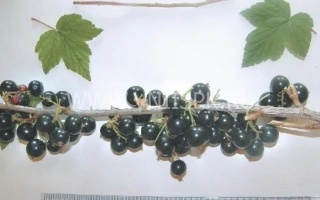
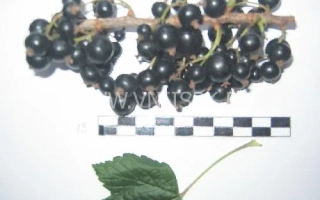
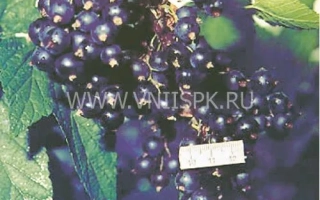
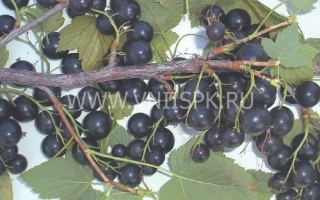
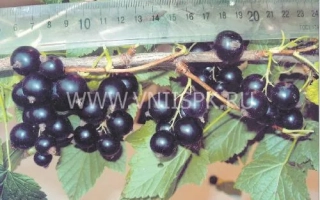
Berries are large (1.1 g), one-dimensional, round, brown-black (ripe berries inside the bush are transparent, nearly colorless, with visible seeds). Calyx is small, half-open, pedicels are short. Flavor is tart-sweet (4.9 points). Berries are of universal use. Chemical composition: dry matter - 16.1%, total sugars - 8.6%, titratable acidity - 2.9%, ascorbic acid - 273.4 mg/100 g, P-active substances - 468.7 mg/100 g.
The variety is relatively winter-hardy, self-fertile, productive (4.0-4.5 kg/bush).
Advantages of the variety: large berry size, low berry drop, high yield, berry flavor, high pectin content (jams always gel), compact bush.
Disadvantages of the variety: slightly lower winter hardiness compared to the Primorsky Champion variety, insufficient resistance to powdery mildew and anthracnose.