
Indonesia arrests three over illegal farming in South Sulawesi forest
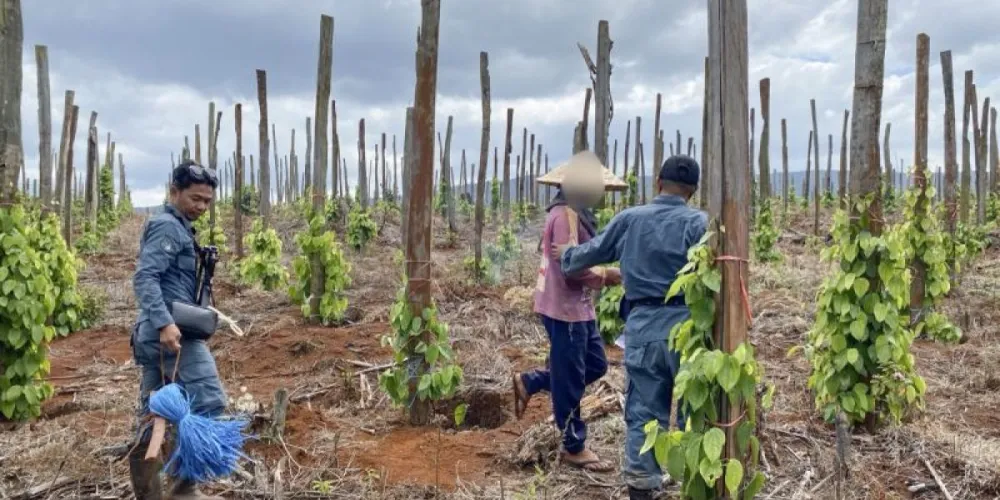
The Indonesian Forestry Ministry has confirmed the arrest of three suspects involved in illegal land trading and farming within a protected forest area in South Sulawesi. The arrests, announced on Monday, mark a significant move by authorities to dismantle informal land-rights schemes that facilitate the unauthorized conversion of state-owned forests into commercial agricultural plots.
The suspects, identified by their initials AR, AI, and AW, were caught in the act on August 3, 2026, in the Towuti Subdistrict of East Luwu Regency. Investigators determined that the group had illegally cleared 1.5 hectares of protected land, where they had already planted approximately 1,500 pepper trees. The operation was part of an ongoing effort to prevent such illegal land-use transfers from spreading further across the region.
Ali Bahri, head of the ministry’s Sulawesi Forestry Law Enforcement Agency, stated that state forest areas are strictly protected and cannot be sold, transferred, or cleared without valid legal permits. The investigation revealed that the suspects acquired the land through informal payments to previous unauthorized occupants, a practice that authorities warn serves as a dangerous catalyst for the systematic destruction of forest ecosystems.
Following the arrest, officers seized a temporary work hut and various farming implements used on the site. The suspects now face severe legal consequences, including potential prison sentences of up to 10 years and fines reaching Rp7.5 billion (approximately $468,000). Law enforcement officials noted that these penalties are intended to serve as a deterrent and to break the cycle of recurring environmental crimes.
Dwi Januanto Nugroho, Director General of Forestry Law Enforcement, emphasized that this operation is part of broader efforts to safeguard the ecological integrity of Indonesia’s state forests. By cracking down on individual encroachment cases, the government aims to curb the shifting pattern of forest degradation and ensure the long-term restoration of protected natural habitats across the nation.
Not yet comments. Be the first!
Comments · 0