
Centre asks Indian banks to standardise contract-farming loans within 6-12 months
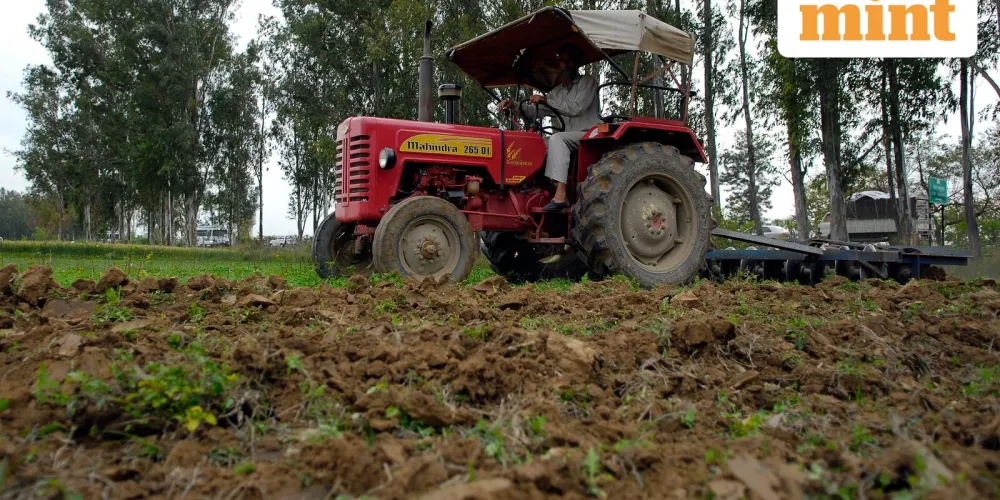
The Indian government has directed public sector banks (PSBs) and the Indian Banks’ Association (IBA) to develop a standard loan product and uniform documentation for contract farming within the next 6-12 months. This initiative is designed to strengthen the entire farm-to-fork value chain by improving produce aggregation, infrastructure, and value addition. The move is expected to allow farmers to retain a larger share of the final consumer price by streamlining financial accessibility.
The proposed framework envisages a model tripartite agreement involving the farmer, the sponsor, and the bank. Payments are to be routed through an escrow account with a predefined waterfall mechanism for fund distribution. These loan products would incorporate sub-limits for input finance, procurement advances, warehouse receipt finance, and capital expenditure for processing. Notably, lending decisions will be based on the reliability of the buyer’s purchase agreement rather than traditional collateral requirements.
Currently, banks document these exposures in disparate ways, which drives up legal costs and slows down the sanctioning process. The proposed framework includes standardized rules for handling quality rejections and price fluctuations. By referencing applicable state contract-farming legislation for dispute resolution, the government aims to reduce the need for case-by-case legal proceedings, making the asset class more comparable and easier to aggregate for institutional lenders.
In addition to contract farming, the government is exploring the use of guarantee mechanisms, such as the Credit Guarantee Fund Trust for Micro and Small Enterprises (CGTMSE) and National Credit Guarantee Trustee Co. Ltd (NCGTC), to support the agricultural value chain. This focus is directed at aggregators and first-stage processors—businesses that exhibit stable cash flows but lack fixed collateral. Without such guarantees, many viable agricultural value-chain proposals are currently stalled by banks seeking security that borrowers cannot provide.
Another significant proposal involves supporting entrepreneurs in establishing district-level custom hiring centres (CHCs) for agricultural machinery. Given that 86% of landholdings in India are small and marginal, below two hectares, individual ownership of advanced equipment is economically unviable. Financing for these centres is proposed as a term loan for micro and small enterprises, appraised based on projected utilization across the crop calendar. Crucially, available government subsidies for farm machinery will be integrated directly into these structured funding schemes.
Not yet comments. Be the first!
Comments · 0