
Canadian beekeepers push for ‘buy local’ movement as U.S. tariffs block top export market
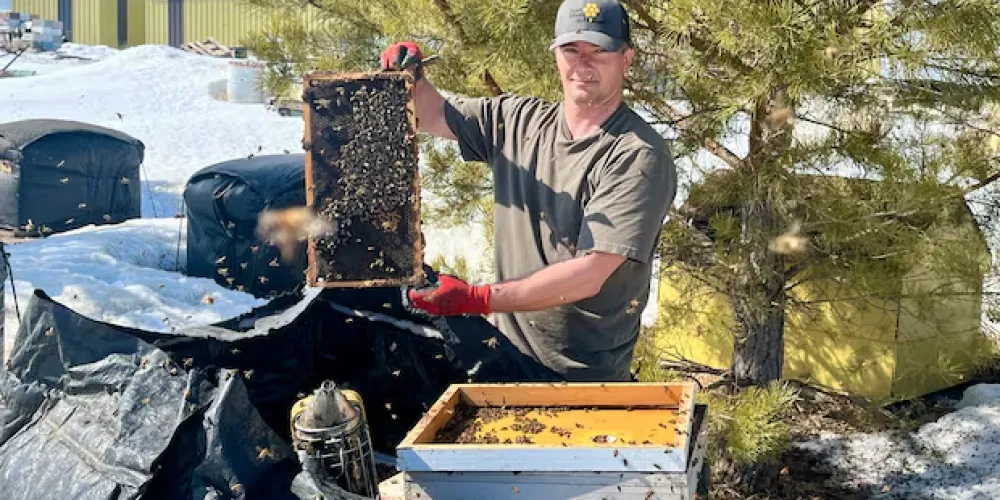
The Canadian honey industry is facing a significant challenge: 50 per cent U.S. import tariffs, which took effect on August 22, 2026, have effectively blocked the primary market for producers across the Prairies. According to Rod Scarlett, executive director of the Canadian Honey Council, roughly 20 per cent of honey destined for American consumers is now stuck in Canada. Industry representatives warn that this will cause long-term financial distress unless producers can successfully pivot to other markets.
Simon Lalonde, president of the Saskatchewan Beekeepers Development Commission, noted that many producers attempted to ship their honey to the U.S. before the tariffs took effect, but trucking capacity limits meant not everyone could make the deadline. Now, the industry is promoting a ‘buy Canadian’ movement. Lalonde estimates that if every Canadian family purchased an extra half-container of local honey annually, it would fully offset the loss in American demand.
This crisis is compounded by the fact that alternative export markets, such as Japan, have strict criteria regarding honey color and quality, which hinders rapid expansion. Lorne Prins, owner of Gull Lake Honey Company in Alberta, highlighted the difficulty of entering new markets. Many beekeepers are now forced to consider downsizing their operations or pivoting to pollination services for crops such as canola and high-bush blueberries.
Simultaneously, beekeepers are fighting unfair competition. Prins and other producers argue that the domestic market is flooded with low-cost honey from countries like Thailand, Vietnam, and India. They allege that this honey is often diluted or adulterated, allowing importers to undercut prices and making it impossible for local producers, who prioritize pure honey, to compete on a level playing field.
The Canadian Food Inspection Agency (CFIA) has intensified its enforcement against fraudulent imports. According to CFIA data, over 133,000 kilograms of adulterated honey were blocked from entering the market in 2024-2025. However, Stuart Smyth, an agricultural economist at the University of Saskatchewan, points out that for large food processing companies, price remains the deciding factor. Unless Canadian honey can compete on cost, it will be difficult to convince large manufacturers to switch from cheaper imported ingredients to domestic supply.
Not yet comments. Be the first!
Comments · 0