
Agricultural Afterlives: When Waste Becomes Architecture
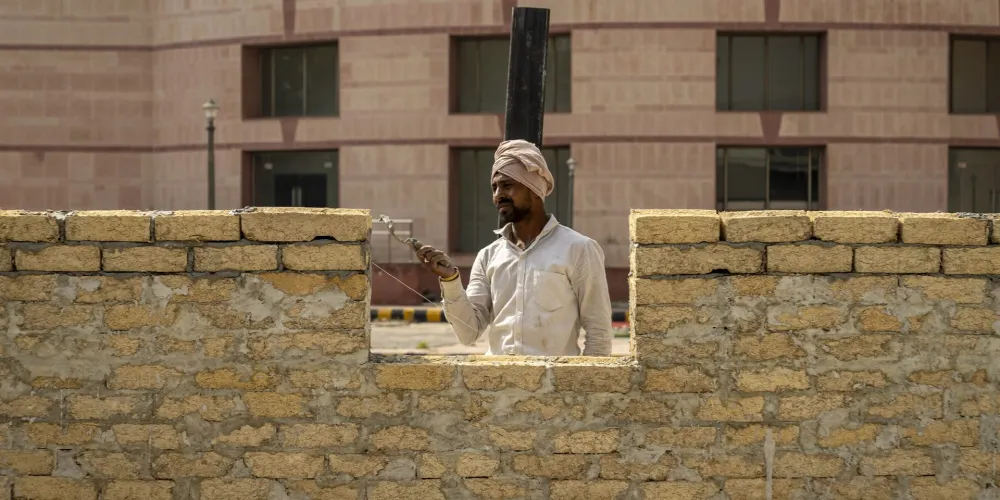
Building materials rarely reveal their origin once they reach the construction site. By the time concrete, timber, or glass arrive at a project, the industries and landscapes that produced them are often obscured. However, across India and the SWANA region (Southwest Asia and North Africa), a visible shift is occurring: agricultural leftovers like rice husks, coconut fibers, sugarcane bagasse, and date palm residues are being redirected into architecture as insulation, composite panels, and cement substitutes.
The scale of these resources is massive. India generates hundreds of millions of tonnes of crop residues annually. Rice milling alone produces husks accounting for roughly one-fifth of the harvest, while sugar production leaves behind vast quantities of fibrous bagasse. Historically discarded or burned, these materials are increasingly entering mainstream manufacturing. By incorporating these by-products into familiar construction assemblies, the industry is finding new ways to utilize biomass without reinventing existing practice.
Practical application is already widespread. Rice husk ash is now used as a supplementary cementitious material, reducing the environmental impact of traditional concrete. Bagasse fibers are being compressed into boards for interior partitions and acoustic panels, while coconut coir is processed into high-performance insulation and geotextiles. Because these materials are compatible with existing construction systems, they offer a sustainable alternative that does not require radical changes to building workflows.
The coir sector in Kerala, India, serves as a prime example of this transition. For decades, the region has supported a mature network of extraction and manufacturing based on coconut cultivation. Today, this agricultural by-product underpins a robust ecosystem that produces scalable construction materials for infrastructure projects. This evolution proves that agricultural waste can shift from being a disposal problem to a valuable commodity within the architecture supply chain.
Beyond their performance, these bio-based materials offer a unique relationship with their source environments. Unlike standardized industrial goods, their characteristics are influenced by local soil, climate, and farming methods. This variation is now seen as a defining feature of regional material culture rather than a defect. As researchers in the Gulf region begin exploring date palm fibers for lightweight construction, resource availability is once again becoming a core driver of architectural identity and design context.
Not yet comments. Be the first!
Comments · 0