
Darjeeling tea industry seeks Centre's support amid deepening financial stress
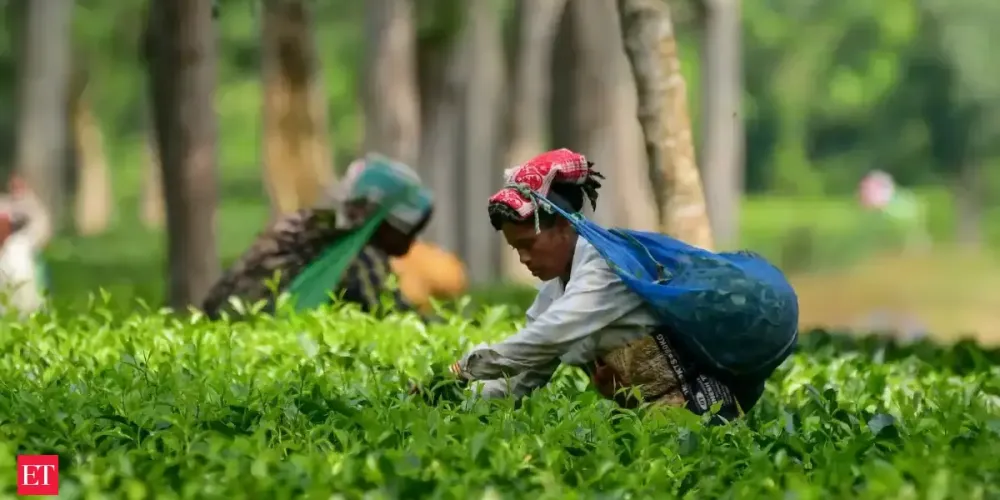
The Darjeeling tea industry, globally celebrated for its unique Geographical Indication (GI) status, is currently grappling with a severe financial crisis. Industry leaders have formally requested targeted government intervention to address the structural decline that has plagued the sector for years. The challenges are manifold, ranging from the aging of tea bushes and difficult mountainous terrain to the escalating disruptions caused by climate change and persistent shortages in the labor force.
The decline in output is stark, dropping from 11.58 million kg in 2008 to approximately 5.3 million kg by 2025. This production collapse is compounded by a downward trend in market prices. Records indicate that between 2018 and 2024, Darjeeling tea prices experienced a negative CAGR of approximately 2%, severely undermining the economic viability of traditional tea estates that struggle with rising operational costs and market price volatility.
To restore sectoral health, industry executives are advocating for the introduction of a comprehensive sustainable pricing framework. Central to this proposal is the establishment of a Minimum Sustainable Price (MSP) that aligns with the cost of production and leaf quality. Industry experts argue that this could also function as a Minimum Import Price, offering a necessary buffer against market fluctuations and ensuring that producers can cover their operational expenditures while maintaining high quality.
Beyond price support, the industry is calling for the extension of various Central and State welfare and agricultural schemes to the organized tea plantation sector. They have emphasized the need for state-backed support in healthcare, irrigation, crop insurance, rural infrastructure development, and the creation of off-season employment opportunities for plantation workers. These initiatives are deemed essential to the long-term survival and resilience of the Darjeeling tea trade.
Finally, industry leaders have urged the Ministry of Commerce and the Ministry of Agriculture to facilitate the inclusion of tea plantations in key national programs. Specifically, they have pointed to the importance of the Pradhan Mantri Krishi Sinchai Yojana, the Accelerated Irrigation Benefit Programme, and the Pradhan Mantri Fasal Bima Yojana. Extending these benefits would provide the organized sector with a safety net against climate-related losses, ultimately helping to mitigate the rising costs of production associated with an increasingly unpredictable climate.
Not yet comments. Be the first!
Comments · 0