
West Bengal launches rural employment scheme VB-G RAM G replacing MGNREGA
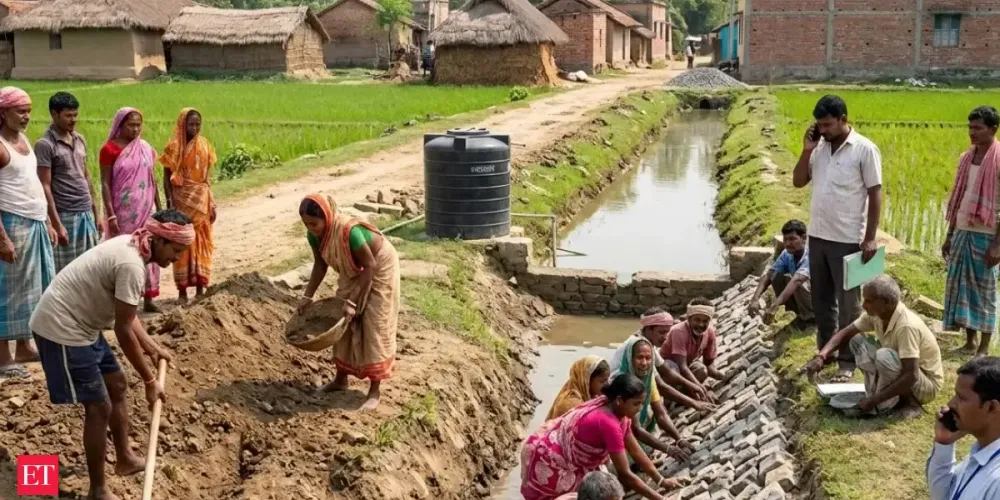
The government of West Bengal has officially notified the implementation of the new rural employment scheme, known as the Viksit Bharat Guarantee for Rozgar and Ajeevika Mission (Gramin), or VB-G RAM G. Effective from July 1, 2026, this initiative replaces the MGNREGA Act within the state, aiming to boost rural economic stability and ensure consistent livelihood opportunities for the local population.
Under this new framework, the scheme guarantees 125 days of wage employment per financial year to every eligible rural household. According to the state’s Panchayats and Rural Development Department, the mission is set to benefit over 2.56 crore job card holders across West Bengal. The scheme is strategically aligned with the national vision of 'Viksit Bharat at 2047,' reflecting a commitment to long-term rural development.
The VB-G RAM G scheme focuses on four primary pillars: improving water security, developing essential rural infrastructure, creating livelihood-generating assets, and executing projects designed to mitigate the impacts of extreme weather events. Rural works will be planned through the 'Viksit Gram Panchayat Plan,' which integrates seamlessly with the national PM Gati Shakti Master Plan to ensure coordinated infrastructure development.
The initiative is jointly funded by the Central and state governments in a 60:40 ratio. The Union Ministry of Rural Development has approved a Central share of Rs 8,508 crore, while the West Bengal government has allocated Rs 5,672 crore to support the scheme’s implementation. This financial structure ensures robust backing for the ambitious expansion of rural employment targets.
Execution of the scheme involves a tiered management approach: district magistrates and sub-divisional officers serve as program coordinators, while block development officers oversee operational aspects. Gram panchayats are responsible for registering beneficiaries, preparing project plans, and maintaining records. Wage payments will be processed via the DBT-SPARSH system, and the use of labor-displacing machinery has been restricted to prioritize human labor and maximize job creation outcomes.
Not yet comments. Be the first!
Comments · 0