
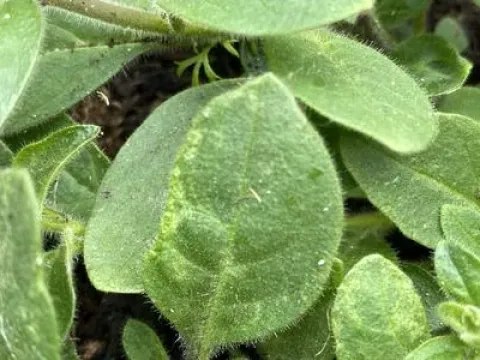
Petunia tombusvirus
Tombusvirus petuniae
The causal agent of this disease is Tombusvirus petuniae, a member of the Tombusviridae family. This RNA virus is a serious pathogen that disrupts cellular metabolism and leads to severe developmental abnormalities in host plants.
What the section contains
Petunia tombusvirus
This virus exhibits significant stability in the environment, remaining infectious on surfaces, tools, and plant debris for extended periods. Mechanical transmission during horticultural practices is the primary route of spread.
The pathogen enters the plant through micro-wounds caused by pruning, pinching, or contact with contaminated equipment. Once inside, the virus utilizes the plant's resources to replicate and spreads systemically through the phloem.
Molecular research indicates that Tombusvirus petuniae effectively evades plant immune responses, leading to systemic infection. Its persistence makes it one of the most challenging pathogens in greenhouse-grown ornamental crops.
The biology of this virus remains a subject of study, as its ability to mutate can lead to variations in strain aggressiveness, complicating diagnostic and management efforts for commercial growers.
Symptoms typically begin with chlorotic spotting or a mosaic pattern on the foliage. Leaves often become distorted, curled, or stunted, significantly detracting from the plant's overall ornamental value.
Infected plants exhibit severe growth retardation and look noticeably weaker than healthy specimens. Internodes may become shortened, and the overall plant architecture loses its intended vigor and symmetry.
Flower symptoms include abnormal coloration, such as streaks, blotches, or faded patches, which are inconsistent with the plant's true variety. Blossoms may be deformed, and flowering is often significantly reduced.
Symptoms may be latent under certain conditions, making early identification difficult. However, under high light or temperature stress, the visual signs of the virus become prominent and widespread throughout the crop.
- Chlorotic leaf spots
- Mosaic-like patterns
- Deformed and stunted shoots
- Atypical floral coloration
- General plant decline
High humidity and overcrowding are the primary conditions that facilitate the rapid spread of the virus. In densely populated greenhouses, mechanical contact between plants increases the efficiency of virus transmission.
Temperatures ranging between 20°C and 25°C provide an optimal environment for viral replication within plant tissues. Maintaining stable temperatures in well-ventilated areas can help slow down the progression of the disease.
Weeds in the vicinity of the growing area serve as potential reservoirs for the virus. Managing weed populations is crucial, as they can harbor the virus before it eventually spreads to the cultivated petunia crops.
Nutritional deficiencies and poor growing conditions weaken the plant's defense mechanisms. A robust and well-nourished plant is generally better equipped to resist or tolerate initial viral challenges compared to stressed specimens.
Non-sterile gardening tools used for pruning or propagation are the most common source of virus outbreaks. Implementing strict sanitation protocols is essential to prevent widespread contamination across the growing facility.
The main impact is the total loss of commercial value for the ornamental crop. Infected plants do not meet quality standards for sale and act as a constant source of infection for the remaining healthy plants in the greenhouse.
The virus causes systemic physiological decline, which leaves the plants highly susceptible to secondary fungal or bacterial infections. Often, the end result is the complete death of the affected plant specimens.
Economic losses for growers can be substantial, involving not only the loss of the crop but also the costs associated with facility decontamination and the disposal of infected material. Outbreaks can necessitate the destruction of entire greenhouse compartments.
Affected plants cannot be used as parent stock for propagation, as the virus is systemic and will pass to any new cuttings. This prevents the continuation of affected genetic lines within the nursery.
Because there is no cure for this viral disease, prevention is the only effective way to mitigate harm. The lack of resistant commercial petunia varieties makes this a persistent threat in floriculture.
Strict sanitation is the cornerstone of management. All tools, workbenches, and hands must be disinfected after working with each plant or batch, using effective virucidal solutions to prevent mechanical transfer.
Early detection and immediate removal of symptomatic plants are critical. Once identified, plants should be carefully bagged and discarded or incinerated away from the production site to prevent cross-contamination.
Integrated pest management, particularly the control of sap-sucking insects like aphids or thrips, is essential, as these pests can facilitate the spread of the virus through physical damage to plant tissues.
Growers should source seed or vegetative material only from reputable, virus-certified suppliers. Establishing a quarantine period for all incoming plants is a necessary precaution to protect established crops.
Maintaining optimal horticultural conditions, such as proper light exposure and balanced fertilization, promotes plant vigor. A healthy, well-maintained plant is better equipped to resist infection compared to a stressed one.