
Maize stripe
Tenuivirus zeae
Maize stripe is a viral disease caused by the Tenuivirus zeae, a pathogen that specifically targets the vascular tissue of the host plant.
What the section contains
Maize stripe
The primary vector responsible for the transmission of the virus is the corn leafhopper, Dalbulus maidis, which acquires the virus while feeding on infected tissues.
The virus is characterized by persistent, circulative, and propagative transmission, meaning it can replicate within the insect vector.
Once transmitted, the virus localizes in the phloem of the corn plant, disrupting the translocation of nutrients and causing systemic physiological collapse.
Apart from cultivated maize, the virus can persist in various perennial grasses, which serve as alternate hosts during the off-season.
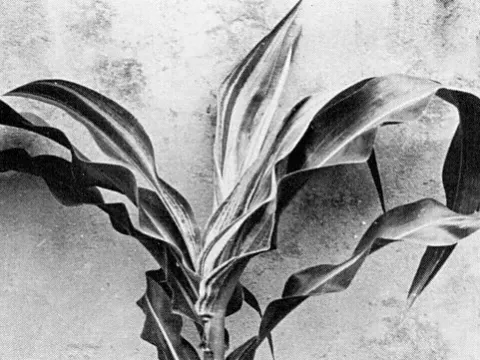
The disease is marked by the appearance of narrow, chlorotic, or pale-yellow stripes along the veins of the leaves, which become more pronounced with time.
Infected leaves often exhibit a mosaic or mottled pattern, and in severe cases, the entire leaf may turn yellowish or develop necrotic areas.
Growth retardation is a hallmark of the disease; plants infected early in their development show stunted growth and significantly shortened internodes.
The reproductive capability of the plant is severely impacted, resulting in small, distorted, or empty ears that fail to develop properly.
Symptoms often appear in a patchy distribution within the field, reflecting the localized movement and colony establishment of the leafhopper vector.
The prevalence of maize stripe is closely linked to the population dynamics of the Dalbulus maidis leafhopper, which thrives in warm environments.
Extended periods of dry and hot weather encourage the migration of vectors from wild grasses to fresh, emerging corn fields.
The presence of weeds and crop residue near fields acts as a "green bridge," allowing both the virus and its vector to survive throughout the year.
Poor agricultural practices, such as lack of field sanitation or continuous cropping in affected areas, significantly increase the disease incidence.
Environmental stress on the crop, such as nutrient deficiency or water deficit, can exacerbate the impact and expression of viral symptoms.
Maize stripe causes substantial economic losses, with yield reductions ranging from 30% to over 80% depending on the timing of the infection.
The grain harvested from infected plants is typically small, shriveled, and of inferior quality, making it unsuitable for commercial sale.
Infected plants exhibit reduced vigor, making them significantly more susceptible to secondary stalk rots and various fungal pathogens.
The overall biomass production is severely reduced, which negatively impacts the yield of high-quality silage for livestock operations.
In regions where the vector population is high, the entire crop quality can be compromised, leading to complete economic failure of the planting season.
The most effective strategy is the use of genetically resistant or tolerant maize hybrids that can withstand the presence of the virus.
Integrated Pest Management (IPM) focusing on the control of the Dalbulus maidis vector is essential in areas prone to outbreaks.
Strict field sanitation, including the removal of weeds and volunteer corn, is critical to eliminate reservoirs for the virus.
Seed treatment with systemic insecticides provides necessary protection for seedlings during the most vulnerable early growth stages.
Implementing spatial isolation between successive plantings helps to break the life cycle of the vector and reduce the rate of virus spread.