
Maize yellow
Maize yellow
Maize yellow is a systemic plant disease caused by phytoplasmas, which are specialized wall-less bacteria that inhabit the phloem tissue of the host plant. They rely entirely on insect vectors for transmission and survival.
What the section contains
Maize yellow
These pathogens move within the plant through the sieve tubes, effectively hijacking the plant's nutrient transport system. This causes severe physiological imbalances, preventing the plant from distributing essential sugars and minerals.
Phytoplasmas cannot be cultured in standard laboratories, making diagnostic identification dependent on molecular techniques like PCR to detect the specific DNA of the pathogen within the plant or the insect vector.
The primary reservoir for these pathogens includes perennial weeds and wild grasses. These plants serve as a bridge for the disease, allowing it to persist between seasons until conditions permit transmission.
The biological cycle involves a latent period during which the phytoplasma multiplies within the insect vector, such as leafhoppers, before the insect becomes capable of transmitting the infection to new host plants.
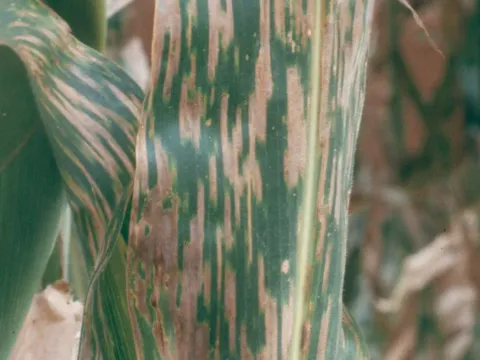
The most prominent symptom is chlorosis, or yellowing, which usually starts at the leaf margins and progresses inward. The leaves lose their vibrant green color and eventually become brittle and chlorotic.
Stunting is a hallmark of the disease. Infected maize plants exhibit shortened internodes and a significantly reduced height, making them stand out in uniform crop fields as weak, underdeveloped individuals.
Abnormal tillering is often observed, where the plant produces excessive side shoots from the nodes. This gives the maize plant a distorted, bushy, or "witches' broom" appearance that is non-productive.
Reproductive development is severely hampered. Ears are often small, deformed, or entirely absent, while the tassels might show sterility, leading to poor or non-existent pollination and grain set.
Disruption of the vascular system leads to stunted root development, further weakening the plant and making it susceptible to environmental stress and opportunistic pathogens.
The spread of Maize Yellow is closely linked to the population dynamics of insect vectors. Warm, dry weather conditions significantly boost the activity and migration of leafhoppers from weed reservoirs into corn fields.
High planting densities create a humid microclimate within the crop canopy, which can protect insect vectors and promote higher infestation rates across the field.
Field edges located near grasslands, forest fringes, or uncultivated fallow land are at a much higher risk of initial infection because these areas harbor the primary sources of the phytoplasma.
Temperatures ranging from 22°C to 30°C are optimal for both the multiplication of phytoplasma inside the plant and the peak feeding activity of the leafhopper, accelerating the disease's lifecycle.
Early-stage infection is the most dangerous. Plants that are infected during the seedling stage rarely reach maturity, while late-stage infection significantly reduces overall grain filling and quality.
The primary economic impact is a dramatic loss in grain yield. Because the disease interferes with the translocation of photosynthetic products, ears remain empty or produce poor, lightweight grain.
Economic damage is compounded by the lack of viable treatment once the plant is systemically infected, often forcing farmers to manage or discard heavily infested crop sections.
Grain quality from infected plants is generally poor, featuring shriveled seeds that fail to meet commercial standards for oil, starch, or feed value, leading to significant market losses.
Infected crops are physically weaker and more susceptible to secondary infections, such as stalk rot and Fusarium, which can cause the crop to lodge, further complicating mechanical harvesting.
Increased expenditures on insecticide applications to control vectors and the removal of reservoir weeds add to the overall cost of production, reducing the profitability of the corn enterprise.
Effective management begins with aggressive weed control. Keeping fields and surrounding borders free of weeds minimizes the reservoir of both the pathogen and the insect vectors.
Selecting resistant maize hybrids is the most sustainable approach to combat the disease. Breeders focus on varieties that show low susceptibility to phytoplasma accumulation and vector feeding.
Strategic insecticide applications during periods of high leafhopper activity can disrupt the cycle of transmission, preventing the disease from reaching epidemic proportions in the field.
Spatial isolation of maize fields from known reservoir hosts, such as wild grasslands, is a highly effective agronomic preventive measure for maintaining field health.
- Regular monitoring of insect populations using yellow sticky traps to time interventions.
- Implementing integrated pest management (IPM) to encourage natural predators of vectors.
- Using high-quality, treated seed to improve initial plant vigor and resistance.