
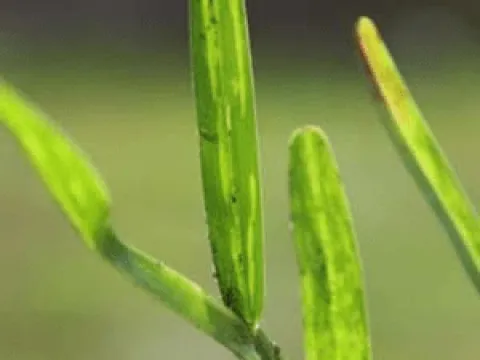
Sugarcane mosaic virus
Sustrivirus sacchari
The causal agent is the Sugarcane mosaic virus (SCMV), which belongs to the genus Potyvirus within the family Potyviridae. It is a single-stranded RNA virus characterized by flexuous, filamentous particles.
What the section contains
Sugarcane mosaic virus
This virus has a broad host range, primarily affecting sugarcane, maize (corn), sorghum, and numerous perennial wild grasses.
Transmission occurs non-persistently through various aphid species (including Rhopalosiphum maidis), which acquire and transmit the virus during short feeding probes.
The virus can also be spread mechanically through physical contact or during agricultural practices that damage leaf tissues.
Perennial grassy weeds serve as the primary reservoir for the virus, allowing it to survive during the winter and infect new crops in the spring.
The most common symptom is a mosaic pattern on the leaves, characterized by alternating patches of light green and dark green or yellow-green.
Infected plants often develop characteristic chlorotic streaks or stripes running parallel to the leaf veins, which may lead to leaf distortion.
In susceptible maize and sorghum hybrids, stunting and reduced plant height are frequently observed, especially if infection occurs at early growth stages.
Severe infections can result in tip necrosis, decreased photosynthetic efficiency, and overall chlorosis of the plant canopy.
Symptom expression can be influenced by the susceptibility of the cultivar, the timing of infection, and the prevailing environmental conditions.
Favorable conditions for virus spread include moderate temperatures and high humidity, which support the multiplication and flight activity of aphid vectors.
Disease outbreaks often coincide with the peak migratory flights of aphids, usually observed during the early stages of crop development.
The proximity of infected wild grasses or earlier-planted susceptible crops creates a high-pressure environment for virus transmission.
Conditions that cause mechanical injury to plants, such as wind, hail, or agricultural machinery, increase the chances of virus entry.
Poor field management, including the presence of weeds that act as hosts, creates an ideal environment for the persistence and transmission of the virus.
The virus causes significant economic losses by reducing grain yield and overall biomass, with losses ranging from 30% to over 50% in severe cases.
Affected crops often exhibit poor ear development, resulting in shriveled grains and reduced seed quality, which impacts both yield and marketability.
SCMV disrupts the plant's metabolic processes, leading to reduced sugar accumulation and compromised nutritional value in forage crops.
Early-season infection can result in significant plant stand reduction, leading to uneven crop development and potentially forcing replanting.
Long-term harm includes the constant threat to susceptible hybrids and the difficulty of managing the viral reservoir in permanent wild host populations.
The most effective method of control is the cultivation of resistant or tolerant commercial hybrids, which can significantly mitigate yield losses.
Regular monitoring of aphid populations is essential, and targeted insecticide applications may be necessary to suppress vector activity during the initial growth stages.
Sanitation practices, including the eradication of perennial grassy weeds in and around fields, are critical for eliminating local sources of the virus.
Optimal planting timing can help crops avoid the peak migratory windows of aphid vectors, thereby reducing the probability of early infection.
- Use of certified, virus-free seed stocks for planting.
- Maintaining adequate spatial isolation from other susceptible cereal crops.
- Post-harvest control of volunteer plants and perennial grass weeds.
- Implementing balanced fertilization to promote plant vigor and tolerance.