
Raspberry ringspot virus
Sadwavirus rubi
The causative agent is the Raspberry ringspot virus (RRV), currently classified under the genus Sadwavirus. It is a polyhedral virus that contains a genome consisting of two positive-sense single-stranded RNA molecules.
What the section contains
Raspberry ringspot virus
The virus is primarily transmitted by soil-inhabiting nematodes, specifically species within the genus Longidorus, which act as efficient vectors during their feeding process on host roots.
In addition to soil-borne transmission, the virus is widely disseminated through infected plant propagation material, such as cuttings or root suckers, posing a significant risk to new plantations.
Mechanical transmission is possible but less frequent in natural conditions compared to the nematode-mediated path; however, it remains a risk factor during pruning and cultivation activities.
The virus exhibits remarkable stability, allowing it to persist within its nematode vectors for extended periods, enabling long-term survival in soil even in the absence of suitable plant hosts.
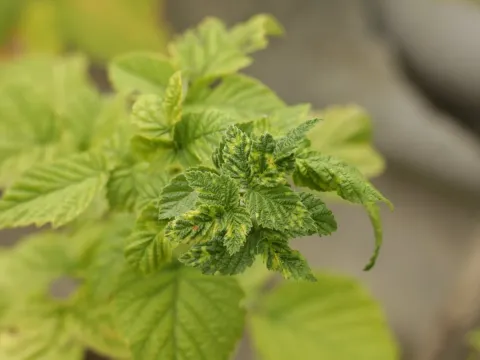
Early symptoms often appear in the spring as chlorotic spots, rings, or line patterns on the leaves, which become particularly visible when temperatures are cool.
Plants affected by the virus typically show signs of stunting, characterized by shortened internodes and a reduced overall canopy size compared to healthy specimens.
Leaf deformation is a common secondary symptom, where foliage may show crinkling, puckering, or mosaic-like discoloration, significantly impacting the plant's photosynthetic efficiency.
During the fruiting phase, infected raspberry plants produce sparse flower clusters and misshapen, crumbly berries that lack the characteristic flavor and size of the healthy variety.
Lateny infection is a significant issue, as many cultivars may harbor the virus without showing obvious symptoms, thereby serving as undetected reservoirs that spread the disease.
Raspberry ringspot virus causes severe yield decline, rendering infested plantations economically non-viable within just a few growing seasons due to the reduced fruit quality.
The cumulative effect of the virus leads to the progressive degeneration of plant vigor, making the raspberry plants increasingly susceptible to environmental stressors and other pathogens.
Infested land becomes restricted for future berry production, as the persistent nature of the virus in the soil necessitates long fallow periods or expensive soil treatment.
The spread of the virus within nursery blocks destroys the value of the stock, causing substantial financial loss and threatening the stability of the entire nursery supply chain.
Reduced plant vitality eventually leads to the death of the root system and complete collapse of the canopy, requiring total removal and destruction of the infected plants.
The most reliable control strategy is the exclusive use of certified, virus-tested planting material that has been screened and cleared by reputable laboratory standards.
Prior to planting, soil testing for the presence of Longidorus nematodes is essential; if vectors are detected, soil fumigation or extended crop rotation is required.
Regular inspection and rogueing are critical steps; any symptomatic plants must be immediately removed, including their entire root zone, to limit further underground spread.
Maintaining a clean cultivation environment by controlling weeds is vital, as many weed species can harbor the virus or act as alternative hosts for the vector nematodes.
Implementing proper hygiene protocols for pruning tools and machinery is necessary to prevent accidental transmission of the virus between different sections of the farm.