
Apple stem grooving virus
Capillovirus alphavii
The disease is caused by Apple stem grooving virus (ASGV), a member of the Capillovirus genus, which is characterized by a single-stranded RNA genome.
What the section contains
Apple stem grooving virus
This virus is a systemic pathogen that colonizes the phloem and xylem tissues of the host plant, disrupting the transport of nutrients and water.
ASGV has a very wide host range, infecting not only apples but also pears, plums, and other related species within the Rosaceae family.
It frequently exists in a latent state, meaning trees can carry the virus for years without showing any clear external symptoms, acting as silent reservoirs.
Transmission occurs primarily through the use of infected scions or rootstocks during propagation and grafting processes in commercial nurseries.
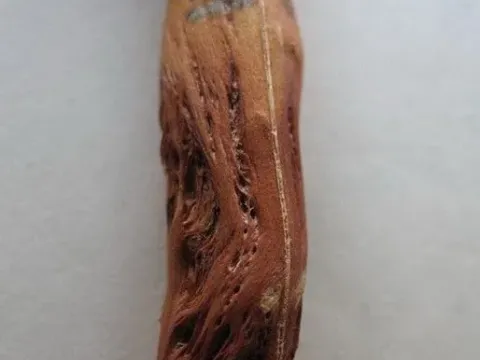
The most distinctive symptom is the development of deep furrows, pits, and grooves on the woody cylinder of the tree, which can be seen by peeling back the bark.
Affected trees often exhibit reduced vigor, stunted growth, and a generally chlorotic appearance of the foliage during the active growing season.
In certain graft combinations, there may be a distinct incompatibility at the graft union, leading to poor tree development and breakage at the site of the graft.
Fruits produced by infected trees are often small, poorly colored, and may show internal or external malformations that decrease their market value.
While some symptoms are internal, general decline such as twig dieback and overall loss of productivity are indicators that the tree's vascular system is compromised.
The virus causes a significant reduction in fruit yield and quality, severely impacting the profitability of apple orchards over the long term.
Infection compromises the overall health of the tree, making it more susceptible to environmental stressors like drought and extreme winter temperatures.
By weakening the structural integrity of the wood, the virus can lead to the snapping of branches under the weight of a full crop or during strong winds.
Economic damage is particularly acute in nurseries, where the sale of infected plant material can lead to the spread of the virus to new plantations.
The lack of curative treatments means that orchards with high infection rates require total removal and replanting, leading to heavy financial losses for growers.
The primary control strategy is the strict use of virus-free, certified nursery stock, which is verified through reliable indexing and diagnostic laboratory testing.
Growers should practice rigorous hygiene by disinfecting all pruning and grafting tools with appropriate chemical agents between every tree to stop transmission.
Selecting tolerant or resistant rootstock varieties is a critical aspect of integrated management to minimize the impact of the virus if accidental exposure occurs.
Regular visual inspections combined with laboratory-based surveillance (ELISA or PCR) help in early detection and removal of infected individuals from the field.
Proper orchard management, including root removal during tree clearing, prevents potential root-to-root transmission between healthy and diseased trees in dense plantings.