
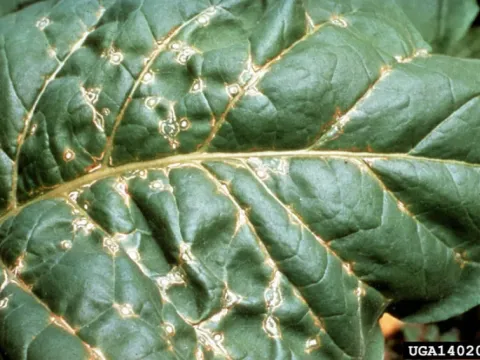
Nepovirus
Nepovirus
Nepoviruses (genus Nepovirus) are a group of plant viruses characterized by their polyhedral (icosahedral) shape and transmission by nematodes.
What the section contains
Nepovirus
The genome consists of two positive-sense single-stranded RNA molecules, which allows for genetic recombination and rapid evolution within different hosts.
The most common vectors for these viruses are soil-dwelling nematodes belonging to the genera Xiphinema, Longidorus, and Paralongidorus.
Viral particles are acquired by the nematodes during feeding on infected roots and can persist in the vector for several weeks or even months.
Besides nematode transmission, these viruses can be spread through infected seeds and pollen, which plays a major role in the long-distance dissemination of the disease.
Symptoms of Nepovirus infections are highly variable and often mimic nutritional deficiencies or herbicide damage, which complicates initial diagnosis.
Common leaf symptoms include chlorotic rings, mosaic patterns, mottling, and the development of distinctive line patterns or zig-zag shapes.
Plants often exhibit stunted growth, reduced leaf size, and severe distortion or curling of the foliage as the virus interferes with normal development.
Flowers and fruits may show deformation, scarring, or discoloration, leading to reduced yields and poor quality of the harvested produce.
In woody plants, chronic infection can lead to tip dieback, general decline, and eventual death of the entire plant over several growing seasons.
The spread of Nepoviruses is strictly dependent on the presence and population density of their specific nematode vectors in the soil environment.
Moist, well-aerated soils with high organic content provide optimal conditions for nematode migration and long-term survival of the viral pathogens.
Poor agricultural practices, such as failing to disinfect pruning tools or planting in contaminated soil, significantly accelerate the spread of the virus.
Weed hosts in and around agricultural fields act as reservoirs, allowing the virus to survive and persist even in the absence of the main crop.
High temperatures during the active growing season can increase nematode activity, thereby enhancing the frequency of virus transmission events.
Nepoviruses cause significant economic losses by drastically reducing the marketable yield and the lifespan of permanent crops like grapevines and fruit trees.
Infected crops show decreased vigor, making them more susceptible to secondary environmental stresses like drought, frost, or other fungal pathogens.
The systemic nature of the virus means that once a plant is infected, there is no curative treatment, and the plant must be removed to prevent further spread.
International trade is severely impacted by these viruses, as strict quarantine regulations are imposed on seeds and plant material suspected of contamination.
Degeneration of orchards and vineyards due to Nepovirus infections often requires total replanting, which involves enormous capital investment and loss of time.
The primary control measure is the use of high-quality, virus-indexed nursery stock that has been certified to be free of Nepoviruses.
Effective management includes pre-plant soil testing to identify the presence of virus-carrying nematodes and appropriate chemical or cultural soil treatments.
Strict sanitation procedures, including the removal of infected plants and their entire root systems, are essential to break the cycle of infection.
Implementing a proper crop rotation strategy helps to reduce the nematode population in the soil and minimizes the risk of re-infection for subsequent crops.
Maintaining tools, tractors, and equipment clean is vital, as mechanical transmission via contaminated soil or plant sap remains a constant risk in field operations.