
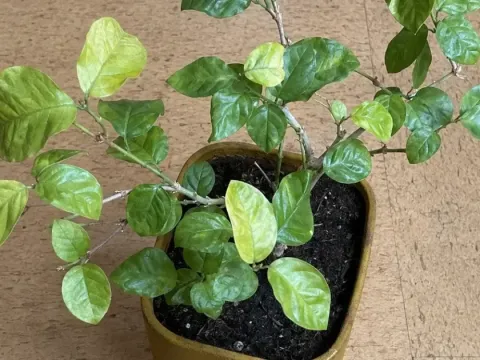
Jasmine infectious chlorosis
Jasmine infectious
The primary symptom of jasmine infectious chlorosis is a noticeable discoloration of the leaves, which lose their vibrant green pigment.
What the section contains
Jasmine infectious chlorosis
Early stages of the disease manifest as pale yellow spots, streaks, or diffuse chlorotic patterns across the leaf surface, often creating a mosaic-like appearance.
As the disease advances, leaves may become thin and lose turgor, with margins potentially curling or deforming due to impaired cellular function.
Infected areas often eventually turn brown or necrotic, indicating tissue death caused by the disruption of photosynthesis and metabolic processes.
Growth becomes significantly stunted; new shoots appear short and weak, and the overall flowering capacity of the shrub is severely diminished or lost entirely.
Jasmine infectious chlorosis is typically caused by viral pathogens that spread through both mechanical wounding and insect vectors.
The Jasmine mosaic virus is often identified as the causative agent, belonging to a group of systemic pathogens that invade the plant's vascular system.
The disease is classified as a systemic infection, meaning viral particles move throughout the entire plant, making treatment extremely difficult.
Transmission occurs through sap contact when contaminated gardening tools are used on healthy tissue without proper sanitation.
Sucking insects, including aphids, whiteflies, and thrips, serve as primary vectors, facilitating the transfer of the virus between neighboring plants.
Environmental conditions that favor active vegetation, particularly high humidity and warm temperatures, accelerate the progression of the virus.
Poor ventilation and overcrowded planting conditions provide an ideal habitat for insect vectors to thrive and spread the infection rapidly.
Suboptimal light conditions and nutrient deficiencies weaken the plant's natural immune response, making it more susceptible to viral invasion.
The lack of strict quarantine measures when introducing new plants into a garden is a leading factor in the initial outbreak of the disease.
Gardening practices that involve high-density planting increase the risk of rapid cross-contamination among healthy jasmine shrubs.
The disease significantly degrades the aesthetic value of jasmine, transforming healthy ornamental shrubs into withered and unattractive plants.
Systemic viral infection disrupts normal plant metabolism, leading to reduced vigor and preventing the shrub from entering dormancy successfully.
Economic damage is considerable, especially in nurseries where the disease can destroy entire batches of stock if not contained immediately.
Affected plants suffer from a permanent decline in health, making them vulnerable to secondary attacks by fungi or bacteria that thrive on stressed tissues.
Long-term survival of heavily infected specimens is low, leading to premature death of the shrub and the need for complete removal from the garden.
The most effective control measure involves the immediate removal and burning of symptomatic plant parts to prevent further viral spread.
Rigorous sanitation protocols must be followed, including the disinfection of pruning shears and other tools with alcohol between uses on different plants.
Management of insect vectors is crucial; regular application of systemic insecticides helps reduce populations of aphids and other carrier pests.
Only disease-free, certified nursery stock should be used when expanding garden collections to prevent the introduction of new viral strains.
- Regular monitoring of foliage
- Isolation of suspicious plants
- Balanced fertilization to boost immunity
- Proactive pest control measures