
Brassica cytorhabdovirus
Cytorhabdovirus brassicae
The causative agent is Cytorhabdovirus brassicae, a member of the Cytorhabdovirus genus within the Rhabdoviridae family, which contains single-stranded RNA.
What the section contains
Brassica cytorhabdovirus
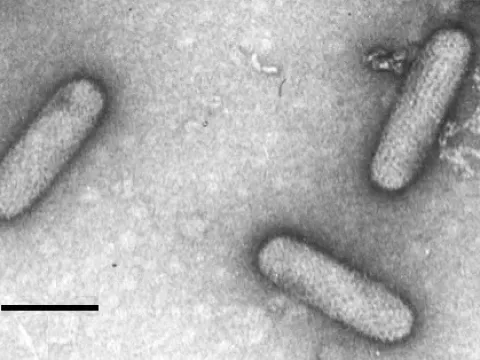
The virus particles exhibit the characteristic bacilliform morphology of the Rhabdoviridae family and infect host plant cells systemically.
In nature, the virus is primarily transmitted by insect vectors, most notably aphid species that feed on the phloem sap of infected cabbage plants.
The pathogenesis involves disrupting the host's cellular machinery, leading to inhibited protein synthesis and interference with normal plant development.
Because the virus is not soil-borne and does not persist on plant debris, its spread depends strictly on the presence and movement of its insect vectors.
Symptoms of infection include systemic chlorosis, which initially manifests on younger leaves and spreads across the entire plant foliage.
Deformation of the leaf blade is a hallmark symptom, often resulting in crinkled, curled, or stunted leaves with irregular edges.
Affected plants show significant growth retardation, appearing as stunted, smaller individuals compared to their healthy counterparts.
A mosaic pattern, represented by mottled areas of light and dark green, is frequently observed as the infection progresses throughout the plant.
The virus severely impacts head formation, often resulting in loose, underdeveloped, or completely absent cabbage heads, rendering them commercially useless.
The spread of the disease is highly correlated with environmental conditions that favor the rapid proliferation of aphid populations, particularly during warm and dry periods.
High planting density facilitates the migration of insect vectors from infected to healthy plants, accelerating the development of disease patches in the field.
Wild Brassicaceae weeds act as essential reservoirs for the virus, allowing it to survive between growing seasons and serving as an initial source of inoculum.
Poor agricultural practices, such as failing to manage wild cruciferous weeds or late-season vector control, significantly elevate the risk of field-wide infection.
Environmental stress factors that weaken the plant's natural defenses can also make the crop more susceptible to the systemic colonization of the virus.
The primary concern regarding this virus is that there are no curative measures available; once a plant is infected, it remains a source of the virus for the entire season.
The infection leads to substantial economic losses due to reduced yields and inferior product quality, failing to meet standard market requirements.
Plants infected with the virus are often more susceptible to secondary infections, such as bacterial soft rot, which further decreases shelf life during storage.
Large-scale outbreaks can cause significant disruption to harvest cycles and force growers to cull entire sections of the crop to prevent further spread.
The overall reduction in plant vigor and biomass accumulation impacts the nutritional quality of the cabbage, reducing its value for processing and consumption.
Management strategy centers on controlling the populations of insect vectors, specifically aphids, using approved systemic insecticides.
Sanitation is critical; fields and surrounding borders must be kept free of cruciferous weeds that serve as alternate hosts for the virus.
Growers should prioritize the use of high-quality, virus-free seeds and transplants sourced from reputable nurseries to prevent early-season infections.
Implementing proper crop rotation helps minimize the persistence of the pathogen in the local environment and breaks the vector cycle.
Frequent monitoring and the immediate removal and destruction of symptomatic plants are essential to reduce the total viral load in the cropping system.