
Brassica latent virus
Carlavirus latensbrassicae
Description
Symptoms
The primary characteristic of this disease is its latent nature, meaning plants may appear healthy despite being infected. Visual diagnosis is notoriously difficult, as affected plants often show no clear signs of viral stress under normal conditions.
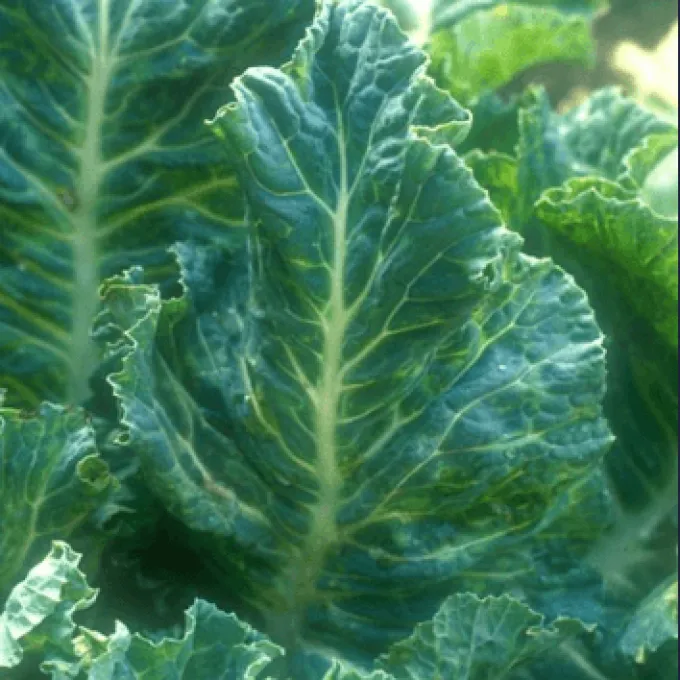
In cases where symptoms do manifest, they typically include mild leaf mosaic, subtle chlorotic spots, or slight leaf deformation. These signs are often mistaken for nutrient deficiencies, leading to incorrect fertilization strategies by growers.
Field diagnosis based on symptoms alone is unreliable and often leads to an underestimation of the infection's prevalence. Precise identification requires advanced laboratory diagnostic tools, such as ELISA (Enzyme-Linked Immunosorbent Assay) or RT-PCR tests.
When environmental stress factors are present, the signs of the virus may become more pronounced. Infected plants often exhibit stunted growth and produce cabbage heads that are less dense and lower in weight compared to healthy plants.
In sensitive varieties, the virus may cause localized necrotic patches on older leaves, which can spread if the plant's defense system is weakened. However, in most cultivated varieties, the lack of dramatic symptoms often results in the disease going undetected.
Pathogen
Brassica latent virus (a member of the genus Carlavirus) is a specialized plant pathogen that primarily infects species within the Brassicaceae family. It is an RNA virus characterized by its ability to remain latent, often failing to produce distinct symptoms in host plants.
Transmission occurs mainly through mechanical means, such as the use of contaminated pruning tools, or via insect vectors, particularly aphids. These insects acquire the virus from infected plants and spread it rapidly throughout the field during the growing season.
Wild cruciferous weeds serve as permanent reservoirs for the virus, allowing it to persist throughout the year and move into cultivated fields in the spring. This continuous presence makes it a persistent threat to commercial vegetable farming.
The virus utilizes the host plant's cellular machinery to replicate, effectively draining the plant's metabolic resources. While it does not always cause visible injury, it consistently compromises the plant's physiological efficiency and overall vigor.
In many agricultural environments, Brassica latent virus is found in mixed infections alongside other viruses, which complicates the assessment of its individual impact. This complex interaction often leads to more severe symptoms and crop losses than single-virus infections.
Why it matters
The damage caused by Brassica latent virus is primarily economic, stemming from reduced yield quality and weight. Infected crops are also more susceptible to secondary infections by fungi and bacteria, which can cause significant rotting in the field or during storage.
Commercial value is significantly impacted due to the reduced size and compactness of cabbage heads. This limits the marketability of the produce, as it fails to meet standard size and quality criteria required for premium supermarket chains.
The virus interferes with the plant’s nutrient uptake and metabolic pathways, resulting in a decline in the sugar and vitamin content of the vegetables. This reduction in nutritional quality is a hidden but significant concern for both processors and consumers.
Seed production farms are particularly at risk, as the virus can negatively affect seed viability and quality. Any detected infection necessitates the culling of mother plants to prevent the spread of the virus through the seed supply chain.
The indirect costs associated with this disease include the need for extensive field monitoring and diagnostic testing to manage risks. These measures increase production costs without necessarily guaranteeing a complete recovery of the crop health.
Protection
Since there are no chemical virucides available to treat infected plants, control strategies must be strictly preventative. Management relies heavily on cultural practices and the containment of insect vectors to minimize the virus's spread.
The use of certified virus-free seed is the most effective way to prevent the introduction of the pathogen into new areas. Establishing spatial isolation between seed crops and general vegetable production is a crucial step in maintaining a clean field.
Rigorous weed management around the perimeter of the field is essential to remove wild host plants that act as viral reservoirs. Additionally, sanitizing agricultural equipment between tasks prevents the accidental transfer of the virus from infected to healthy plants.
Controlling aphid populations through integrated pest management (IPM) is vital. By reducing the number of vectors using timely insecticide applications, farmers can effectively lower the rate of viral transmission throughout the growing season.
- Implement systematic crop rotation to disrupt the pathogen cycle;
- Select resistant or tolerant varieties;
- Conduct regular field scouting for early detection;
- Dispose of crop residues immediately after harvest;
- Practice strict hygiene when pruning or handling plants.
Discussion
No discussions yet — be the first.