
Andean potato mottle comovirus
Comovirus andesense
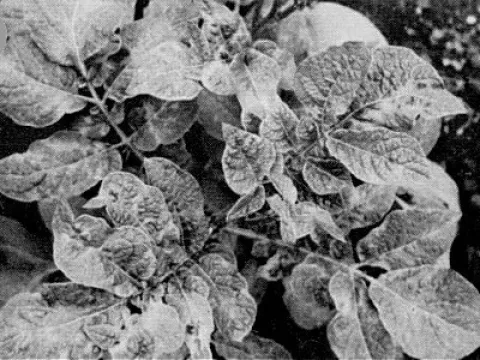
The primary symptom of infection in potato plants caused by this virus is a characteristic mottle on the leaf blades. Leaves exhibit a variegated appearance with alternating patches of dark green and lighter green or yellowish tissues.
What the section contains
Andean potato mottle comovirus
Depending on the specific virus strain and potato cultivar, symptoms may range from mild mosaic patterns to severe deformation of the leaf structure. The leaf surface often becomes crinkled or puckered, indicating a systemic infection throughout the plant.
Infected plants show noticeable stunting in growth and general development. These plants appear visibly suppressed, and their canopy size may be significantly smaller compared to healthy specimens growing in the same field.
As the disease progresses, early senescence and yellowing of the lower leaves may occur. This shortens the vegetative growth period, which is a critical phase for the formation of healthy and high-yielding tubers.
Under field conditions, symptoms can sometimes be masked by other viral potato diseases. Precise diagnosis requires laboratory confirmation using serological assays or PCR-based detection methods.
The pathogen is the Andean potato mottle comovirus, a member of the Comovirus genus. It is a single-stranded RNA virus known for its specific morphology and high infectivity within Solanaceae crops.
Transmission occurs primarily through mechanical means, such as the contact of sap from infected plants with healthy ones. The virus is easily spread during routine agricultural activities through contact with contaminated equipment.
Insect vectors play a significant role in the dispersal of the virus. In natural settings, various beetle species, particularly leaf-feeding beetles, can act as efficient vectors for the virus.
The virus is tuber-borne, meaning it persists in infected seed potatoes, making them the primary source of infection for subsequent planting seasons. Planting infected tubers ensures the disease spreads rapidly across the field during the growth cycle.
Survival in the soil is relatively limited; however, the virus can persist in crop residues that have not fully decomposed. Its ecological adaptability allows the pathogen to survive effectively in high-altitude environments where potatoes are traditionally grown.
The development of an epiphytotic is favored by conditions that support high insect vector activity. Humid and moderately warm weather conditions accelerate the feeding and movement of beetles, thereby facilitating viral spread.
The intensity of viral spread increases dramatically during routine agronomic practices such as weeding, hilling, or mechanical cultivation. Any physical injury to the leaf tissue caused by tools allows for easy viral entry.
Plant density directly influences the speed at which an infection covers an entire plot. Closely spaced plants allow for more frequent physical contact between foliage, which accelerates the transmission of the virus.
Soil characteristics and pH levels may indirectly influence the host's susceptibility to the virus. Plants growing in nutrient-poor or stressed soils often exhibit more severe symptoms due to a weakened defense mechanism.
Human agricultural practices are the primary driver of pathogen dissemination. Failure to disinfect tools between working on different sections or cultivars is a leading cause of widespread viral outbreaks on farms.
The Andean potato mottle comovirus causes significant economic losses for potato producers. Reduced plant vigor directly translates into lower overall tuber yields and decreased marketability of the produce.
The infection significantly impairs the quality of marketable tubers. Infected potatoes often become smaller, deformed, and lose their nutritional value, rendering them unsuitable for long-term storage or processing.
The virus reduces starch content and other essential nutrients in the tubers, which is highly detrimental for both commercial food production and seed multiplication. Using diseased tubers for future planting is strictly discouraged to prevent heavy losses.
Infection severely limits the export potential of potato-growing regions. Due to the quarantine status of many potato viruses, the presence of this pathogen can lead to trade restrictions on seed shipments.
Over the long term, the virus induces severe degeneration of potato cultivars. Without robust management, the quality of the crop degrades, and yields fall below the threshold of economic viability within just a few growing seasons.
The cornerstone of management is the use of high-quality, certified, virus-free seed potatoes. Utilizing tubers derived from meristem culture provides the best assurance of a healthy start for the crop.
Regular phytosanitary roguing of the fields is essential. All plants showing symptoms of mosaic, mottling, or deformation should be immediately removed from the field, along with their tubers, and destroyed off-site.
Strict control of insect vector populations is vital. The application of systemic insecticides at appropriate intervals helps minimize both primary and secondary transmission of the virus during the growing season.
Hygiene during field operations is critical. Disinfecting knives used for cutting tubers and sanitizing all agricultural tools after contact with plants is a mandatory practice to prevent mechanical spread.
Crop rotation and maintaining spatial isolation from other Solanaceae crops help manage the regional infection pressure. Eliminating host weeds that act as virus reservoirs is a necessary part of a comprehensive protection strategy.