
Bymovirus
Bymovirus
Bymovirus is a genus of plant viruses in the family Potyviridae, characterized by a bipartite genome consisting of two positive-sense single-stranded RNA molecules. These viruses are specialized pathogens that primarily infect cereal crops.
What the section contains
Bymovirus
The primary natural vector for Bymovirus is the soil-borne plasmodiophorid fungus Polymyxa graminis. The virus persists within the resting spores (cystosori) of the fungus, which can remain viable in the soil for many years even without a host crop.
Infection occurs when the fungus's zoospores come into contact with the root hairs of emerging seedlings. Once the virus enters the plant cells, it replicates and systematically spreads throughout the vascular tissues of the host.
Beyond natural biological transmission, the virus is spread mechanically through the movement of infested soil attached to farm machinery, tractor tires, and agricultural equipment.
The high genetic variability of these viruses allows them to adapt rapidly to environmental changes and host defenses, posing a constant challenge for crop breeding programs.
Symptoms of Bymovirus infection typically appear in early spring, as the crop resumes active growth. Affected plants often exhibit stunted growth and an overall unthrifty appearance compared to healthy plants.
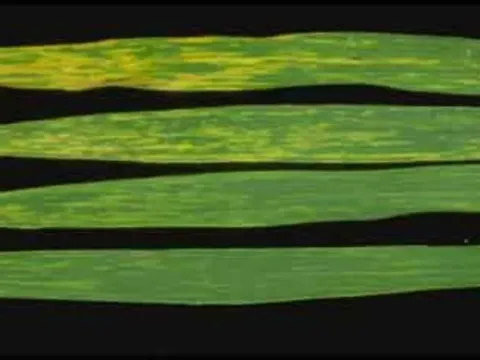
The most characteristic symptom is the development of chlorotic streaks on the leaves. These streaks, which are often yellow or light green, run parallel to the veins and create a distinct mosaic or mottled pattern.
In severe infections, leaves may show signs of deformation, curling, or premature necrosis. Plants may exhibit excessive tillering, resulting in a bushy appearance with many weak shoots instead of a few robust stems.
In infected wheat or barley, head development is often delayed or hindered. Ears may remain small, incompletely filled, or show signs of floret sterility, leading to significant yield losses.
The distribution of symptomatic plants in a field is usually patchy, corresponding to the soil areas where the fungal vector is most prevalent. These infection foci tend to expand over time if susceptible varieties are grown repeatedly.
The disease development is strictly dependent on the biology of the vector Polymyxa graminis. Favorable conditions for transmission include high soil moisture levels and moderate temperatures during the autumn and early spring.
Prolonged wet autumns are particularly dangerous, as young winter cereal seedlings are highly vulnerable to infection when the soil remains saturated, facilitating the movement of fungal zoospores.
Continuous cropping of cereals on the same land creates an ideal environment for the buildup of infectious fungal spores in the soil, significantly increasing the potential for epidemic outbreaks.
Heavy-textured or poorly drained soils retain water for longer periods, providing an optimal habitat for the survival and multiplication of the fungal vector.
Improving soil drainage and physical structure through proper agronomic management can help mitigate the conditions that favor the activity of the fungal vector.
The primary damage caused by Bymovirus is a substantial reduction in grain yield due to the plant's weakened physiological state. Infected plants are often more susceptible to winterkill and frost damage.
The viral infection inhibits photosynthesis and impairs the translocation of nutrients to the grains, resulting in shriveled kernels, lower test weight, and reduced overall crop quality.
Beyond yield loss, the infection negatively affects the protein content, gluten quality, and baking characteristics of the grain, significantly impacting its market value.
In cases of heavy infestation, yield losses can range from 30% to over 50%, especially when combined with environmental stressors like nutrient deficiency or extreme weather events.
The persistence of the virus in the soil renders infested fields unsuitable for highly productive cereal varieties for several years without the implementation of strict preventive measures.
The most effective management strategy for Bymovirus is the deployment of resistant or tolerant cultivars. Breeding programs focus on identifying genetic resistance to both the virus and the fungal vector.
Crop rotation is a critical cultural practice. Farmers should avoid planting susceptible cereals in the same field for a minimum of 3–5 years to break the infection cycle of the soil-borne vector.
Adjusting sowing dates can sometimes reduce the risk of infection. Planting at times that avoid the peak activity window of the fungal zoospores can significantly decrease the initial infection rate.
Sanitation is essential; cleaning machinery and equipment to remove infested soil before moving to clean fields prevents the long-distance spread of the vector and the associated virus.
Chemical control of Polymyxa graminis is not currently considered practical or economically viable, making integrated agronomic practices the cornerstone of Bymovirus management.