
Burdock benyvirus
Benyvirus arctii
Description
Symptoms
Key symptoms of infection include systemic chlorosis, often appearing as a mosaic pattern on the leaves. Yellowing along the leaf veins is a very characteristic sign of the disease.
Infected plants exhibit severe stunting and reduced growth rates. Plants appear weak and display shortened internodes compared to healthy specimens growing under identical conditions.
Deformation of the leaf blades, including curling and necrotic spots, may also occur. These lesions can merge over time, eventually leading to premature tissue death and senescence.
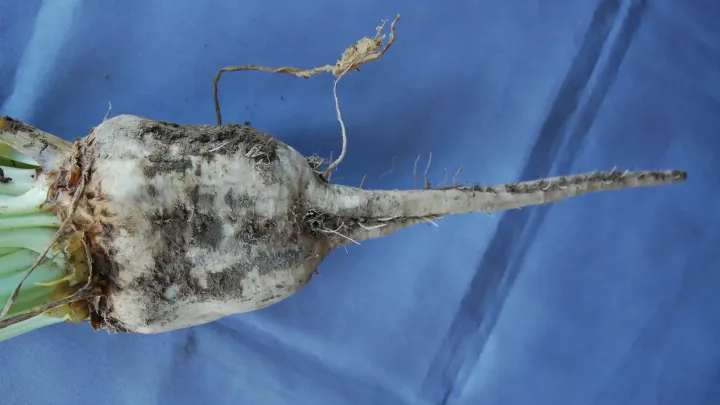
The root system is significantly affected, showing poor development of lateral roots, which severely restricts the plant's ability to absorb water and vital mineral nutrients from the soil.
- Systemic chlorosis of leaves
- Distinct mosaic patterns
- Significant stunting (reduced height)
- Leaf deformation and necrosis
Pathogen
Burdock benyvirus (Benyvirus arctii) is a specific plant pathogenic virus belonging to the Benyvirus genus. The viral particles are rod-shaped and contain a positive-sense single-stranded RNA genome, which is typical for this virus group.
In nature, the pathogen has evolved alongside species of the Arctium genus. Its life cycle is inextricably linked to soil-borne organisms that act as vectors, ensuring the survival and spread of the virus within the ecosystem.
The virus primarily infects the phloem tissues of the host plant, disrupting the translocation of assimilates. This leads to systemic distribution of the infection throughout the entire plant organism.
Vectors of the virus are specialized soil protists, such as Polymyxa species or related chytrid fungi. These organisms harbor the virus and transmit it to plant roots via motile zoospores.
The genetic architecture of the virus allows it to adapt to various environmental stresses and successfully infect susceptible plants while maintaining stability in the soil environment for extended periods.
Conditions for development
The development of the disease is strictly dependent on the activity of its soil-borne vector. Optimal conditions for infection involve high soil moisture and moderate temperatures.
The virus vector prefers heavy, compacted soils where water drainage is poor. Such conditions provide an ideal environment for the mobility of zoospores and successful root infection.
The spread of the pathogen in agricultural fields is frequently caused by the movement of contaminated soil through farming equipment or irrigation systems that transport the vector spores.
High planting density of susceptible crops in a monoculture system leads to the accumulation of the pathogen in the soil, increasing the infection pressure significantly over several seasons.
Symptom severity is often correlated with the overall health of the plant; additional stressors such as drought or nutrient deficiencies can exacerbate the disease progression.
Why it matters
The harm caused by Burdock benyvirus is manifested in significant yield losses and reduced quality of vegetative matter. The virus effectively inhibits the growth potential of the host crop.
In commercial agricultural settings, heavy infection leads to such poor crop performance that cultivation becomes economically non-viable and results in total loss of marketable produce.
The viral infection weakens the plant's immune system, making it highly susceptible to secondary bacterial and fungal pathogens, which further accelerate the decline and death of the crop.
A major long-term danger is the virus's ability to remain dormant within the vector's resting spores in the soil for several years, making it an extremely difficult pathogen to eradicate.
Currently, there are no effective chemical treatments to cure already infected plants, emphasizing the critical importance of preventive agronomic measures in integrated pest management.
Protection
The primary control strategy is strict crop rotation. Excluding susceptible crops from the field for 3 to 5 years allows the population of the vector in the soil to decline to negligible levels.
Sanitation is essential; removing weeds that act as virus reservoirs is crucial. Farmers should keep fields free from wild burdock and related Asteraceae species that can harbor the virus.
Implementing land management practices that improve soil drainage helps to reduce moisture levels in the root zone, thereby limiting the activity of zoospores and reducing infection risks.
Thorough cleaning and disinfection of agricultural machinery after working in contaminated areas are mandatory to prevent the transportation of soil-borne spores to healthy fields.
Breeding and utilizing resistant cultivars is the most sustainable approach. Selecting seeds with genetic resistance to the virus or lower susceptibility to the vector ensures stable production.
Discussion
No discussions yet — be the first.