
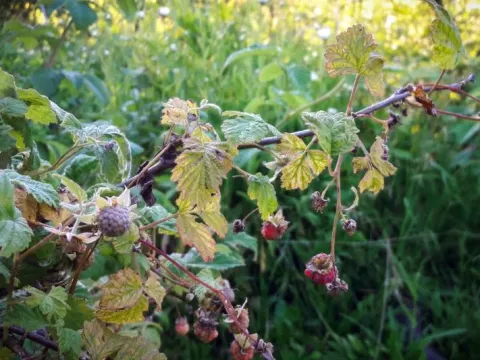
Raspberry stunt
Rubus stunt
Raspberry stunt, scientifically known as Rubus stunt, is a serious phytoplasma disease. The pathogen is a specialized phytoplasma that infects the plant's vascular system, severely disrupting its metabolic processes.
What the section contains
Raspberry stunt
This pathogen belongs to a group of microorganisms lacking a cell wall, inhabiting exclusively the sieve tubes of the phloem in infected plants. The infection spreads systemically throughout all plant organs.
The main natural reservoir and vector for the infection are insects, particularly various species of leafhoppers. By feeding on the sap of infected plants, the insect acquires the ability to transmit the phytoplasma to healthy bushes.
The pathogen can also be spread through the use of infected planting material. Infected seedlings do not always show immediate symptoms, which complicates disease control at the stage of establishing a plantation.
The pathogen primarily affects the common raspberry, but it can potentially pose a threat to other members of the Rosaceae family. The disease is chronic in nature and cannot be cured with modern chemical treatments.
The first and most noticeable symptom is a sharp reduction in leaf and shoot size, which gives the disease its name. The bush takes on a "witch's broom" appearance due to abnormal branching and shortened internodes.
Leaves on infected specimens become chlorotic, often curling or taking on an uncharacteristic shape. Premature reddening or yellowing of the leaves is frequently observed during the summer period.
Fruit production is drastically reduced or completely stops due to the stunting. The remaining berries become small, dry, and lose their flavor and market value, making them unsuitable for sale.
Infected bushes gradually weaken, losing their ability to grow and develop normally. The root system also becomes stunted, making the plant highly sensitive to unfavorable climatic conditions.
Visually, the disease often manifests in the second half of the season. Gradually, the entire plant deforms, acquiring a stunted, suppressed appearance, which makes it easily distinguishable from healthy, vigorous raspberry bushes.
The development of the disease is closely linked to the activity of insect vectors. Infection spreads most intensely during periods of warm, humid weather, which facilitates the reproduction of leafhoppers.
Neglected plantings overgrown with weeds are an ideal environment for the buildup of vectors. Weeds can act as additional reservoirs for the phytoplasma, ensuring its survival during the off-season.
Inadequate plantation care and a lack of pest control significantly increase the risk of mass infection. Optimal conditions for leafhoppers ensure the rapid spread of the pathogen across the entire plot.
The use of unverified, infected planting material is a key factor in the appearance of primary disease outbreaks. Infection can be introduced to the farm along with seedlings from unreliable nurseries.
High planting density combined with poor air circulation also facilitates the faster movement of insect vectors between bushes, accelerating the rate of infection across the plantation.
Raspberry stunt is one of the most damaging diseases for berry crops. The primary loss lies in the almost complete lack of yield from infected bushes, which makes their maintenance economically unviable.
The disease leads to the degradation of the plantation, requiring a complete replacement of the planting material. Infected areas become a source of infection for all surrounding crops, threatening the entire berry farm.
A significant decline in product quality is observed. Even if a sick bush manages to produce berries, they lack marketability, taste poor, and have a very short shelf life, reducing the farmer's profit.
The biological depression of the bushes makes them vulnerable to secondary infections and external stressors, such as frost or drought. Plants lose their vitality and gradually die out.
Large-scale crop losses and the need for expensive plantation removal cause serious financial damage to the grower. Prevention remains the only way to maintain the profitability of the business.
The main strategy for control lies in strict adherence to phytosanitary standards. Only certified, healthy planting material, verified as free from phytoplasmas, should be used for establishing new orchards.
Upon detection of the first signs of the disease, affected plants must be immediately dug out by the roots and destroyed by burning. Leaving infected bushes in the field is strictly prohibited.
An integral part of protection is the control of insect vectors. Regular applications of systemic insecticides help reduce leafhopper populations and break the transmission cycle of the pathogen.
Maintaining cleanliness on the farm is also critical. Regular weeding to remove the habitats of pests and following proper cultivation techniques helps to improve the plant's natural immunity.
Monitoring the condition of the plantation throughout the entire growing season allows for the timely identification of disease hotspots. Timely removal of primary infection sources helps save the majority of the crop from total infection.