
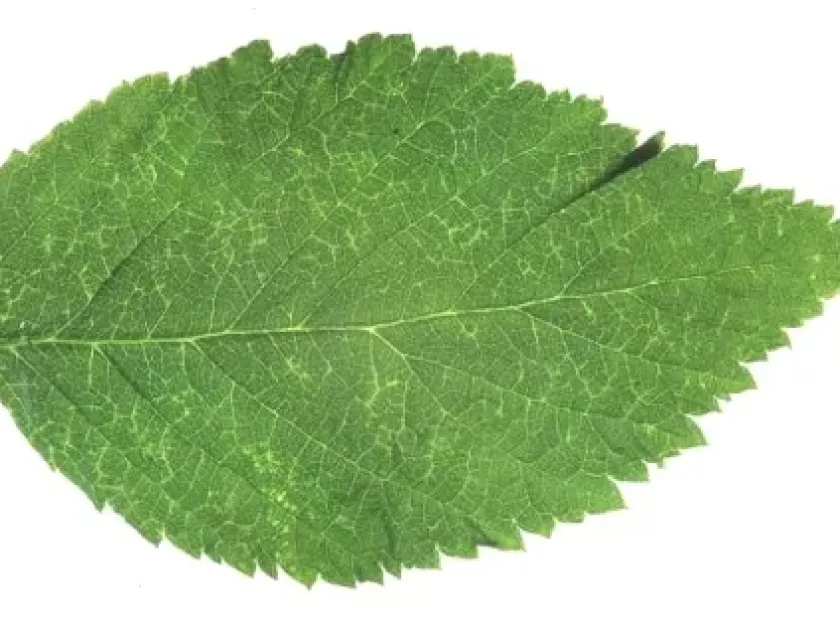
Description
Symptoms
The most characteristic symptom is the development of yellow discoloration along the leaf veins. This banding pattern is most visible on young leaves during the spring growth phase.
In many cases, the yellowing can become quite intense, creating a distinct net-like pattern on the foliage. The intensity of symptoms often correlates with the overall health of the plant.
Infected leaves may exhibit signs of curling or structural distortion. Reduced leaf size is frequently observed as the infection impacts the plant's metabolic functions.
Symptom expression is highly dependent on environmental conditions. During hot summer weather, signs of chlorosis may fade or become completely masked by green tissue.
Top-down growth suppression is common in infected canes. While new leaves may show the classic symptoms, the lower, older leaves might appear normal for an extended period.
Pathogen
The disease is caused by the Raspberry vein chlorosis virus (RVCV). This is a systemic virus that invades the plant's vascular tissue, specifically affecting the phloem cells.
As a viral infection, it is transmitted primarily by the aphid species Aphis idaei. The aphid acts as a vector, spreading the pathogen while feeding on infected plant sap.
The virus can also be introduced to new fields through contaminated planting stock. Using infected root cuttings or canes is the primary cause of long-distance transmission.
The pathogen thrives within the host plant, disrupting photosynthesis and nutrient transport. Once a plant is infected, the virus spreads systemically throughout its structure.
The host range is primarily limited to Rubus idaeus (red raspberry). Different cultivars exhibit varying degrees of susceptibility to this specific virus strain.
Why it matters
The disease causes significant stunting of canes, leading to poor plant architecture. Affected bushes produce fewer suckers and show signs of declining vigor over time.
Yield loss is a major concern, as the virus negatively impacts berry production. Fruit size and quality are often reduced, making the produce less attractive for commercial markets.
The overall weakening of the raspberry bush makes it more susceptible to environmental stress, including winter injury and summer drought, leading to premature plantation decline.
As a systemic infection, it reduces the plant's ability to store energy for the next growing season. This cumulative stress eventually shortens the productive lifespan of the plantation.
The presence of the virus in a field serves as a constant reservoir for further transmission. Without management, the infection rate can escalate quickly across the entire area.
Protection
The primary control strategy is to plant only certified, virus-free nursery stock. This remains the most effective way to prevent the establishment of the disease in a new field.
Strict phytosanitary practices are essential. Once plants show symptoms of vein chlorosis, they should be rogued out immediately, including the root system, to remove the viral source.
Effective aphid control is critical to minimize the spread. Regular monitoring and the application of insecticides targeting Aphis idaei help to break the transmission cycle.
Maintaining good agronomic conditions, such as proper fertilization and irrigation, can help mitigate the stress on plants, though it does not cure the viral infection itself.
Selecting tolerant or resistant cultivars is a key long-term goal for commercial raspberry production. Genetic resistance offers the best protection against recurring RVCV outbreaks.
Pathogens and affected parts
Affects crops · 1
Discussion
No discussions yet — be the first.