
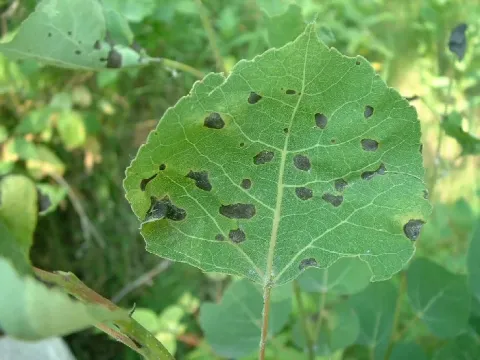
Venturia leaf spot of poplar
Venturia populina
The disease is caused by the ascomycete fungus Venturia populina, which is a specialized pathogen targeting various species within the Populus genus.
What the section contains
Venturia leaf spot of poplar
The life cycle of the pathogen involves both sexual reproduction on overwintered fallen leaves and asexual reproduction via conidia during the growing season.
The fungus overwinters primarily as mycelium in infected twigs or on fallen leaf litter, which acts as a major reservoir for the following season's outbreak.
Primary infections occur in early spring when ascospores are released and dispersed by wind and rain splash onto the emerging young leaves.
Secondary infections are driven by conidia, which are produced in large quantities on the necrotic spots, enabling rapid spread during humid weather conditions.
Symptoms typically appear as small, dark olive-brown to black spots on young leaves, which often expand to affect the petioles and stems.
A classic sign is the curling of young shoots into a distinct shepherd's crook shape, which is caused by the death of the shoot tip due to infection.
Under high humidity, a velvety layer of conidia becomes visible on the underside of the necrotic leaf spots, indicating active sporulation of the fungus.
Severe infections lead to progressive dieback of the twigs, resulting in distorted growth patterns and significant reduction of the tree's foliage canopy.
Premature leaf drop is a common consequence, which further weakens the tree's physiological status and photosynthetic capacity throughout the summer.
The development of Venturia populina is strongly favored by cool, wet weather conditions, particularly during the early spring growth phase.
Persistent moisture on the leaf surface is a prerequisite for spore germination and successful fungal penetration into the plant tissues.
Dense plantings with poor air circulation create stagnant microclimates that maintain high humidity levels, facilitating the rapid build-up of the infection.
Stressed trees, whether due to poor site conditions, nutrient deficiencies, or insect attacks, exhibit higher susceptibility to the disease compared to vigorous trees.
Optimum temperatures for mycelial growth range between 15°C and 22°C, making spring the most critical window for monitoring and management actions.
In forest nurseries, this disease can cause devastating losses, potentially leading to the death of young poplar seedlings before they reach a marketable size.
The infection severely stunts shoot growth, resulting in poor tree architecture and the loss of desirable vertical stems required for timber production.
Chronic annual infections deplete the tree's carbohydrate reserves, reducing its overall vitality, cold tolerance, and resistance to secondary pathogens.
The aesthetic value of poplars used in landscape and urban forestry is significantly reduced by the presence of twisted, blackened twigs and prematurely defoliated branches.
Economic damage stems from the costs associated with disease management, replacement of dead seedlings, and the loss of growth potential in infected plantations.
Sanitation is the most effective management strategy, involving the pruning and destruction of infected twigs and the removal of leaf litter to reduce inoculum.
Selecting and planting genetically resistant poplar clones is recommended as the primary long-term solution to mitigate the risk of Venturia leaf spot.
Fungicide applications, timed with the bud-break period in spring, can be used to protect young, vulnerable tissues from the primary infection phase.
Maintaining proper spacing between trees is essential to ensure adequate airflow, which helps keep foliage dry and creates an unfavorable environment for the fungus.
Monitoring the health of the plantation during early spring allows for early detection of initial symptoms, enabling targeted intervention before a major outbreak occurs.