
Description
Symptoms
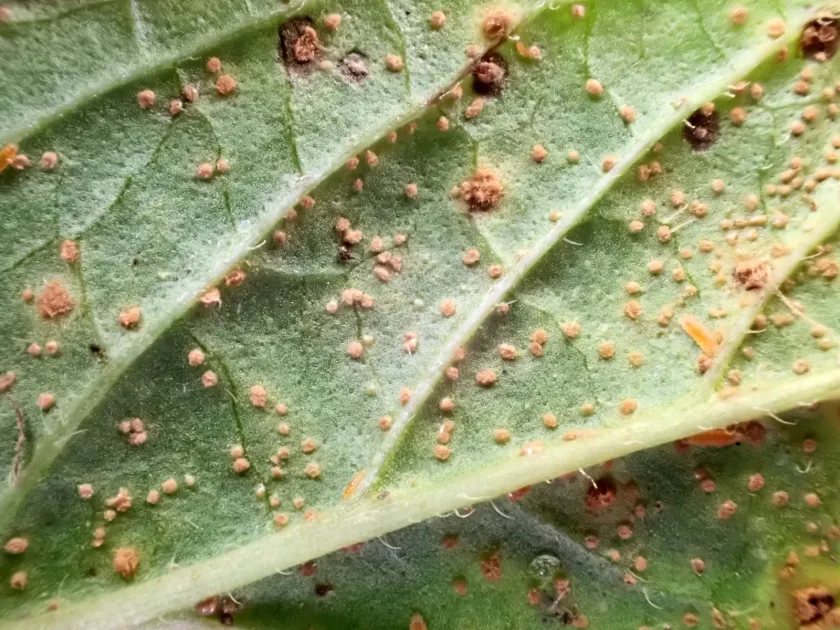
Early symptoms appear as small, light-yellow spots on the underside of the leaves, which gradually develop into raised, powdery pustules.
As the disease progresses, these pustules turn into a distinct rusty-brown or dark-brown color as the fungus releases masses of spores.
Leaves affected by the rust may turn yellow, curl up, and eventually drop off, leading to significant defoliation of the entire plant.
In cases of severe infection, the stems may also show signs of distortion or stunted growth, making the plant look withered and unhealthy.
- Bright orange or brown powdery pustules.
- Yellowing and wilting of mint leaves.
- Premature leaf drop.
- Deformed stems and stunted plant growth.
Pathogen
The causative agent of this disease is the rust fungus Puccinia menthae, which is a highly specialized parasite of plants in the Lamiaceae family.
This fungus completes its life cycle on mint, producing different types of spores throughout the growing season to ensure its survival and spread.
The fungus overwinters as mycelium in the rhizomes of infected plants, which allows the disease to emerge again as soon as growth starts in the spring.
It is an obligate parasite, meaning it requires living host tissue to obtain nutrients, which directly impacts the health and vitality of the mint plant.
The production of large quantities of urediniospores allows the disease to spread rapidly across fields when weather conditions are favourable.
Conditions for development
Mint rust thrives in cool to moderate temperatures ranging from 15 to 22 degrees Celsius, coupled with high humidity or frequent precipitation.
Damp, stagnant air in crowded plantings creates a perfect environment for spore germination and rapid infection of surrounding plants.
Poor drainage and excessive watering, especially overhead irrigation that leaves water on the foliage, significantly increase the risk of disease outbreaks.
Lack of proper sanitation, such as leaving debris from previous harvests in the garden, allows the fungus to persist and re-infect the area year after year.
Plants grown in shade or areas with poor sunlight exposure are often more susceptible to infection due to weakened immunity and lingering surface moisture.
Why it matters
Mint rust is a serious threat to both commercial growers and home gardeners, as it significantly reduces the overall yield and quality of the mint crop.
Infection leads to a decline in essential oil production, which is crucial for the culinary, pharmaceutical, and cosmetic industries.
Severe infestations weaken the plants, leading to poor winter survival and a higher likelihood of plant loss during the dormant season.
The aesthetic and culinary value of the leaves is destroyed, making the mint unsuitable for consumption or drying for herbal teas.
Once established in a patch, the disease can be persistent and difficult to eradicate without aggressive cultural or chemical interventions.
Protection
Start by selecting and planting only healthy, rust-free rhizomes to avoid introducing the pathogen into your garden in the first place.
Ensure adequate spacing between plants to promote good air circulation, which helps keep the foliage dry and discourages fungal growth.
Practice good sanitation by removing and destroying any infected plant material immediately upon detection to prevent the spread of spores.
After the harvest or at the end of the season, remove and discard all dead mint foliage to eliminate the primary sources of overwintering inoculum.
When necessary, use appropriate fungicides labeled for mint, ensuring strict adherence to safety intervals before harvesting for culinary use.
Content graph
Connections · Mint rust
Most often together:
Marketplace
Products · 1
Community
Discussion
No discussions yet — be the first.