
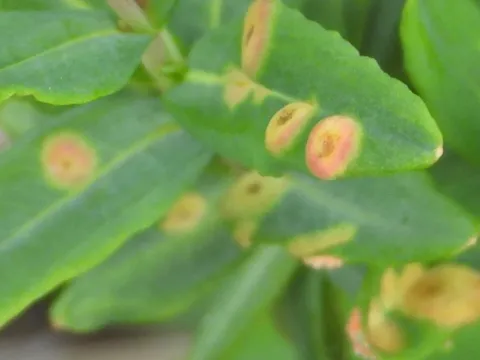
St. John's wort rust
Uromyces triquetrus
The causal agent of this disease is a specialized rust fungus known as Uromyces triquetrus. It is an obligate parasite that completes its life cycle primarily on plants belonging to the Hypericum genus.
What the section contains
St. John's wort rust
The fungus produces various types of spores, with urediniospores playing a key role in spreading the infection rapidly across the field during the growing season. These spores are easily disseminated by wind.
Uromyces triquetrus penetrates the host plant tissues, establishing itself within the intercellular spaces. It feeds through specialized structures called haustoria, which draw nutrients directly from the plant cells.
The fungus can overwinter in the roots of perennial plants as mycelium or as teliospores in leaf litter and soil, ensuring a persistent threat in following years.
Understanding the biology of this rust is crucial, as its specialized nature means that infection cycles are tightly synchronized with the development of the host plant.
The first signs of infection usually appear as small, yellowish or light brown spots on the leaves. As the disease advances, these spots develop into raised pustules.
These pustules, or sori, are characterized by a rusty brown, powdery substance that consists of thousands of spores. If left unchecked, the pustules can spread to stems and flower buds.
Infected leaves often turn yellow, curl up, and prematurely drop from the plant. This loss of foliage significantly reduces the plant's ability to photosynthesize effectively.
Under humid conditions, the area around the rust pustules may show chlorosis (yellowing). In severe cases, the affected leaf tissue dies, leading to necrosis and stunted plant growth.
- Yellowish spotting on leaves
- Rusty powdery pustules
- Leaf curling and premature drop
- Stunted growth of the plant
The development of Uromyces triquetrus is highly dependent on environmental conditions, specifically high humidity and prolonged moisture on leaf surfaces, such as dew or rain.
Optimal temperatures for spore germination typically range between 15°C and 22°C. These mild conditions are often prevalent in spring and autumn, leading to outbreaks.
Poor airflow, caused by dense planting or weeds, allows moisture to remain on the foliage for longer periods, providing the perfect environment for infection to take hold.
Shaded areas with poor sunlight exposure also increase the plant's susceptibility to rust by weakening its natural defenses.
Windy conditions contribute to the rapid spread of spores from infected plants to healthy ones, potentially leading to widespread outbreaks across entire fields.
St. John's wort rust poses a significant threat to agricultural producers of medicinal herbs. The disease interferes with the accumulation of secondary metabolites, reducing the quality of the raw material.
The infection forces the plant to divert energy toward defense rather than growth, leading to reduced overall yield and biomass.
For ornamental Hypericum varieties, the aesthetic damage is severe. The presence of rust pustules and dead leaves makes the plants unsuitable for commercial landscaping or nursery sales.
Consistent annual infection can eventually lead to the decline and death of perennial plants, as their energy reserves become depleted over time.
Economic losses are compounded by the costs of applying fungicides and the potential need to destroy heavily infested batches of plants.
Crop rotation is the most essential cultural practice. Avoiding Hypericum cultivation on the same plot for at least three to four years helps break the fungus's life cycle.
Sanitation is equally critical. All infected plant debris should be removed from the field at the end of the season and destroyed to minimize the overwintering inoculum.
Proper plant spacing ensures good air circulation, which helps foliage dry quickly after rainfall, making it difficult for the fungus to establish itself.
Fungicide application should be performed as a preventative measure or at the very first sign of symptoms, strictly following regulatory guidelines for medicinal crops.
Selecting resistant cultivars or species is the most sustainable approach to long-term control, significantly reducing the need for chemical intervention.