
Stagonospora blight of flax
Stagonospora neglecta
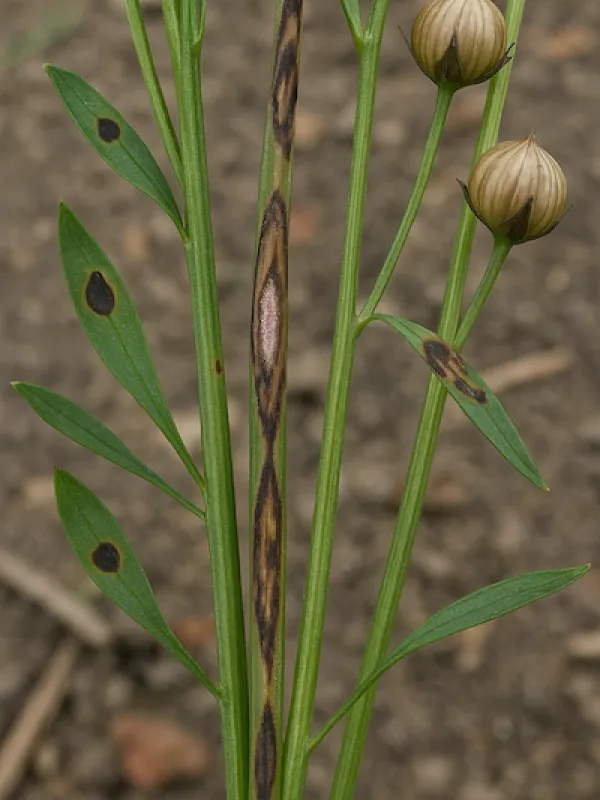
Description
Symptoms
Initial symptoms include small, light-brown spots on the lower leaves. As the disease progresses, these lesions expand and become irregular, often turning dark brown with a distinct lighter center.
On stems, the lesions are elongated and may lead to girdling. A characteristic sign of the infection is the presence of tiny, black, dot-like pycnidia appearing within the necrotic areas of the lesions.
Infected leaves usually yellow prematurely and drop, resulting in significant defoliation. This reduction in the green surface area severely impacts the plant's ability to undergo photosynthesis and fill the seeds.
When the capsules are infected, they often become discolored and shriveled. The seeds inside may either fail to develop or become contaminated with fungal mycelium, reducing overall seed viability.
In humid conditions, a greyish, spore-bearing mass may be visible on the surface of the lesions. Severe infection leads to lodging, as the stems lose their structural integrity and strength.
Pathogen
The disease is caused by the fungus Stagonospora neglecta (synonym Septoria linicola), which is a major pathogen of flax crops. It specifically attacks the stems, leaves, and capsules of both fiber and oilseed flax varieties.
The pathogen primarily overwinters in infested crop residues remaining on the soil surface. It can also be transmitted through infected seeds, making high-quality, disease-free seed selection critical for prevention.
During the growing season, the fungus produces pycnidia, which contain spores. Under moist conditions, these spores are released and dispersed by splashing rain or wind to healthy flax tissues.
Stagonospora neglecta thrives in the plant's vascular tissues and epidermis. It has a relatively rapid infection cycle, allowing it to spread quickly through a dense canopy if environmental conditions remain favorable.
The biology of this fungus is closely linked to the moisture levels surrounding the plant, and it can remain dormant in the soil for several years waiting for a susceptible host to be planted.
Conditions for development
The development of Stagonospora blight is heavily dependent on prolonged periods of high humidity and rainfall. The disease is most common in seasons characterized by frequent showers and dew.
Optimal temperatures for spore germination and infection range from 18°C to 22°C. High humidity levels at these temperatures significantly accelerate the development of the pathogen.
Dense crop stands create a stagnant microclimate that retains moisture around the base of the stems, promoting the spread of the fungus. Proper spacing is essential to ensure adequate air circulation.
Poor crop rotation practices play a major role in disease development. Growing flax in the same field too frequently leads to a massive accumulation of fungal inoculum in the soil.
Nitrogen-rich fertilizers can encourage lush, succulent growth, which is often more susceptible to fungal entry and colonization, potentially increasing the severity of an outbreak.
Why it matters
The blight significantly degrades the quality of flax fiber, making it brittle and reducing its market value. In extreme cases, total fiber yield can be reduced by nearly one-third.
In oilseed flax, the disease negatively impacts both seed weight and oil content. Infected crops often produce shriveled, low-vigor seeds that are unsuitable for future planting.
Lodging caused by stem infection complicates mechanical harvesting, leading to increased equipment costs and direct yield loss due to missed plants during the cutting process.
The presence of the disease creates a weakened crop that is more prone to secondary infections from other pathogens, further complicating management efforts throughout the growing season.
Ultimately, the economic burden includes not only yield losses but also the increased necessity for prophylactic fungicide applications and the costs associated with seed cleaning.
Protection
Effective management begins with strict crop rotation, ensuring a gap of at least five years between flax crops to allow the fungal inoculum in the soil to naturally decline.
Using certified, disease-free seed is paramount. Seed treatments with appropriate fungicides are highly effective in eliminating seed-borne infections and protecting seedlings during emergence.
Cultivating resistant or tolerant flax varieties remains the cornerstone of modern disease management strategies. Growers should select seeds that have been vetted for local regional pathogens.
When conditions become highly favorable for the fungus, systemic fungicide applications are necessary. These should be applied at the early stages of disease appearance to prevent large-scale spread.
- Deep plowing to bury crop residues deep in the soil profile.
- Maintaining optimal plant density to improve canopy aeration.
- Balanced application of phosphorus and potassium to strengthen plant resistance.
- Prompt harvesting to prevent late-season infection of capsules.
Discussion
No discussions yet — be the first.