
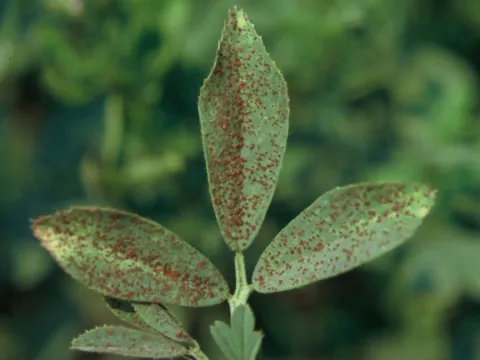
Alfalfa rust
Uromyces striatus
Alfalfa rust is caused by the obligate fungal pathogen Uromyces striatus, which belongs to the Uredinales order. This fungus completes its life cycle on alfalfa and occasionally on alternate hosts within the Euphorbia genus.
What the section contains
Alfalfa rust
The fungus produces various types of spores, with urediniospores being the primary drivers of secondary infections during the growing season. These spores are easily dispersed by wind and splashing rain to infect healthy foliage.
Overwintering occurs primarily through teliospores, which remain viable on crop residues. Additionally, the fungus may persist as mycelium in the crowns of perennial alfalfa plants, allowing it to re-infect new growth in the spring.
The pathogen is highly specialized and thrives in environments where alfalfa is grown continuously. It targets all aerial organs, utilizing the nutrients of the host plant for its own development and spore production.
Biological success of this pathogen is largely due to its ability to synchronize its development with the growth stages of alfalfa, ensuring a constant supply of host tissue for infection.
The infection typically begins on the underside of lower leaves, manifesting as small, chlorotic flecks. These spots soon erupt to form pustules containing reddish-brown urediniospores.
As the disease progresses, these pustules can spread to the upper leaves and stems. The presence of numerous pustules causes the foliage to lose its healthy green color, leading to premature yellowing and leaf senescence.
Severely infected plants often show curling and drying of the leaflets. When brushed against, infected plants may release a cloud of rusty-colored dust, consisting of millions of microscopic spores.
Towards the end of the season, the reddish pustules may transition to a dark brown or black color, signaling the formation of teliospores, which are the hardy survival stage of the fungus.
Early diagnosis is crucial, as the disease can rapidly move from the lower canopy to the entire plant structure, significantly reducing the vigor of the affected alfalfa crop.
The development of Uromyces striatus is heavily dependent on moisture and moderate temperatures. The fungus thrives when humidity levels are high, often following periods of frequent rain or prolonged dew.
Optimal temperatures for spore germination and infection typically range between 20°C and 25°C. In such conditions, the incubation period can be as short as one week, allowing for rapid disease development.
Poor field management, such as excessive canopy density, reduces airflow and creates a stagnant microclimate. This high-humidity environment at the soil level acts as a catalyst for severe rust outbreaks.
Environmental stress, such as drought or nutrient imbalances, can weaken the plant's natural defense systems, making the crop more susceptible to fungal colonization.
Long-distance dispersal is facilitated by wind currents, which carry spores between fields and regions, often making local containment challenging once an infection is established.
The primary economic impact of alfalfa rust is the loss of both forage yield and nutritional quality. Rust-infected leaves tend to shatter and drop off during harvest, resulting in lower dry matter yields.
Because leaves contain the majority of the plant’s crude protein and vitamins, their loss significantly lowers the feeding value of the hay. This results in poorer weight gain or milk production in livestock.
Photosynthetic capacity is severely compromised in infected plants, which slows down the rate of regrowth after mowing. This can lead to a reduction in the number of harvests possible in a single season.
Chronic infection weakens the plant, reducing its ability to store carbohydrates in the crown and roots. This diminishes winter hardiness and leads to thinner stands in subsequent years.
In severe cases of epidemic outbreaks, losses in leaf tissue can exceed 30%, which directly impacts the profitability and sustainability of forage production operations.
The most effective strategy is the use of resistant alfalfa cultivars. Genetic resistance provides a robust defense against the pathogen and is the cornerstone of integrated disease management.
Strategic harvesting is a critical management tool. Cutting the alfalfa early when rust is detected can remove the infected biomass, thereby reducing the spore load and interrupting the infection cycle.
Maintaining balanced soil fertility, particularly adequate potassium levels, helps alfalfa maintain its vigor and inherent resistance to fungal diseases, facilitating quicker recovery after cutting.
Weed management is also important; identifying and controlling alternate hosts or related weeds that can harbor the fungus helps decrease the initial inoculum in the field vicinity.
- Monitor fields regularly, especially during warm and humid periods.
- Avoid over-seeding to ensure proper ventilation and canopy airflow.
- Implement proper crop rotation to break the cycle of pathogen buildup in the soil.
- Apply fungicides only when necessary and feasible, adhering strictly to local regulations.