
Alfalfa anthracnose
Colletotrichum trifolii
Description
Symptoms
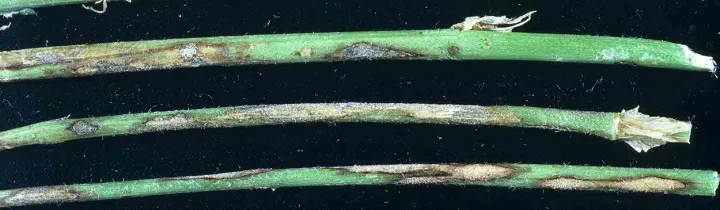
The primary symptom is the development of sunken, diamond-shaped lesions on the lower stems of the plant. These lesions start as light spots and gradually darken in color.
A distinctive feature is the presence of small, black acervuli within the lesions. These appear as tiny dark dots and are often arranged in concentric rings or scattered patterns.
Severe infections frequently cause the tips of the stems to wilt and curl, a condition commonly referred to as a shepherd's crook, indicating blocked vascular flow.
The crown of the plant may also be affected, leading to crown rot, which results in the eventual death of the entire alfalfa plant.
- Sunken stem lesions.
- Presence of black acervuli (dots).
- Shepherd's crook symptom on shoots.
- Crown rot and plant death.
- Premature leaf drop.
Pathogen
The causal agent of this disease is the fungus Colletotrichum trifolii, which belongs to the order Melanconiales. This pathogen is known for its ability to persist in plant debris and soil for several years.
The fungus produces asexual fruiting bodies known as acervuli. These structures are characterized by dark, stiff hairs called setae, which are diagnostic indicators when observed under a microscope.
The fungus colonizes the epidermis and vascular tissue of alfalfa plants, disrupting the transport of water and nutrients. Its survival depends on favorable moisture conditions for spore release.
Spore dispersal occurs primarily through rain splashing, wind, and the movement of contaminated harvesting machinery throughout the alfalfa field.
While primarily affecting alfalfa, the pathogen can infect various clover species, creating a continuous cycle of infection if proper crop rotation is not practiced.
Conditions for development
Anthracnose development is strongly favored by warm, humid weather. The fungus thrives at temperatures ranging from 22°C to 28°C (72°F to 82°F).
High relative humidity and frequent rainfall provide the necessary moisture for the germination of spores and the infection of healthy plant tissue.
Dense canopies, which restrict airflow, create a humid microclimate that allows the disease to spread rapidly across the field during the growing season.
Mechanical damage from insects or agricultural equipment serves as an entry point for the fungal spores, accelerating the colonization process.
Periods of prolonged dry weather can slow down the progression of the disease, but the pathogen remains viable, waiting for subsequent moisture to resume activity.
Why it matters
The primary damage caused by alfalfa anthracnose is a significant reduction in biomass yield, as the disease destroys stem tissues and limits plant growth.
The disease reduces the nutritional value of the forage, making it less palatable for livestock and potentially risky if secondary metabolites are produced.
Persistent infection leads to thinning stands, which forces growers to terminate the alfalfa crop prematurely, leading to significant economic losses.
The susceptibility of weakened plants to winter injury increases significantly, leading to poor crop survival over the cold months and reduced stand longevity.
Economic impacts include not only direct yield loss but also the increased costs associated with field renovation and the potential need for fungicide applications.
Protection
The most effective management strategy is the use of resistant alfalfa varieties. Breeding for resistance to Colletotrichum trifolii remains the primary defense for growers.
Implementing a proper crop rotation program, where alfalfa is rotated with non-host crops for at least 3 years, helps reduce the population of fungal spores in the soil.
Sanitation practices, such as cleaning harvesting equipment between fields, are essential to prevent the mechanical transfer of the pathogen from infected areas to healthy ones.
Maintaining proper field hygiene and avoiding low cutting heights can prevent damage to the crown, which serves as a common infection site for the fungus.
In cases of severe infestation, systemic fungicides may be used, although they are generally considered only for high-value seed production rather than commodity hay fields.
Discussion
No discussions yet — be the first.