
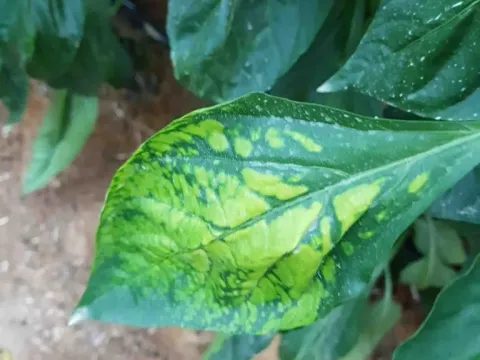
Alfalfa mosaic virus
Alfalfa mosaic
Alfalfa mosaic virus (AMV) is a widespread plant pathogen belonging to the genus Alfalfa mosaic virus, known for affecting a vast number of cultivated and wild plant species. It is a virus with a broad host range, including over 150 species from various families, such as legumes and solanaceous crops.
What the section contains
Alfalfa mosaic virus
The pathogen consists of bacilliform particles of varying lengths. It possesses a high capacity for rapid adaptation and survival in diverse climatic zones, making it a persistent threat to agricultural ecosystems.
The primary reservoir of infection is perennial legumes, particularly alfalfa, where the virus persists in roots and aerial parts for many years. Within plants, the virus spreads systemically, invading all tissues, including reproductive organs.
An important biological feature of this pathogen is its seed transmission. In certain crops, including legumes, the virus can be transmitted through seeds, which ensures the primary infection of new season crops.
Mechanical transmission occurs during contact between healthy plants and infected sap, for instance, during field maintenance or machinery movement; however, insects are the primary natural vectors.
Symptoms of Alfalfa mosaic virus infection vary depending on the plant species, cultivar, age, and environmental conditions. The most typical sign is chlorotic mosaic, characterized by the appearance of yellow spots, stripes, or rings on the leaves.
In many crops, including chickpeas, leaf deformation occurs, often accompanied by vein discoloration or clearing. General stunting is frequently observed, with infected plants appearing dwarfed compared to healthy specimens.
In some cases, the infection leads to tissue necrosis or leaf drop, significantly reducing the photosynthetic surface area. Severe infestation leads to thin crop stands and delayed growth rates.
Flowers of infected plants often show petal variegation, and fruits may develop into malformed, underdeveloped structures, or appear in significantly lower quantities compared to healthy counterparts.
It is important to note that symptoms are often masked by nutrient deficiencies or other physiological disorders, making accurate diagnosis possible only through laboratory methods such as ELISA or PCR.
The spread of Alfalfa mosaic virus in field conditions occurs mainly through aphids, which act as non-persistent vectors. This means the aphid acquires the virus during short feeding bursts on an infected plant and quickly transmits it to a healthy one upon probing.
Warm and dry weather conditions favor the development of epidemics as they promote the high activity of insect vectors. During periods of massive aphid flights, the risk of crop infection increases exponentially.
The presence of perennial legumes infected with AMV in close proximity to fields is a critical risk factor. Windy weather facilitates the migration of aphids from infection sources to young shoots of sensitive crops, such as chickpeas or beans.
Intra-field disease dynamics depend largely on the vector population density. The more insects detected in the field, the faster the horizontal spread of the pathogen from one infected plant to its neighbors.
Agronomic factors, such as poor weed management, which can serve as alternative viral reservoirs, also significantly accelerate disease development and its impact on the final yield.
The harmfulness of Alfalfa mosaic virus lies in the sharp decline of product quality and quantitative yield parameters. Diseased plants struggle to absorb nutrients and water, making them susceptible to environmental stress factors.
For crops like chickpeas, early-stage infection can result in complete crop failure due to the plant's inability to form viable pods. At later stages, seed weight decreases, and overall seed quality deteriorates.
Economic losses arise from both direct yield reduction and decreased market value due to seed deformation. In perennial grasses, the virus reduces stand productivity and shortens the productive lifespan of the crop.
The infection has a systematic negative impact on plant metabolism, inhibiting chlorophyll and protein synthesis. This results in lowered immunity, causing the crop to become more susceptible to secondary fungal or bacterial infections.
The scale of harm depends on the timing of infection: the earlier the infection occurs, the more pronounced the pathological processes and the lower the overall productivity of the agro-ecosystem.
Effective protection against Alfalfa mosaic virus is based on a comprehensive approach, as there are no direct chemical agents to treat already infected plants. The focus is primarily on prevention and limiting the spread of vectors.
A key measure is the use of healthy, certified seed material free from viruses. This prevents the introduction of infection into clean fields, which is particularly vital for chickpeas and other grain legumes.
Strict control of aphid populations in crops is necessary. The application of insecticides during periods of peak pest activity helps significantly limit the spread of the virus within the field.
Important agronomic practices include spatial isolation. Sensitive crops should not be planted near fields of perennial alfalfa or other legumes, which serve as constant sources of infection.
- Elimination of weed reservoirs.
- Adherence to optimal planting dates and rates for robust plant development.
- Use of resistant cultivars where available.
- Timely removal and destruction of single infected plants (sanitary roguing).