
Umbellate polypore
Polyporus umbellatus
Description
Symptoms
The primary symptom of an infected tree is a progressive decline in growth rate and a noticeable thinning of the canopy over several seasons.
Leaves may show premature chlorosis or dieback as the root system loses its ability to transport sufficient water and minerals to the crown.
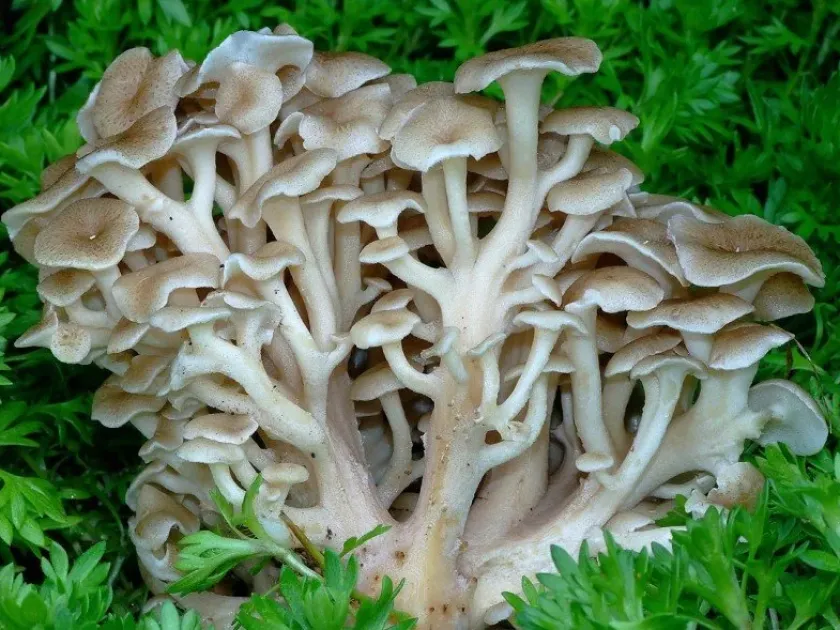
Large, characteristic fruit bodies composed of numerous small caps emerge from the ground near the trunk base as the disease progresses.
The internal structure of the roots and the lower trunk exhibits signs of white rot, where the wood becomes soft, discolored, and fibrous.
In advanced stages, affected trees show signs of structural instability, leading to increased risk of windthrow during storms.
Pathogen
The causal agent is the fungus Polyporus umbellatus (syn. Grifola umbellata), which is known to cause root rot in various broadleaf tree species.
This fungus acts as a parasite that infects the root system, eventually spreading to the base of the trunk where it decomposes the wood tissue.
It survives in the soil through sclerotia, which are dense survival structures that allow the fungus to persist even when a host is not immediately available.
The fungal mycelium spreads through the soil and between roots that are in direct contact, facilitating the expansion of infection within a forest stand.
Reproduction is achieved via basidiocarps, which typically appear at the base of infected trees during the summer months.
Conditions for development
The fungus thrives in fertile, moist forest soils that provide the necessary conditions for mycelial growth and spread.
High-density plantings of preferred hosts like oaks and beeches significantly increase the probability of root-to-root transmission of the pathogen.
Mechanical injuries to the root system, often caused by human activity or soil-dwelling pests, provide easy entry points for fungal spores.
Periods of high rainfall followed by moderate temperatures are ideal for the rapid development of the visible fruit bodies of the polypore.
Lack of proper soil aeration can exacerbate the stress on trees, making them more susceptible to infection by root-decaying fungi.
Why it matters
The most severe impact is the destruction of the tree's root system, which compromises its health and structural integrity, leading to death.
The decay caused by the fungus reduces the timber quality of the wood, resulting in significant economic losses for forestry operations.
Once established, the pathogen creates persistent infection centers that threaten the health of the surrounding forest ecosystem.
Trees affected by root rot become less competitive, which can alter the composition and biodiversity of the woodland over time.
Management is often difficult because the infection is usually identified only after extensive damage has already been done to the root system.
Protection
The most effective strategy for managing this disease is to conduct regular health inspections of forest stands to detect early signs of infection.
Removal of heavily infected trees, including the excavation of major roots, is necessary to reduce the inoculum load in the soil.
Minimizing mechanical damage to the roots of healthy trees during forest maintenance is a critical preventive measure.
Maintaining high forest hygiene and promoting vigorous tree growth through proper silvicultural practices can increase overall resistance.
- Sanitary removal of affected trees.
- Root isolation techniques.
- Monitoring soil moisture levels.
Discussion
No discussions yet — be the first.