
Thyrostroma canker
Thyrostroma compactum
The disease is caused by the fungus Thyrostroma compactum, an ascomycete that primarily attacks the bark of deciduous trees, with the lime tree (Tilia) being its most common host.
What the section contains
Thyrostroma canker
The fungus develops its fruiting bodies, known as acervuli, beneath the periderm of the bark. These structures eventually rupture the outer layer to release infectious conidia into the environment.
As a wound parasite, the pathogen typically enters the host through existing mechanical damage, pruning cuts, or frost cracks, allowing the mycelium to establish itself within the living tissue.
The life cycle is closely regulated by moisture and temperature. During favorable conditions, the pathogen produces vast amounts of spores that are easily disseminated by wind and splashing rain.
The survival of Thyrostroma compactum is facilitated by its ability to remain dormant within the bark tissues, leading to a chronic infection that can persist for many years if left untreated.
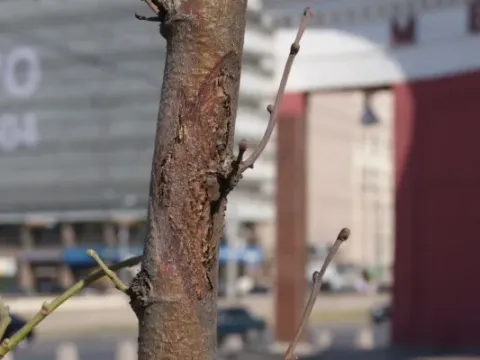
The primary symptom is the appearance of distinct, dark-colored necrotic lesions on the bark of trunks and branches, often characterized by a black, crusty appearance.
As the infection progresses, the affected bark becomes brittle and sunken. Small, velvety, grey-to-black fungal cushions develop in these necrotic areas, marking the points of spore production.
Foliage symptoms include chlorosis and early leaf drop on infected branches. As the pathogen girdles the stem or branch, the distal parts of the tree begin to dry out and die back.
In older trees, the symptoms may be localized to specific branches, but in vulnerable young specimens, the fungus can quickly spread to the main trunk, endangering the entire tree.
The bark necrosis often expands over several seasons, creating a recurring cycle of branch dieback that severely compromises the tree's architecture and health.
Thyrostroma canker thrives on trees subjected to urban environmental stress, such as air pollution, soil compaction, and limited water availability, which weaken the host's natural defenses.
High relative humidity, frequent rainfall, and prolonged morning mists are essential for the germination and spread of Thyrostroma compactum conidia.
Any mechanical injury to the bark acts as an entry point for the fungus. Improper pruning practices, such as leaving jagged cuts, significantly increase the risk of colonization.
Moderate temperatures ranging from +15 to +22 degrees Celsius are optimal for the pathogen's growth, making late spring and autumn critical periods for infection and spread.
Poorly ventilated planting sites with high stand density contribute to local humidity levels that favor fungal development, facilitating the rapid transfer of spores between healthy and infected trees.
The economic and aesthetic impact is significant, particularly in landscape management and nursery production, where damaged trees lose their ornamental value and structural integrity.
Chronic infection disrupts the tree's vascular system, leading to nutrient deficiency and eventual branch mortality, which reduces the tree's photosynthetic capacity over time.
The potential for falling deadwood poses a safety risk in public areas, necessitating costly removal of diseased trees and regular maintenance to avoid accidents.
Severely infected trees show reduced winter hardiness, often succumbing to secondary frost damage or opportunistic pests that exploit the tree's weakened state.
If not managed, the disease acts as a persistent reservoir, allowing for the widespread infection of adjacent trees, which can eventually lead to the loss of entire stands or avenues.
Rigorous sanitary pruning is the most effective management strategy. All infected branches must be removed, cutting back to healthy, non-discolored wood to ensure the removal of the mycelium.
Strict sanitation protocols must be followed: all pruned material must be destroyed immediately, ideally by burning or off-site disposal, to prevent further spore production.
Disinfecting pruning tools between each cut with alcohol or a specialized disinfectant is mandatory to prevent the mechanical transmission of the fungus from infected to healthy stems.
The application of copper-based fungicides during the early spring, before bud break, can provide a protective layer and reduce the overall infection pressure within the stand.
Promoting tree health through appropriate irrigation, fertilization, and protection from physical trauma is essential to boost natural resistance and facilitate faster wound closure.