
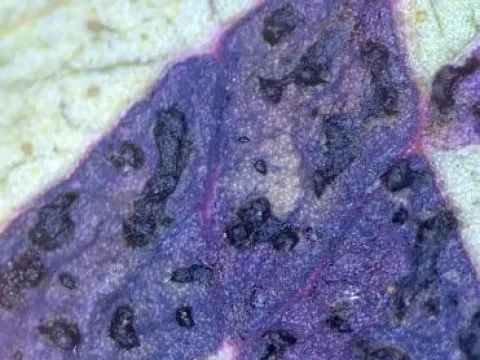
Eucalyptus Teratosphaeria leaf blight
Teratosphaeria destructans
The causal agent of this severe disease is the ascomycetous fungus Teratosphaeria destructans. It is a highly aggressive pathogen that primarily targets various Eucalyptus species, leading to significant foliage loss and growth suppression.
What the section contains
Eucalyptus Teratosphaeria leaf blight
The fungus is known for its ability to quickly establish itself in suitable climates. It colonizes leaf tissues and disrupts the normal physiological processes of the host tree through rapid necrotrophic colonization.
The pathogen completes its cycle by producing spores on the surface of infected leaves. These spores are then dispersed by wind and rain, ensuring the continuation of the disease cycle throughout the growing season.
It can persist in leaf litter and on infected twigs for extended periods, making the eradication of the fungus extremely difficult in existing plantations. Its survival strategy makes it a persistent threat.
Genetic studies have shown that Teratosphaeria destructans has diverse populations, which complicates the development of universally resistant tree clones for commercial timber production.
Initial symptoms include small chlorotic spots on the leaves, which rapidly develop into irregular, necrotic lesions. These spots eventually turn dark brown or greyish as the fungus continues to feed on the tissue.
A characteristic sign of the disease is the development of sporulating structures on the underside of the leaves. These structures appear as small, dense, dark-colored pads or pustules easily visible under magnification.
The progression of the blight leads to premature leaf abscission. In severe cases, the tree crown becomes thin and sparse, significantly reducing the tree's photosynthetic capacity and overall health.
Young sprouts and shoots are particularly sensitive and may become twisted or deformed. If the infestation is left unmanaged, the tree may suffer from dieback, starting from the terminal buds downwards.
- Dark necrotic spots on leaves.
- Fungal fruiting bodies on the lower leaf surface.
- Premature leaf drop.
- Stunted shoot development.
- Dieback symptoms in severe infections.
The development of the disease is heavily dependent on moisture. High relative humidity and frequent rainfall are the most critical factors that trigger spore germination and infection processes.
Warm temperatures, specifically within the range of 20°C to 28°C, provide the ideal environment for the rapid growth of the fungus. This makes the disease particularly virulent during tropical wet seasons.
Plantation density significantly influences disease severity. Dense plantings restrict air movement and increase the duration of leaf wetness, creating a localized humid microclimate favorable for fungal spread.
Dispersal is largely facilitated by splash-dispersal during rain showers and wind currents. Furthermore, contaminated tools and human activity can inadvertently introduce the pathogen into healthy areas.
Stress factors, such as nutrient deficiencies, improper soil drainage, or concurrent pest attacks, make eucalyptus trees more susceptible to colonization by Teratosphaeria destructans.
The economic impact of this disease on the eucalyptus industry is substantial. It causes significant growth loss, which directly translates to lower timber volume and reduced profitability for plantation owners.
In nurseries, the impact is often catastrophic, as the pathogen can cause high mortality rates among seedlings. This forces nurseries to discard large batches of stock, resulting in significant financial losses.
Long-term infestation weakens the vitality of the trees, making them more susceptible to other secondary pests and pathogens. This leads to a gradual decline in the quality and lifespan of the plantation.
The costs associated with chemical disease management and the need for frequent monitoring further inflate the operational expenses for forest managers and nursery operators.
Widespread outbreaks may necessitate expensive sanitation measures, such as clear-felling and site treatment, which can disrupt the entire supply chain of wood production.
The most effective strategy for long-term control is the breeding and planting of resistant eucalyptus genotypes. Genetic improvement is considered the most sustainable method for managing this blight.
Proper silvicultural practices, including optimal spacing to ensure adequate aeration of the canopy, are essential. This reduces leaf moisture and helps prevent the initial infection from escalating.
Sanitation practices, such as the removal and destruction of infected leaf litter and debris, are crucial to reducing the primary inoculum source in the field, especially in young plantations.
Fungicide application is generally reserved for nursery settings. Using systemic or copper-based fungicides can help protect valuable seedlings from severe infection during critical growth phases.
Rigorous quarantine and monitoring protocols should be in place to prevent the spread of infected materials across regions. Early detection of symptoms allows for localized management and containment.