
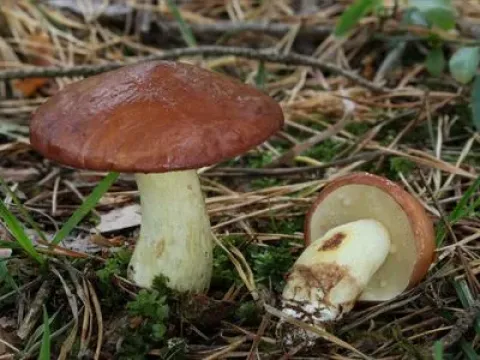
Granulated bolete
Suillus granulatus
The granulated bolete (Suillus granulatus) is a basidiomycete fungus that is not a plant pathogen, but rather a vital mycorrhizal partner for pine trees.
What the section contains
Granulated bolete
It forms an obligate symbiotic relationship with roots of conifers, known as ectomycorrhiza, which is essential for the healthy growth of pine forests.
The fungus provides the tree with essential minerals, particularly phosphorus and nitrogen, which it extracts from the soil organic matter.
In return, the tree supplies the fungus with carbohydrates, which the tree produces through the process of photosynthesis.
Agronomists and foresters classify this organism as a beneficial soil component that enhances the vigor of pine plantations rather than a cause of disease.
The most visible sign of the presence of this fungus is the formation of fruiting bodies under pine trees during late summer and autumn.
These fruiting bodies have a sticky, yellow-brown cap and a stem covered with characteristic glandular dots that darken with age.
Below the soil surface, the fungus forms a network of hyphae around the roots, known as the Hartig net, which is a hallmark of successful mycorrhizal colonization.
Conifers colonized by Suillus granulatus typically show improved foliage color and greater resilience against environmental stressors.
The absence of mushrooms on the surface does not mean the fungus is absent, as the mycelium remains active in the soil substrate throughout the year.
The granulated bolete thrives in sunny pine forests, woodland edges, and young tree nurseries where soil aeration is sufficient.
Optimal growth conditions for the fungus include moderate humidity and ambient temperatures ranging from 15 to 20 degrees Celsius.
It has a strong preference for sandy or loamy soils, which are typical environments for the healthy development of pine root systems.
Sporadic rainfall is crucial for the initiation of fruiting bodies, as the fungus requires a consistent moisture supply to complete its reproductive cycle.
Preservation of the natural soil structure is essential for the persistence of the mycelium, which can survive for decades if the host tree remains healthy.
The granulated bolete poses no harm to plants; in fact, its presence is a prerequisite for the optimal development of many coniferous species.
Potential risks are limited to human consumption, as the fruiting bodies can absorb heavy metals if they grow in highly polluted urban areas or near busy highways.
There is no record of this fungus causing damage or disease to trees, meaning no eradication measures are needed in forest management.
Physical disturbance of the forest floor by heavy machinery can damage the mycelium, which indirectly reduces the vitality of the associated pine trees.
Thus, the fungus should be protected as an integral part of a healthy forest ecosystem, as it contributes significantly to biological productivity.
No protection measures are required against Suillus granulatus, as it is a beneficial organism that supports plant life.
Standard forest management practices should focus on maintaining natural soil biological activity rather than using chemicals that might kill mycorrhizal fungi.
In forestry practices, one should avoid the over-application of synthetic fertilizers, as they can inhibit the development of mycorrhizal networks.
Encouraging the presence of natural mycorrhizal fungi is a recommended strategy for establishing robust and healthy forest plantations.
- Limit the use of fungicides in nurseries.
- Protect the integrity of the soil and litter layer.
- Monitor soil health to ensure beneficial fungi thrive.
- Promote biodiversity to support natural symbiotic relationships.