
Grape anthracnose
Elsinoë necatrix
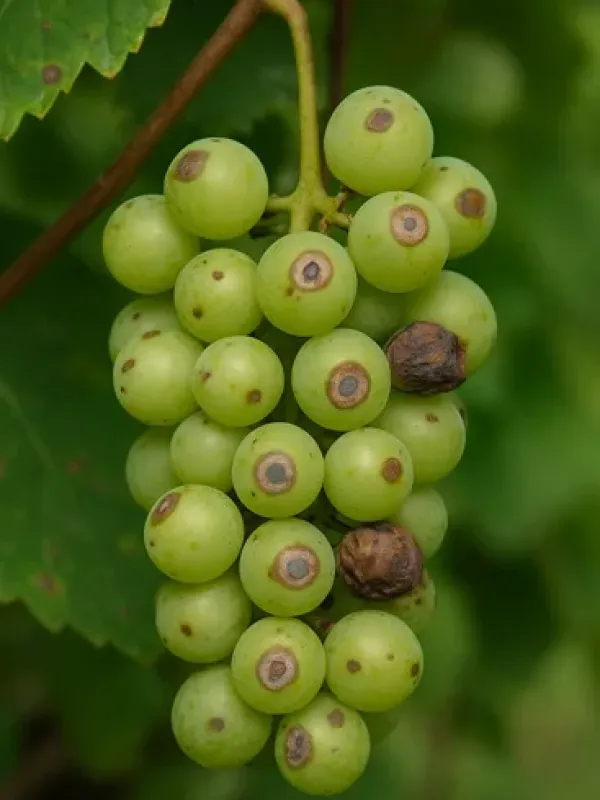
Description
Symptoms
Initial symptoms include the appearance of small, circular, reddish-brown spots on young leaves. As the disease progresses, the centers of these spots turn light gray and may drop out, leaving a shot-hole appearance.
On green shoots, the fungus causes sunken, dark brown, or black lesions. These lesions can merge over time, eventually causing the shoot to crack or even break off during heavy winds or as the fruit load increases.
Berries are susceptible to infection at all stages of development. Infected grapes display sunken, circular spots with a dark border, often referred to as "bird's-eye" rot symptoms.
Tendrils and rachises of the grape clusters also show severe infection signs, often turning brown, curling, and drying out, which ultimately destroys the marketability of the entire cluster.
- Reddish-brown spots on leaves.
- Sunken lesions on shoots and stems.
- Deformed "bird's-eye" spots on grapes.
- Premature shriveling of clusters.
- Brittle, cracked canes.
Pathogen
The causal agent of grape anthracnose is the ascomycete fungus Elsinoë necatrix. This pathogen is highly destructive and targets all green, actively growing tissues of the vine, including leaves, stems, and fruits.
The fungus overwinters as mycelium within the lesions of infected woody canes. In the spring, when temperatures rise and humidity is high, the fungus produces conidia that are splashed onto new growth by raindrops.
Once the infection is established, the pathogen continues to produce spores throughout the growing season. This ensures multiple cycles of infection, making the disease highly contagious in humid conditions.
The mycelium colonizes the host tissue by penetrating epidermal cells. It disrupts the plant's vascular system, leading to localized necrosis and the formation of characteristic visible lesions.
As a pathogen, Elsinoë necatrix shows high persistence. It can survive in the vineyard for years if diseased wood is not systematically removed and destroyed.
Conditions for development
The development of grape anthracnose is heavily dependent on moisture. Frequent rain events and high humidity are the primary environmental triggers for spore dispersal and germination.
Optimal growth for the fungus occurs in temperatures between +20°C and +30°C. Within this range, the pathogen's incubation period is significantly shortened, accelerating the disease spread.
Poorly managed, dense vine canopies that lack airflow trap humidity, creating a microclimate perfect for Elsinoë necatrix to flourish even during shorter rainy spells.
Mechanical damage from hail or strong winds provides direct entry points for the fungus, leading to localized epidemics within the vineyard following storm events.
Inadequate sanitation practices, specifically leaving pruned infected wood on the ground, provide a permanent reservoir for the fungus to reinfect the vineyard each spring.
Why it matters
The primary economic impact of anthracnose is the direct loss of fruit yield. Infected clusters become unsightly and bitter, rendering them useless for winemaking or fresh market consumption.
The disease causes significant structural damage to the vine. Deep stem lesions weaken the wood, leading to reduced vigor and the potential death of individual shoots or canes.
Anthracnose-affected vines suffer from premature leaf drop, which severely inhibits photosynthesis. This prevents the vine from accumulating enough sugars and energy for winter hardening.
Repeated yearly infections drain the vine's resources, causing overall decline and reduced fruitfulness. Over time, an infected vineyard becomes increasingly unproductive and difficult to manage.
In severe cases, if not controlled, the disease can compromise the vine's health to the point where it becomes highly susceptible to other secondary pathogens and winter damage.
Protection
Strict sanitation is the foundation of management. All infected canes must be pruned out during the dormant season and removed from the vineyard to eliminate the primary inoculum source.
Cultural practices such as training and canopy management are vital. By ensuring open canopy structure and adequate airflow, growers can significantly reduce leaf wetness duration.
Chemical control usually involves copper-based sprays applied during the dormant or early bud-break stage to protect emerging tissues from initial infection.
During the growing season, if conditions are wet, growers must use systemic fungicides to stop the further spread of the pathogen. Rotating chemical classes is necessary to prevent fungicide resistance.
Selecting disease-resistant cultivars is the most effective long-term strategy for minimizing the need for chemical intervention and ensuring a sustainable vineyard operation.
Discussion
No discussions yet — be the first.