
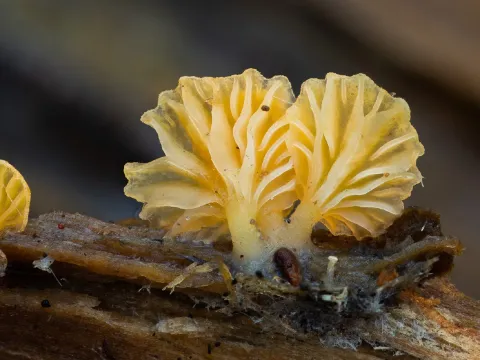
Stypella
Stypella
The genus Stypella consists of basidiomycetous fungi, primarily recognized as saprotrophs living on decaying wood. In a phytopathological context, they act as opportunistic pathogens that target weakened or injured plant tissues.
What the section contains
Stypella
These fungi belong to the order Auriculariales and are characterized by the production of gelatinous, often translucent or whitish, fruiting bodies. Their biological strategy is to decompose complex organic matter using secreted extracellular enzymes.
The infection process typically begins when basidiospores land on damaged bark or necrotic plant tissues. Given the right environmental triggers, the mycelium penetrates the bark and begins its destructive cycle.
Stypella is not a highly specialized parasite, meaning its activity is largely opportunistic. It thrives when the host plant is stressed due to environmental factors, poor nutrition, or previous mechanical injury.
The fungus survives through periods of environmental stress in the form of a dormant mycelium within the wood, waiting for favorable conditions, such as high moisture levels, to resume its development.
The presence of Stypella is most easily identified by the appearance of small, jelly-like or waxy eruptions on the surface of tree bark. These growths can be clear, white, or pale yellow in color.
Affected tissues beneath these fruiting bodies often show signs of decay, appearing dark, soft, or mushy. The bark may begin to peel away from the underlying wood as the fungus degrades the structural components.
Over time, the affected area becomes necrotic. In severe cases, the damage to the conductive tissues of the stem or branch leads to wilting and death of the distal parts of the plant.
One diagnostic sign is the specific appearance of the wood surface, which becomes increasingly fragile and prone to cracking, often accompanied by a mild earthy or decaying smell.
- Gelatinous fruiting bodies on bark.
- Soft, darkened areas of necrotic bark.
- Loss of structural integrity in woody tissues.
- Premature leaf drop or branch dieback.
Fungi of the genus Stypella are strictly dependent on high humidity. Prolonged rainy weather, fog, or morning dew provides the necessary moisture for the activation of their fruiting bodies.
Stagnant air, common in dense and poorly pruned orchards, significantly increases the risk of Stypella outbreaks. Poor ventilation maintains the high surface moisture required for spore germination.
Mechanical injuries are primary entry points. Damage from winter freezing, heavy machinery, or improper pruning creates open wounds that are highly susceptible to colonization by these fungi.
Temperatures between 15°C and 22°C (59°F - 72°F) are generally optimal for the growth and spread of the mycelium, making spring and autumn the most dangerous times for infection.
The presence of significant woody debris on the ground provides a continuous source of spores, which can be easily transported to susceptible living trees by wind or rainwater splash.
The primary harm caused by Stypella is the accelerated decomposition of woody tissues, which leads to the weakening of branches and the tree as a whole. This significantly shortens the lifespan of the host.
The obstruction of nutrient flow caused by the destruction of the phloem and xylem results in stunted growth and a sharp decline in crop yield, as the plant cannot effectively support its fruit development.
As the structural integrity of the branches diminishes, the tree becomes highly vulnerable to mechanical breakage during strong winds or under the weight of a harvest.
Stypella serves as an indicator of an unhealthy orchard environment. Its persistent presence suggests poor aeration and sanitation, which often leads to secondary infections by more aggressive pathogens.
In commercial settings, the disease causes significant economic loss due to the necessity of removing entire sections of the canopy and the increased labor costs associated with sanitation efforts.
Rigorous sanitation is the cornerstone of control. All symptomatic branches and bark sections should be pruned and removed from the site to minimize the spore load.
After pruning, all open cuts should be treated immediately with a suitable fungicide or wound-sealing paste to prevent the ingress of pathogens like Stypella.
Improving orchard ventilation through systematic thinning and proper canopy management reduces the humidity levels, making the environment less favorable for the fungus.
Early spring applications of copper-based fungicides can act as a protective barrier, killing dormant spores on the bark and preventing initial spring infections.
Ensuring trees are well-watered and receive adequate nutrition boosts their natural defense mechanisms, allowing for faster wound closure and better resistance against opportunistic pathogens.