
Raveneliaceae rust fungi
Raveneliaceae
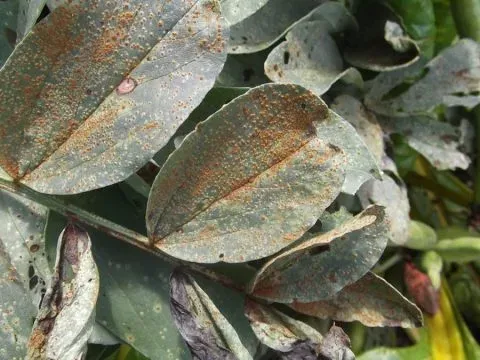
The primary symptom of infection by Raveneliaceae fungi is the appearance of characteristic pustules on plant tissues. These structures commonly emerge on the undersides of leaves, petioles, and stems, indicating an active fungal colonization.
What the section contains
Raveneliaceae rust fungi
As the pustules mature, they rupture the plant epidermis, releasing a dusty mass of spores. These spores typically exhibit shades of brown, rust-red, or dark chestnut, covering the infected organs in a visible layer.
A distinctive feature of the Raveneliaceae family is the formation of complex, multicellular teliospores. These spores are often arranged in specific clusters or "heads," sometimes surrounded by sterile cells, which are unique to this group.
Infection zones often show signs of chlorosis, necrosis, and tissue deformation. As the disease progresses, the plant experiences significant physiological stress, leading to premature wilting and abscission of the leaves.
Accurate field identification can be challenging because the symptoms often resemble other types of rust diseases. Laboratory confirmation involving microscopic examination of spore morphology is frequently required for definitive diagnosis.
The pathogens are fungi within the family Raveneliaceae, belonging to the order Pucciniales (rust fungi). These are obligate parasites that depend entirely on the tissues of living host plants to complete their life cycle.
The life cycle of these fungi can be complex and may involve multiple spore stages, including pycniospores, aeciospores, urediniospores, and teliospores, each serving a specific role in the spread and survival of the pathogen.
Teliospores are particularly important for identification and survival. They often possess unique hyaline appendages or cysts that aid in their dispersal and protect them from adverse environmental stressors.
The fungus can persist in the environment on infected plant debris. Teliospores are the most resistant stage, allowing the pathogen to overwinter successfully in the soil or on decaying organic matter.
Infection typically begins when basidiospores land on susceptible plant surfaces. The presence of free moisture, such as dew or rain, is necessary for the spores to germinate and penetrate the host tissue.
The development of Raveneliaceae fungi is heavily influenced by humidity levels. High moisture content in the air and the presence of dew are critical factors that facilitate the germination and infection processes during the growing season.
Temperature is another decisive factor. Most species thrive within a range of 18 to 25 degrees Celsius. Under these conditions, the incubation period is significantly reduced, leading to rapid disease propagation.
Poor agricultural practices, such as high planting density and inadequate field ventilation, create a stagnant microclimate that encourages fungal growth. Excessive nitrogen fertilization can also make plants more susceptible by creating soft, nutrient-rich tissues.
Drought conditions may temporarily slow down the development of the fungus, but the pathogen often survives in a latent state, ready to resume activity as soon as favorable conditions return.
Strategic site selection and weed management are essential to reduce the localized humidity and inoculum pressure that typically favor the spread of rust diseases.
The primary damage caused by Raveneliaceae rust fungi is the significant reduction of the plant's photosynthetic surface. The loss of leaf area severely limits the plant's ability to produce energy, directly impacting growth and yield.
Infected crops often show signs of stunted growth, reduced seed weight, and overall poor quality of harvestable products. The nutritional value of the crop can also be adversely affected due to systemic physiological stress.
In perennial plants, recurrent infections over multiple seasons can lead to a long-term decline in vigor. This exhaustion makes the host more susceptible to secondary infections and environmental stressors like frost.
Epidemic outbreaks can cause substantial yield losses, ranging from 20% to 50% in severe cases. This poses a significant economic threat to agricultural operations and requires proactive intervention.
Furthermore, heavily infected fields serve as a major source of inoculum for neighboring regions, necessitating strictly coordinated phytosanitary measures.
Effective management begins with rigorous crop rotation. By avoiding the cultivation of susceptible hosts in the same field for consecutive years, farmers can break the fungal life cycle and lower the soil inoculum level.
Cultural methods include the deep plowing of crop residues to promote their decomposition, which helps eliminate resting spores. Effective weed control is also necessary to remove alternative hosts that may harbor the pathogen.
The application of systemic fungicides during the early stages of infection is highly effective in stopping the spread. Triazole and strobilurin-based treatments are commonly used due to their therapeutic and protective properties.
Breeding and planting resistant cultivars is the most sustainable long-term solution. Utilizing genetically resistant varieties significantly reduces the reliance on chemical control methods.
Continuous monitoring of field health allows for the early detection of infection foci. Quick action in these small areas can prevent the widespread dispersal of spores and protect the overall health of the crop.