
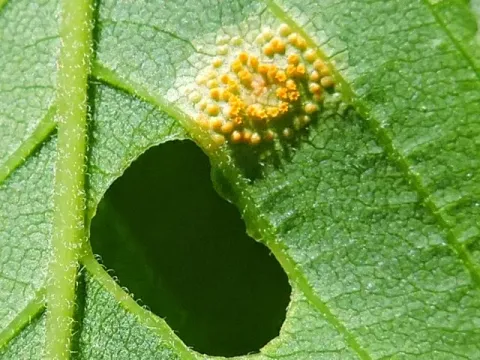
Cereal rust (Puccinia andropogonis)
Puccinia andropogonis
The causative agent of this disease is an obligate fungal parasite classified within the Basidiomycota division, specifically the Puccinia genus. It is known for its heteroecious life cycle, requiring two unrelated host plants to complete all developmental stages.
What the section contains
Cereal rust (Puccinia andropogonis)
The primary infection on cereal crops usually occurs via urediniospores, which are dispersed over long distances by wind currents. These spores infect the host tissue through the stomata, where the fungus develops mycelium and haustoria to extract nutrients.
The full cycle of Puccinia andropogonis often involves an alternate host, such as various legumes, where the aecial and pycnial stages occur. This biological trait allows the fungus to survive and adapt to various agro-climatic zones.
The pathogen persists in the environment by forming teliospores that can survive harsh winter conditions on crop residues or wild grasses. These spores then serve as the primary inoculum for the following growing season.
Due to the high reproductive capacity of the fungus, mass sporulation can lead to rapid spread across large agricultural areas. Its ability to mutate makes it a persistent challenge for plant breeders and farmers worldwide.
Initial symptoms include the appearance of small, rusty-brown pustules on leaves and stems. These pustules contain masses of urediniospores that easily disperse when touched or disturbed by wind.
As the infection progresses, the color of the pustules typically darkens to a deep brown or black, signaling the production of teliospores. This stage often leads to the rupture of the plant epidermis, weakening the structural integrity of the tissue.
Severe infections result in premature yellowing and chlorosis of the leaves. Infected plants appear stunted, and the overall vigor of the crop is significantly reduced compared to healthy plants in the same field.
- Presence of powdery spore masses on leaves and stems.
- Deformation or curling of leaves in the early stages of development.
- Reduced photosynthetic efficiency due to extensive leaf surface damage.
- Premature plant senescence leading to early harvesting issues.
Field diagnosis relies on observing the color, shape, and distribution of the pustules. In complex cases, laboratory analysis is required to distinguish this species from other rust fungi affecting the same cereal hosts.
Optimal disease development occurs at temperatures ranging between 15 and 25 degrees Celsius. These conditions facilitate rapid spore germination and successful penetration of the host's surface tissues.
High relative humidity and the presence of leaf moisture (such as dew or light rain) are essential for the infection process. Frequent damp periods allow the fungus to thrive and multiply at an exponential rate.
Dense crop stands create a humid microclimate that hinders airflow, promoting infection spread. Proper plant spacing is often recommended to reduce the localized humidity levels within the canopy.
The proximity of wild host plants, which serve as reservoirs for the pathogen, can trigger earlier and more severe disease outbreaks. Managing surrounding vegetation is crucial for reducing the initial disease pressure.
Excessive nitrogen application can also exacerbate the severity of the disease by promoting lush, soft foliage that is more susceptible to fungal penetration and colonization.
The damage caused by Puccinia andropogonis is primarily reflected in significant yield reductions. By compromising the foliage, the fungus interferes with carbon fixation and energy translocation to the grain.
Infected plants suffer from increased transpiration and moisture stress, which prevents the grain from filling properly. This results in thin, shriveled kernels that have lower weight and poor commercial quality.
The disease significantly alters the plant's metabolism, shortening the grain-filling period. Consequently, the crop may reach physiological maturity prematurely, leading to lower overall biomass and grain quantity.
Economic losses arise not only from reduced yield but also from the increased costs of fungicide applications and potential loss of grain quality for milling or seed purposes.
Additionally, infected plants may be more vulnerable to secondary invaders, including various opportunistic pathogens and pests that capitalize on the host's weakened defensive state.
The most sustainable strategy for management is the use of resistant cereal varieties. Breeding programs focus on identifying and incorporating genes that provide durable resistance against specific races of the rust pathogen.
Cultural practices, such as crop rotation and the destruction of infected crop residues, are vital for breaking the disease cycle. Deep plowing helps bury spores, reducing the amount of inoculum for the next year.
Weed management, particularly focusing on the elimination of alternate host plants, is a standard component of integrated pest management (IPM) strategies to suppress the pathogen's development.
When environmental conditions favor disease outbreak, the timely application of systemic fungicides is recommended. Monitoring programs allow farmers to apply treatments only when the economic threshold is reached.
Maintaining a balanced nutrient program, particularly ensuring adequate potassium levels, helps strengthen plant cell walls and enhances the natural defense mechanisms against fungal penetration.