
Cereal smut
Sareales
Cereal smut is a widespread fungal disease caused by various species of the order Ustilaginales, which specifically target grain crops like wheat, barley, and oats.
What the section contains
Cereal smut
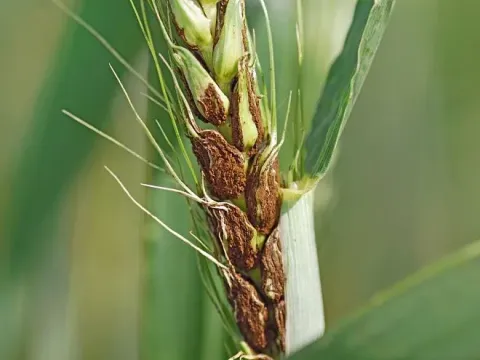
The pathogen replaces the host plant's reproductive tissues with a dark, powdery mass of teliospores, effectively destroying the yield potential of the infected spikes.
The infection mechanism varies by species: some are seed-borne, infecting the germinating embryo, while others are soil-borne or spread via airborne spores during the flowering phase.
The fungal mycelium grows systemically within the plant, eventually concentrating its activity in the inflorescence to produce new generations of spores.
Environmental factors dictate the success of the pathogen's lifecycle, often requiring specific moisture and temperature windows to infect the host successfully.
The most diagnostic feature of smut is the transformation of grain heads into masses of black, soot-like spores that can be easily blown away by the wind.
Loose smut causes the entire spike to disintegrate into powder, leaving only a bare central rachis visible on the plant stem.
Covered smut affects individual grains, which remain intact externally but are filled entirely with fungal spores instead of starchy endosperm.
Infected plants often exhibit stunted growth, reduced tillering, or abnormal twisting of the leaves and stems due to chemical secretions from the fungus.
- Black, dusty fungal masses in the heads.
- Malformed or sterile spikes.
- Discolored or shriveled grains.
- Specific musty odor in mature harvests.
Smut development is heavily reliant on environmental conditions during the critical early growth stages or the flowering period of the host crop.
Loose smut often favors humid weather and moderate temperatures during the flowering stage, allowing spores to land on the stigma and infect the developing ovary.
Covered smut is generally favored by cool, moist soil conditions during the planting season, which slows down seedling emergence and gives the fungus time to penetrate.
Monocropping and the failure to practice proper crop rotation contribute to the buildup of high spore counts in the agricultural soil.
Excessive moisture or planting at improper depths can exacerbate the risk of soil-borne infection by extending the vulnerable seedling phase.
The economic impact of cereal smut is severe, causing substantial reductions in both the quantity and the market quality of the harvested grain.
Contaminated grain is often rejected by millers because the smut spores cause discoloration and an unpleasant smell in flour products.
Beyond yield loss, smut can affect the nutritional value of the crop and may pose health risks to livestock if consumed as contaminated fodder.
The presence of high levels of smut in a field often signals a breakdown in overall crop health and management practices, leading to long-term soil contamination.
Farmers face significant losses due to the need for costly grading and cleaning processes to remove infected kernels from marketable grain stocks.
The primary control strategy for cereal smut is the systematic treatment of seeds with effective fungicides prior to planting to kill dormant spores.
Implementing a strict crop rotation plan helps to break the infection cycle of soil-borne smut species by ensuring that susceptible hosts are not present annually.
Selecting and planting resistant crop varieties remains the most effective long-term solution for minimizing the impact of smut diseases in modern agriculture.
Optimizing planting dates ensures that crops germinate under conditions that favor rapid growth, minimizing the window of vulnerability to soil-borne pathogens.
Maintaining clean farm machinery and storing grain in proper conditions prevents the spread of spores to healthy fields and protects stored inventories from secondary contamination.