
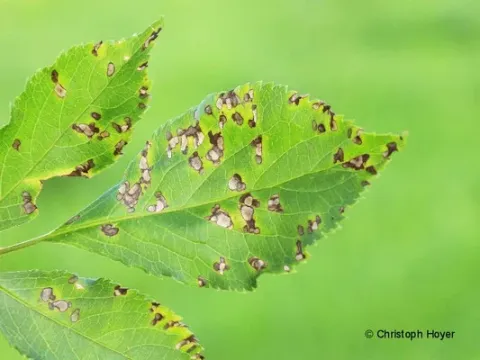
Pseudocercospora leaf spot of elderberry
Pseudocercospora depazeoides
The causal agent of this disease is the microscopic fungus Pseudocercospora depazeoides. It is a specialized phytopathogen classified within the deuteromycetes group.
What the section contains
Pseudocercospora leaf spot of elderberry
This pathogen primarily targets various species of the Sambucus genus, with common elderberry (Sambucus nigra) being the most susceptible host.
The fungus maintains its lifecycle by developing mycelium within the plant tissue and producing conidia, which are responsible for the dispersal of the infection.
Conidia are spread through wind, splashing rain droplets, and occasionally by insect vectors, facilitating the spread of the disease throughout the vegetation period.
The fungus overwinters primarily in fallen infected leaves, acting as a reservoir for primary infection when conditions become favorable the following spring.
The primary symptom of the disease is the appearance of distinct leaf spots. Initially, they manifest as small chlorotic areas that gradually darken in color.
These spots often exhibit an irregular or circular shape, frequently bounded by leaf veins, with colors ranging from light brown to deep dark brown.
On the underside of the leaves, corresponding to the spots, a thin olive-gray fungal mat may become visible, representing the sporulation layer of the pathogen.
As the infection progresses, lesions can merge, causing large sections of the leaf to wither and curl, leading to premature tissue death.
Heavy infestation typically leads to early leaf drop, which significantly impacts the visual health and overall vigor of the elderberry shrub.
High humidity and moderate temperatures are the most critical factors favoring the development and spread of Pseudocercospora depazeoides.
Optimal temperatures for mycelial growth and spore germination fall between +18°C and +25°C, typical of late spring and summer climates.
Crowded plantings that restrict airflow promote moisture retention on leaf surfaces, creating an ideal microclimate for the fungus to establish itself.
Poor sanitation, such as leaving debris under the shrubs, drastically increases the chances of infection recurring year after year.
Periods of prolonged rainfall combined with heavy morning dews significantly accelerate the infection rate among susceptible populations.
The disease impairs the plant's photosynthetic capacity, which leads to reduced energy production and weakened overall growth.
Premature defoliation prevents the shrub from accumulating sufficient nutrient reserves, making it more susceptible to winter frost damage.
In ornamental settings, the disease is particularly destructive as it ruins the aesthetic appearance of the plant long before the end of the season.
For fruit-bearing varieties, severe leaf spot can lead to reduced yield and lower quality berries due to the physiological stress placed on the plant.
Persistent infection over multiple seasons can lead to severe shrub decline, making the plant more vulnerable to secondary pests and environmental stressors.
Sanitation is the most effective preventative measure; all fallen leaves must be collected and disposed of away from the planting site every autumn.
Pruning shrubs to increase airflow and sunlight penetration within the canopy is essential to reduce the moisture that facilitates fungal growth.
When symptoms appear, the application of appropriate fungicides can help manage the spread and protect healthy foliage from new infections.
- Copper-based fungicidal sprays for protective treatment.
- Systemic fungicides effective against leaf spot pathogens.
- Targeted watering techniques to keep foliage dry.
Maintaining plant health through balanced fertilization and correct watering practices helps improve the elderberry's natural resistance to the pathogen.