
Pseudocercospora leaf spot
Pseudocercospora
The disease known as Pseudocercospora leaf spot is caused by a group of fungi within the Pseudocercospora genus. These pathogenic organisms are characterized by their ability to infect a wide array of hosts, ranging from ornamental trees and shrubs to essential commercial agricultural crops.
What the section contains
Pseudocercospora leaf spot
The life cycle of the pathogen begins with the survival of mycelium or conidia on fallen leaves and woody debris during the dormant season. As environmental conditions become favorable, the fungus produces spores that are disseminated primarily via wind-borne movement and splashing raindrops.
Once the spores land on susceptible plant tissues, they germinate and enter the host through stomata or directly through the cuticle. Inside the host, the pathogen colonizes the intercellular spaces, secreting enzymes that break down plant cell walls and lead to the development of necrotic spots.
From a biological standpoint, these fungi are classified as hemibiotrophs or necrotrophs, depending on the specific species and host interaction. They possess specialized structures like stroma that allow them to endure periods of drought or cold, ensuring the persistence of the disease in the field.
Accurate identification of the specific Pseudocercospora species is vital, as different species exhibit varying degrees of virulence and host specificity. Modern diagnostic techniques such as microscopic observation of conidial morphology are essential for precise disease management.
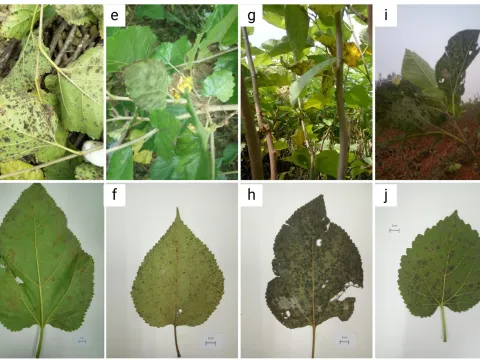
Symptoms of Pseudocercospora infection typically begin as small, chlorotic lesions on leaves. As the disease progresses, these lesions expand and change color, often turning brown, dark gray, or black, depending on the severity of the infection and the plant species involved.
A distinctive sign of this disease is the appearance of a dark, velvety layer of sporulation on the underside of the leaves. This corresponds to the areas of necrosis seen on the upper surface and is a key indicator for differentiating it from other fungal leaf spots.
Heavy infections can lead to premature leaf drop, a condition known as defoliation, which severely stresses the plant. When this happens early in the season, it can weaken the plant's overall vigor, reduce its growth rate, and decrease its ability to withstand winter conditions.
On stems and branches, the infection can manifest as elongated or irregular dark lesions. These areas can cause girdling, which inhibits the transport of water and nutrients throughout the plant, potentially leading to the dieback of branches and twigs.
- Chlorotic and necrotic leaf spots.
- Velvety dark sporulation on the leaf underside.
- Premature yellowing and leaf shedding.
- Lesions on shoots and stems.
- Reduced fruit quality and aesthetic value.
The development of Pseudocercospora leaf spot is highly dependent on moisture levels. High relative humidity, persistent morning dew, and frequent rainy spells are the most critical factors that promote the germination of conidia and the successful establishment of the fungus.
Temperature also plays a pivotal role, with most species favoring moderate temperatures ranging from 20°C to 26°C. During these conditions, the incubation period is significantly shortened, allowing for multiple infection cycles within a single growing season.
Cultural practices that promote good air circulation, such as proper plant spacing and thinning of dense canopies, are essential in minimizing humidity build-up around the leaves. Poorly managed plants are far more susceptible to rapid outbreaks of the disease.
Nutrient management is another factor, as excessive nitrogen application can lead to lush, soft plant growth that is more easily penetrated by the fungal hyphae. Maintaining a balanced nutrient program helps strengthen the plant's natural physical defenses.
Field sanitation is of utmost importance in disease management. Because the fungus overwinters on debris, the presence of old, infected leaves and plant materials serves as a primary source of inoculum that can initiate new infections as soon as the weather warms up.
The primary economic impact of this disease is the significant reduction in yield due to diminished photosynthetic capacity. When a plant loses a substantial portion of its leaf area, its ability to produce the sugars required for fruit development and storage is severely compromised.
In the context of perennial crops, Pseudocercospora can cause cumulative damage over several seasons. This leads to a gradual decline in the tree's health, resulting in shorter production lifespans and increased susceptibility to other biotic and abiotic stress factors.
For fruit-bearing crops, the presence of necrotic spots on the produce directly affects its market value. Fruits may become deformed, fail to size correctly, or become more prone to post-harvest decay, leading to significant financial losses for producers.
The cost of implementing management strategies, including the purchase and application of fungicides, is a significant burden. In many cases, these costs reduce the overall profitability of the farm, especially if multiple applications are required throughout the season.
Additionally, nursery stock affected by Pseudocercospora often fails to meet strict phytosanitary standards. This can lead to the condemnation of large quantities of plant material, severely impacting nursery operations and restricting trade opportunities in regional or international markets.
Integrated Pest Management (IPM) is the most effective approach to controlling Pseudocercospora. This begins with crop rotation, which breaks the pathogen’s cycle by ensuring the host plant is not present in the same location for several consecutive years.
Physical removal and destruction of infected plant debris are essential. Methods such as deep plowing in agricultural fields or pruning and burning/composting infected cuttings in orchards help to significantly reduce the inoculum pressure for the next season.
Chemical control involving timely fungicide applications is often necessary under high disease pressure. Copper-based products, as well as systemic fungicides such as triazoles or strobilurins, are commonly utilized to protect new growth and suppress existing infections.
Selecting and planting resistant cultivars is the most sustainable long-term solution. Breeding programs that focus on genetic resistance allow farmers to grow crops that can naturally defend themselves against the fungus, reducing the need for chemical intervention.
Regular field scouting is critical for early detection. Identifying the first signs of the disease allows for prompt action, such as localized treatments or adjustments to irrigation and canopy management, which can prevent a minor spot of infection from turning into a full-scale outbreak.