
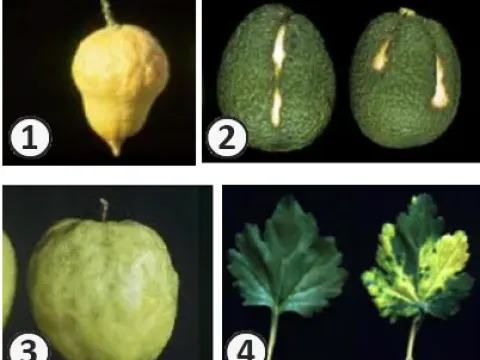
Hop stunt viroid
Hop stunt
The causal agent of this disease is the Hop stunt viroid (HSVd). It is a pathogen consisting of a small, single-stranded circular RNA molecule that lacks the protein coat typical of viruses.
What the section contains
Hop stunt viroid
This object is classified as an obligate parasite, capable of multiplying only within the cells of a host plant, causing systemic infection throughout the organism.
The transmission of the viroid occurs primarily through mechanical means during routine agricultural activities, such as pruning or training plants in a greenhouse.
The infection is easily spread via contaminated gardening tools, pruning knives, or physical contact between healthy and diseased plants during cultivation.
In addition to cucumbers, the pathogen affects a wide range of crops, including hops, citrus, grapes, tomatoes, and watermelons, where it causes characteristic deformations.
The main symptom of the disease in cucumbers is severe stunting, where internodes become shortened, and the overall plant growth is significantly retarded compared to healthy ones.
Fruits of infected cucumbers become deformed, small in size, and often lose their typical color, turning pale or yellowish, which severely lowers their marketability.
Leaves may show characteristic chlorosis, accompanied by curling of the leaf blade and a change in tissue texture, becoming coarse and rigid to the touch.
For watermelons affected by this viroid, there is a significant reduction in vine growth rates and a sharp drop in productivity during the peak fruit-bearing period.
Visual symptoms often do not appear immediately after infection, as the viroid has a latent period during which it accumulates in the plant tissues.
High ambient temperatures promote the development and active spread of the disease by accelerating the metabolism of the viroid within the host plant cells.
Increased plant density in greenhouses creates favorable conditions for rapid transmission, as tools frequently come into contact with a high number of individual plants.
The use of unsterilized equipment is a critical risk factor, often leading to the rapid spread of infection throughout an entire greenhouse or production area.
High humidity, especially when combined with poor ventilation, weakens plant immunity, making them more susceptible to the entry and establishment of the viroid.
Continuous cultivation of susceptible crops on the same site without proper crop rotation facilitates the accumulation of the viroid in plant debris, threatening subsequent harvests.
The damage caused by the viroid manifests as a drastic reduction in fruit quality, as produce becomes misshapen, undersized, and unfit for commercial sale.
Significant yield losses are attributed not only to fruit damage but also to the general suppression of vegetative growth, which can lead to premature plant death.
Economic losses grow rapidly because there is no known cure for infected plants, forcing farmers to remove and destroy entire sections of their crops.
Viroid infection inhibits the photosynthetic apparatus, leading to general physiological exhaustion and leaving the plants vulnerable to secondary diseases and pests.
The presence of this viroid in commercial operations poses a major threat, as it can be easily disseminated through infected propagation material or nursery stock.
The primary control method involves strict adherence to phytosanitary protocols, specifically the immediate removal and disposal of infected plants to curb transmission.
Tools used on suspect plants must be thoroughly disinfected with specialized solutions capable of inactivating RNA-based pathogens to prevent accidental spread.
It is essential to use only certified, viroid-free seeds and healthy seedlings sourced from specialized nurseries under strict pathological supervision.
Effective pest management is crucial, as insects and other pests can cause micro-wounds, providing entry points for the viroid into the plant's vascular system.
Preventive measures also include soil disinfection, weed control to eliminate potential reservoirs of the pathogen, and maintaining a strict crop rotation schedule.