
Poa rust
Uromyces poae
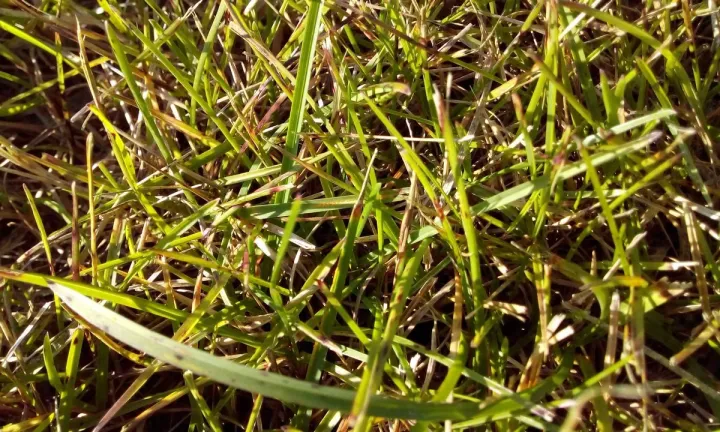
Description
Symptoms
The first clinical signs of infection are the appearance of tiny, elongated or circular pustules that range in color from yellow to orange on leaves and sheaths.
These pustules, known as uredinia, contain dusty spores that are easily released upon physical contact, leaving a distinct rust-colored residue on surfaces.
As the infection progresses throughout the season, the color of these pustules transitions to dark brown or nearly black, indicating the formation of teliospores.
Heavy infestations cause premature leaf chlorosis and necrosis, leading to stunted growth, reduced tillering, and an overall decline in turf vigor.
- Yellow-orange dusty pustules on leaf blades.
- Presence of rust-colored spores when touched.
- Tip dieback and generalized chlorosis (yellowing).
- Darkening of pustules during the late stages of the disease cycle.
Pathogen
The causal agent of this disease is the fungus Uromyces poae, which belongs to the Basidiomycota phylum. It is an obligate parasite with a complex life cycle requiring alternate hosts.
The fungus develops urediniospores and teliospores on various grass species, particularly those in the Poa genus, while aeciospores are formed on alternative hosts like buttercups (Ranunculus).
This pathogen specifically targets meadow grasses, making it a persistent challenge in both agricultural pastures and intensive turf management systems.
Microscopically, the fungus produces pustules that rupture the host epidermis, releasing masses of spores that are easily disseminated by wind and water splashing.
Overwintering of the pathogen typically occurs in the form of dormant teliospores on plant debris or as living mycelium within the roots of perennial grass hosts.
Conditions for development
The development of Uromyces poae is highly dependent on environmental factors, specifically requiring high humidity and moderate temperatures for optimal growth.
Frequent fog, dew, or light rain provides the necessary surface moisture for spore germination, allowing the fungus to infect plant tissues efficiently.
Dense, poorly ventilated stands create a microclimate that traps moisture on the leaf surface, significantly shortening the incubation period of the fungus.
Excessive evening irrigation is a major contributing factor, as it keeps the leaf surface wet overnight, favoring the colonization process of the pathogen.
Nutrient deficiencies, particularly low potassium levels, can compromise the structural integrity of the grass, making it more susceptible to fungal penetration.
Why it matters
The primary impact of the disease is the reduction of the photosynthetic surface area, which leads to lower energy production and a weakened root system.
Seed production is negatively affected, as severe rust pressure results in shriveled seeds, lower germination rates, and overall lower yield quality.
In turf applications, the disease ruins the aesthetic quality of the grass, creating unattractive patches that diminish the uniformity and color of the lawn.
The nutritional value of infested forage is significantly reduced, potentially impacting the health of livestock consuming the infected plant material.
Prolonged outbreaks can weaken the turf to the point where invasive weed species may colonize the damaged areas, leading to permanent lawn degradation.
Protection
Integrated pest management begins with the selection of resistant cultivars, which is the most sustainable and effective way to minimize rust impact.
Good cultural practices, such as regular mowing and prompt removal of clippings, help decrease the inoculum load present in the environment.
Balanced fertilization, specifically ensuring adequate potassium levels, strengthens the grass against potential fungal infections by promoting healthy cell walls.
Fungicidal intervention using triazoles or strobilurins may be necessary during periods of high disease pressure to halt mycelial growth and spore production.
Eliminating potential alternative hosts, such as wild Ranunculus species, from the vicinity of the grass stands is critical for breaking the disease cycle.
Discussion
No discussions yet — be the first.