
Phytophthora palmivora
Phytophthora palmivora
Description
Symptoms
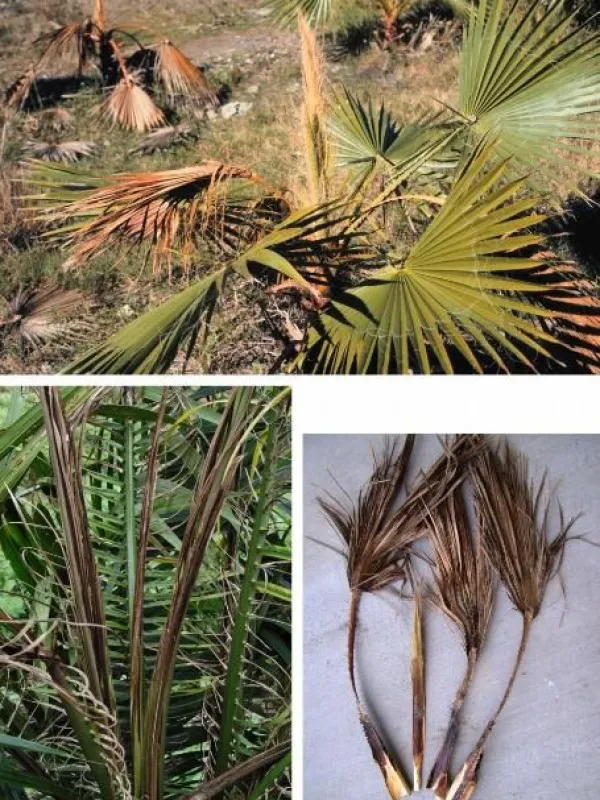
Early symptoms typically include yellowing and drooping of leaves. In palm trees, the disease often manifests as heart rot, where the terminal bud and surrounding tissues decay, leading to the death of the crown.
On cocoa pods and papaya fruit, the pathogen causes distinct, water-soaked, dark-brown spots. These lesions expand rapidly under high humidity, eventually covering the entire fruit surface.
Root systems infected by Phytophthora palmivora show signs of severe decay, turning dark and brittle. The destruction of the root cortex prevents nutrient uptake, leading to the eventual collapse of the entire plant.
Internal symptoms involve the browning of vascular tissues, which can be seen upon cutting the stem or stalk. This systemic invasion results in the disruption of sap flow and overall plant decline.
In humid conditions, a sparse, whitish, cottony growth of mycelium may emerge from the infected tissues, providing a visual confirmation of the presence of the pathogen.
Pathogen
Phytophthora palmivora is a highly destructive oomycete pathogen. Although it is commonly associated with palm heart rot, it exhibits a wide host range, infecting cocoa, rubber, papaya, and numerous vegetable crops.
The life cycle involves the production of motile zoospores, which utilize water films to swim and reach host tissues. This aquatic dispersal makes the pathogen particularly lethal during rainy seasons or in irrigation-intensive systems.
Once it colonizes the host, the pathogen produces mycelia that secrete enzymes to degrade cell walls. This action disrupts the plant's vascular system, leading to rapid wilting and necrosis of the infected tissues.
The pathogen persists in soil and organic matter through resilient structures such as chlamydospores and oospores. These structures ensure the pathogen's survival even in the absence of a susceptible host plant.
High genetic diversity and rapid reproduction rates allow this oomycete to adapt quickly to different environments, presenting a persistent challenge to global agricultural production.
Conditions for development
High moisture levels are the most critical factor for the outbreaks of this disease. Relative humidity levels above 85 percent and frequent rain showers create an ideal environment for spore germination.
The optimal temperature range for the pathogen's growth is between 25 and 30 degrees Celsius. In these tropical conditions, the generation time of the fungus is short, allowing for rapid disease spread.
Poor soil drainage and waterlogging significantly increase the risk of infection. Heavy clay soils that retain moisture for long periods are particularly conducive to the movement of zoospores to the root zone.
Dense planting patterns reduce air circulation, keeping plant surfaces wet for longer durations. This promotes the infection of leaves and fruit through splashing rain or contaminated water.
Mechanical injuries, such as those caused by pruning or insect feeding, create entry points for the pathogen, significantly increasing the likelihood and severity of the disease outbreak.
Why it matters
The economic impact of Phytophthora palmivora is profound, particularly in cocoa and coconut plantations. It is responsible for significant yield losses, often rendering entire crops unmarketable.
In plant nurseries, this pathogen causes high mortality rates among seedlings, leading to substantial financial losses and delayed planting schedules. Recovery often requires costly complete replanting.
Fruit rot caused by the pathogen leads to the total loss of harvestable produce. Furthermore, infected fruit may serve as an inoculum source, spreading the disease to healthy plants throughout the field.
Systemic infections in mature trees lead to permanent damage and death, requiring the removal of infected trees. This causes a loss of long-term investment in plantation infrastructure.
The international spread of this pathogen via infected nursery stock poses a significant phytosanitary risk, often triggering strict quarantine regulations and limiting the trade of certain plant materials.
Protection
Effective management requires an integrated approach that focuses on prevention and sanitation. Using certified, disease-free planting material is the first and most crucial line of defense.
Improving field drainage is essential to eliminate standing water and reduce the swimming range of zoospores. Implementing drip irrigation helps maintain soil moisture without wetting the foliage.
Chemical control involving copper-based fungicides or systemic compounds like metalaxyl is used to protect vulnerable tissues. Regular, scheduled spraying is often required during peak rainy periods.
- Promptly remove and destroy infected plant parts to reduce the inoculum level.
- Disinfect agricultural tools regularly to prevent cross-contamination.
- Maintain proper spacing between plants to enhance air circulation and reduce humidity.
- Utilize biocontrol agents, such as beneficial Trichoderma species, to suppress the pathogen.
Long-term control strategies emphasize the breeding and deployment of resistant crop varieties, which remains the most sustainable way to manage Phytophthora palmivora in the field.
Discussion
No discussions yet — be the first.