
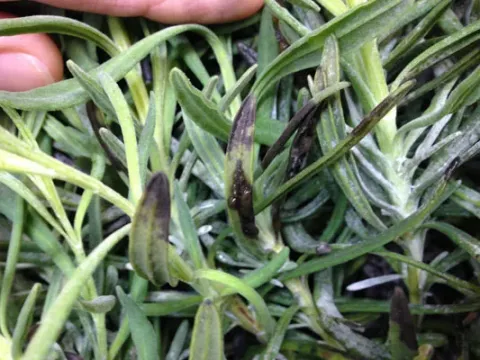
Phoma leaf spot
Phoma lavandulae
The disease is caused by the fungus Phoma lavandulae, an ascomycete pathogen that specifically targets lavender plants, leading to stem necrosis and wilting.
What the section contains
Phoma leaf spot
This fungus survives as pycnidia or dormant mycelium within infected plant debris and soil, allowing it to remain viable in the field for several growing seasons.
During wet weather, the pycnidia release conidia, which are dispersed via splashing rain, irrigation water, wind, or human activity during routine maintenance tasks.
The pathogen typically enters the plant tissue through wounds caused by pruning, insect feeding, or environmental stress, such as frost cracking the stem bark.
Once inside, the mycelium colonizes the vascular tissues, effectively obstructing the flow of water and nutrients, which causes the eventual collapse of the affected branches.
The most characteristic signs are brown or grayish-brown lesions appearing on the stems, which gradually elongate and spread along the branch structure.
Small, dark, pinhead-sized structures called pycnidia appear on the surface of the lesions, serving as a primary indicator of Phoma infection during field inspection.
Infected branches often exhibit dieback, where foliage turns yellow and withers before browning completely, significantly impacting the aesthetic value of the plant.
If the infection reaches the main stem or crown, the entire plant may become stunted or die, leading to large bare patches within the lavender rows.
In humid conditions, a faint fungal mass may sometimes be visible on the surface of the infected lesions, which acts as a source of secondary infection.
High humidity and moisture are the primary drivers of Phoma lavandulae development, making rainy periods and foggy environments extremely risky for lavender health.
The fungus thrives at moderate temperatures, typically aligning with the spring and autumn growth flushes of the lavender plant, when environmental conditions are mild.
Poor airflow, often caused by overcrowding or lack of proper pruning, creates a stagnant microclimate that allows fungal spores to germinate and infect stems effectively.
Overhead irrigation significantly increases the spread of the pathogen by creating persistent water films on the plant surface, facilitating spore germination.
Plants under physiological stress, such as those grown in poorly drained soil or suffering from nutrient deficiencies, are significantly more susceptible to infection.
The primary economic harm is the reduction in flower yield, which directly impacts the production of lavender oil and high-quality dried flower bouquets.
Widespread infection can lead to the loss of entire stands of lavender, necessitating costly removal and replanting efforts to restore the plantation's productivity.
Chronic infection weakens the plant's overall vigor, making it less resilient to harsh winter conditions and other opportunistic pests or secondary pathogens.
The aesthetic quality of the crop is severely compromised, as the presence of necrotic spots on the stems renders the lavender unsuitable for premium ornamental markets.
The disease increases the pathogen load in the soil, which can restrict crop rotation options and necessitate stricter sanitation protocols for several years.
The most effective strategy starts with selecting disease-free, certified planting material and ensuring it is planted in well-draining, sunny locations.
Proper plant spacing and regular pruning are essential to maintain adequate airflow, which keeps the foliage dry and discourages fungal spore germination.
Strict sanitation measures, such as the immediate removal and destruction of infected stems, are crucial for limiting the spread of the disease within the field.
Preventative fungicide applications, particularly those containing copper, can be used in regions where the disease pressure is historically high, following label guidelines.
Balanced fertilization, particularly ensuring adequate potassium levels, strengthens plant cell walls and improves natural resistance against fungal infections.