
Phoma leaf spot and stem canker
Boeremia heteromorpha
The disease is caused by the fungus Boeremia heteromorpha, formerly identified as Phoma helianthi, which is a member of the Dothideomycetes class.
What the section contains
Phoma leaf spot and stem canker
The pathogen produces pycnidia, small black fruiting bodies that serve as the primary source of inoculum during the growing season through the release of conidia.
The fungus is highly specialized to sunflowers and can persist in soil, crop residues, and infected seeds for multiple years, making crop rotation essential.
The mycelium of the pathogen colonizes the sunflower's internal tissues, disrupting vascular transport and nutrient distribution throughout the plant.
Spread is primarily facilitated by wind, rain splashes, and movement of infested soil or plant debris, enabling the fungus to colonize healthy plants.
Initial symptoms are characterized by brown or black leaf spots, often accompanied by a distinct yellow halo, appearing on lower leaves first.
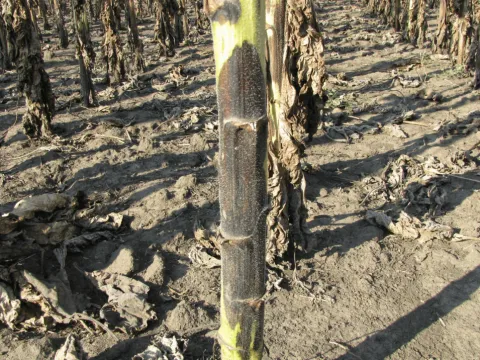
Stem infection typically begins near the leaf axils, resulting in large, dark, necrotic lesions that expand as the plant matures.
Infected stem tissues become brittle and may turn ash-grey in color, which is a key diagnostic feature of Phoma stem canker.
Visible tiny black pycnidia can be observed on the surface of these necrotic lesions, especially when humidity levels remain consistently high.
Systemic damage often leads to the breaking of the stem, resulting in plants falling over shortly before harvest, causing significant yield losses.
High humidity and rainfall are the primary drivers for the germination of fungal spores and the spread of the disease within the field.
The development of the fungus is most rapid at moderate temperatures, typically ranging from 20°C to 25°C, common during summer months.
Poor crop rotation practices, where sunflowers are planted back-to-back in the same field, significantly escalate the risk of infection.
High planting densities reduce airflow between plants, trapping moisture in the canopy and creating an ideal environment for fungal development.
Mechanical damage to the plants during field operations or pest attacks creates entry points for the pathogen to infiltrate the stem tissue.
The disease causes premature senescence of the foliage, drastically reducing the photosynthetic capacity of the plant and hindering seed fill.
Plants affected by Phoma produce lighter, smaller, and less viable seeds, leading to a substantial decrease in overall grain yield and quality.
Oil content is often compromised in seeds harvested from diseased plants, which is a critical issue for oil processing and production standards.
Stem lodging caused by the pathogen significantly hinders mechanical harvesting operations and leads to direct harvest losses in the field.
Severe infestations can lead to early crop death, which may result in poor stand establishment if the disease reaches the flowering stage.
Implementing a strict long-term crop rotation program is the most effective cultural strategy to reduce the pathogen population in the soil.
Deep plowing of crop residues is recommended to accelerate decomposition and destroy the sites where the fungus overwinters.
Selecting and planting genetically resistant sunflower hybrids is considered the primary and most sustainable method for managing Phoma canker.
Seed treatment with professional fungicides helps protect seedlings during the vulnerable early stages of growth against soil-borne pathogens.
- Regular field scouting to detect early leaf symptoms.
- Application of foliar fungicides if weather conditions favor the disease.
- Weed management to prevent alternative infection reservoirs.
- Optimizing sowing density to ensure adequate light and air penetration.