
Phoma leaf spot of astragalus
Phoma astragalina
Description
Symptoms
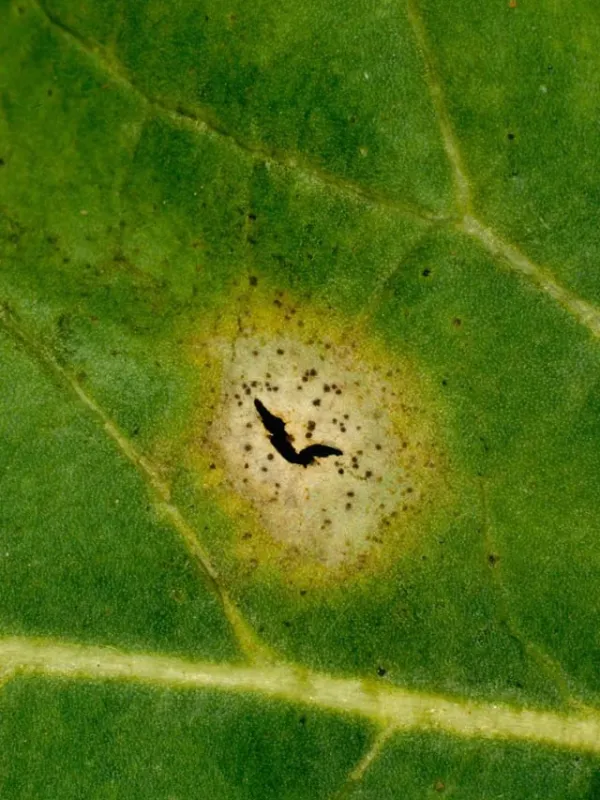
Early symptoms of Phoma leaf spot in astragalus appear as small chlorotic spots on leaves and stems, which gradually turn brown or dark brown.
The center of the necrotic spots often lightens to a grayish or straw color, while the edges remain marked by a distinct dark rim. Tiny black dots, which are the fungus's pycnidia, become visible in the center of the lesions.
When stems are affected, the disease leads to sunken necrotic areas that can girdle the stem, causing wilting and eventual stem breakage.
In the early stages of plant development, the infection can cause leaf deformation and premature leaf drop. Severe infestations lead to general growth suppression and stunting of the plant.
Upon visual inspection in humid conditions, a faint gray or whitish film, consisting of fungal conidia, may be observed on the affected tissues.
Pathogen
The disease is caused by the imperfect fungus Phoma astragalina, which belongs to the class Coelomycetes. This pathogen specifically targets plants of the legume family, with a focus on various species of Astragalus.
The fungus survives in the soil and on plant debris as pycnidia and mycelium. Pycnidia are small, dark fruiting bodies containing spores that trigger primary infection in crops at the beginning of the growing season.
The pathogen's life cycle is closely linked to climatic conditions. During periods of high humidity, spores spread through rainwater droplets, wind, and insect activity, settling on the vegetative parts of the plants.
The infection penetrates plant tissues through mechanical damage to the epidermis or through natural openings, such as stomata. Once inside, the pathogen develops within the intercellular spaces, breaking down plant cells.
The biology of Phoma astragalina involves a phase of rapid mycelial growth at moderate temperatures, allowing the fungus to colonize host tissues quickly and produce new generations of spores.
Conditions for development
Favorable conditions for the development of Phoma leaf spot are periods of high air humidity and frequent rainfall. Surface water on leaves is essential for spore germination.
The optimal temperature for Phoma astragalina growth is within the moderate range, typical for spring and summer seasons. Sharp temperature fluctuations can weaken the plant's immune system.
Poor agricultural practices, such as overly dense planting, create a microclimate with high humidity within the canopy, which accelerates the spread of the infection between plants.
The presence of large amounts of undecomposed crop residues increases the pathogen inoculum in the field, creating an ideal environment for the overwintering and early development of the fungus.
Lack of crop rotation and returning astragalus to the same field sooner than every 3–4 years contributes to the accumulation of spores in the upper soil layers and mass infection of seedlings.
Why it matters
The damage caused by Phoma leaf spot is primarily due to a significant reduction in the leaf surface area, which leads to reduced growth rates and lower plant productivity.
Stem lesions disrupt metabolic processes and nutrient transport, causing premature wilting and the death of individual plant parts or the entire plant.
The disease negatively impacts seed production: when generative organs are infected, seeds become shriveled, resulting in low germination energy and viability.
The forage value of the green mass is significantly reduced in infected crops, and quality can deteriorate during silage or hay preparation due to the risk of mold growth.
- Reduction in total green mass yield by 15–30%.
- Loss of seed quality.
- Accelerated thinning of the plant stand.
Protection
The cornerstone of protection against Phoma leaf spot is strict crop rotation, ensuring that astragalus is not planted in the same field more often than once every 3–4 years, thereby reducing soil inoculum.
Important agricultural practices include the thorough incorporation of plant residues into the soil and deep plowing, which accelerate the decomposition of fungal mycelium and reduce spore survival.
It is recommended to use high-quality, fungicide-treated seeds to protect young seedlings from early infection coming from the soil.
Optimizing plant density through standardized seeding rates prevents moisture stagnation and improves airflow through the canopy, hindering the spread of the disease.
In the event of a severe outbreak, an effective control method is the application of systemic fungicides authorized for use on legume crops.
Discussion
No discussions yet — be the first.