
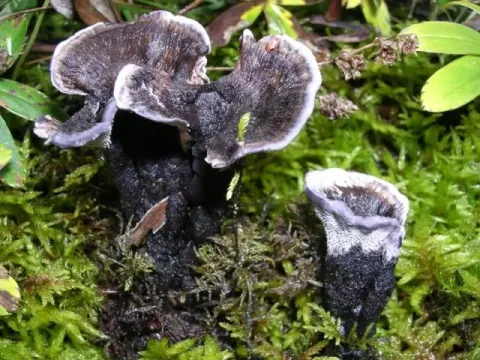
Phellodon niger
Phellodon niger
Phellodon niger is a basidiomycete fungus belonging to the Bankeraceae family. It is vital to state that this species is not a plant pathogen and does not cause agricultural diseases.
What the section contains
Phellodon niger
This fungus establishes a symbiotic mycorrhizal relationship with the root systems of coniferous trees. It provides essential nutrients to trees while receiving carbohydrates in return.
The fruit bodies are characterized by a dark, funnel-shaped cap with a spine-bearing underside. Its morphology is typical of the genus Phellodon found in temperate forests.
Its biological cycle is strictly confined to forest soils rich in needle litter. It has no biological interaction with common row crops or horticultural plants.
In mycological research, Phellodon niger is recognized for its role in maintaining soil structure and supporting the vitality of forest stands in undisturbed environments.
The development of Phellodon niger requires undisturbed coniferous forest environments. It thrives in soils with low pH levels and a steady supply of organic matter.
Moderate temperature and consistent soil moisture are critical factors for the emergence of its reproductive bodies during the autumn season.
This species is highly sensitive to environmental degradation, including nitrogen deposition and chemical runoff, which act as limiting factors for its survival.
As a mycorrhizal specialist, it requires a healthy host tree population to sustain its vegetative mycelium within the soil layers.
Forest fragmentation often leads to the disappearance of this species, as it cannot adapt to the changing microclimatic conditions of open agricultural landscapes.
There is no economic or agricultural harm associated with Phellodon niger. It poses no threat to food crops, orchards, or managed plantations.
Unlike parasitic fungi that cause root rots or vascular wilts, this species does not invade the tissues of agricultural plants. Its metabolism is specialized for forest litter decomposition and mycorrhizal associations.
The presence of Phellodon niger is generally considered a sign of a healthy, biodiverse forest ecosystem rather than a symptom of plant disease.
It does not produce toxins that would inhibit the growth of surrounding vegetation, nor does it compete with crops for resources in an agricultural setting.
Agronomic literature does not classify this fungus as a pest, as it remains strictly confined to its native forest habitat throughout its lifecycle.
Since Phellodon niger is not a plant disease, there are no control, prevention, or protection measures required for this species in any agricultural context.
Applying fungicides would be ecologically detrimental and entirely unnecessary, as the fungus does not threaten crop yields or quality.
Good agricultural practice involves distinguishing between beneficial forest fungi and actual pathogenic threats to prevent the unnecessary use of chemicals in the environment.
Efforts should focus on protecting natural forest buffers where these fungi play a role, rather than treating them as a nuisance or biological threat.
In case of unexplained plant wilting or death in field conditions, growers should look for specific agricultural pathogens rather than misidentifying harmless forest fungi present in nearby woodland edges.