
Phellorinia
Phellorinia
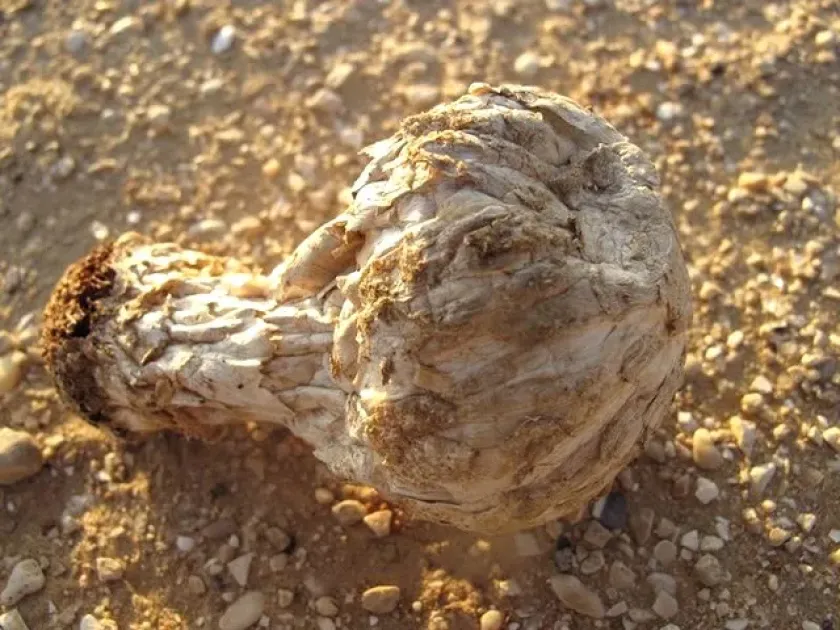
Description
Pathogen
Phellorinia is a genus of fungi belonging to the Phelloriniaceae family, known primarily for its presence in arid and desert environments worldwide.
The most prominent species, Phellorinia herculeana, is characterized by a distinctive fruiting body with a stout stalk and a head that releases spores upon maturation.
These fungi are saprotrophs, meaning they feed on dead or decaying organic matter. They do not infect live plant tissues and thus are not classified as plant pathogens.
Unlike parasitic fungi, Phellorinia relies on decomposing plant material within sandy soils, playing a vital role in nutrient cycling in harsh climates.
They lack any ability to colonize living hosts, making them completely non-threatening to agricultural crops and vegetation health.
Conditions for development
Phellorinia thrives in extreme environmental conditions, specifically those found in semi-arid and desert ecosystems with high solar exposure.
They prefer well-drained, sandy soil structures that support mycelial expansion despite high temperatures that would inhibit many other fungal species.
While typically dormant during prolonged droughts, they produce visible fruiting bodies rapidly following rare rainfall events that temporarily moisten the soil.
The presence of organic debris from desert plants provides the essential substrate required for their biological activity and reproduction.
Spore dispersal is facilitated by wind, allowing the fungus to maintain a presence across vast expanses of sparse, arid landscapes.
Why it matters
Phellorinia poses no threat to agricultural operations. It is not a disease of plants and does not impact the health or yield of field crops.
Concerns regarding this fungus on farmlands are purely based on its unusual morphology, which can lead to misidentification as a plant-infecting pathogen.
However, thorough mycological analysis confirms that Phellorinia does not interfere with crop development or compete for nutrients in any detrimental way.
There is zero documentation suggesting any negative interaction between this fungal genus and any major agricultural or horticultural plant species.
In fact, as a decomposer, it may contribute to the breakdown of organic material, which can marginally benefit soil fertility in extreme desert soils.
Protection
No control or prevention measures are required for Phellorinia. It is not considered a pest or a disease, and intervention is unnecessary.
The application of fungicides against Phellorinia is completely unjustified and would only result in needless environmental impact and expense.
Agricultural protocols do not include management for this fungus, as farmers and agronomists view its presence as a natural component of the soil microflora.
The best practice regarding this organism is to recognize it as a harmless saprotroph and focus efforts on managing actual phytopathogenic threats.
- Phellorinia does not require management strategies.
- No phytosanitary measures are needed for this fungal species.
Discussion
No discussions yet — be the first.