
Phelloriniaceae
Phelloriniaceae
Description
Symptoms
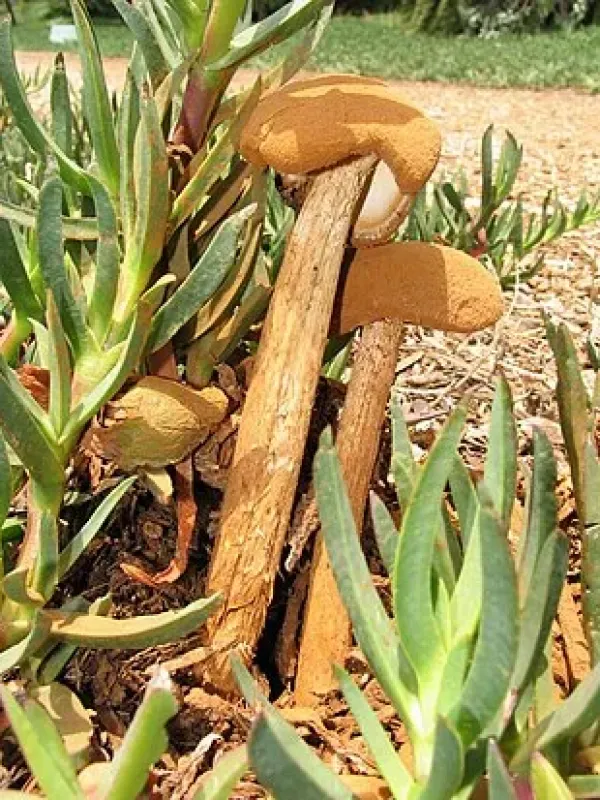
The most visible sign of Phelloriniaceae is the emergence of distinctive, stalked fruit bodies protruding from the ground, often resembling puffballs with a firm stem.
The fruit bodies are designed for arid conditions, featuring a hard outer peridium that protects the spores from desiccation and environmental stress.
In areas where these fungi colonize the soil, one may observe patches of mycelial mats, though these are typically harmless and do not indicate a disease process.
Affected fields do not show signs of plant decline; the presence of these fungi is usually incidental to the growth of nearby vegetation.
Microscopic analysis of spores and the internal structure of the fruit body remains the only accurate way to identify members of this specific family.
Pathogen
The Phelloriniaceae family belongs to the order Agaricales, representing a group of gasteroid fungi. These organisms are primarily saprotrophic, meaning they derive nutrients from decaying organic matter rather than attacking living plant tissues.
The fungus develops in the soil, utilizing root debris and dead plant material for growth. Their biological cycle is characterized by the production of robust fruit bodies that are highly adapted to harsh, arid environments.
Unlike common phytopathogens, Phelloriniaceae do not infect crops, meaning they do not cause diseases such as wilting, root rot, or leaf spotting in agricultural settings.
Mycological research indicates that these fungi play a vital role in natural nutrient recycling, contributing to soil health by breaking down complex organic molecules.
Understanding their taxonomy is important for agricultural microbiology to distinguish between beneficial or neutral soil inhabitants and actual threats to plant health.
Conditions for development
Phelloriniaceae are specialized fungi that thrive in dry, semi-desert, or desert regions where moisture is limited and temperatures fluctuate significantly.
They prefer light, sandy, or alkaline soils where competition from other soil-borne fungi is reduced due to the challenging environment.
The development of the fruit bodies is often triggered by seasonal rainfall, which provides the necessary hydration for the mycelium to complete its reproductive cycle.
High levels of solar radiation and sandy substrates favor their growth, as these fungi have evolved to survive in habitats that would inhibit most other mushroom species.
Spore dispersal is primarily achieved through wind, allowing these fungi to occupy vast areas of barren or semi-barren land efficiently.
Why it matters
Phelloriniaceae cause no harm to agricultural production, as they do not possess the mechanisms to parasitize living vascular plants.
They do not affect crop yield, fruit quality, or seed germination, and they do not produce any toxins that could contaminate soil or water supplies.
The economic damage associated with this family is non-existent, and there is no need for farmers to track or monitor them as a potential pest.
They are strictly decomposers, and their presence suggests a functional ecosystem where organic matter is being recycled effectively.
Farmers can be reassured that these fungi are not pathogens and do not represent a threat to any commercial crop variety.
Protection
There are no chemical or physical control measures required for Phelloriniaceae, as they do not pose any threat to farm profitability or plant health.
Standard agricultural practices, such as soil cultivation and crop rotation, are more than sufficient to maintain a balanced soil ecosystem without targeting these organisms.
If the appearance of fruit bodies is considered unsightly, mechanical removal during standard soil preparation or weeding is the simplest and most effective solution.
Applying fungicides to control this family would be unnecessary and environmentally damaging, as it would disrupt the beneficial soil microbial community.
Promoting general soil fertility and moisture management is the best way to ensure an optimal environment for crops, which naturally suppresses the dominance of specialized arid-zone fungi.
Discussion
No discussions yet — be the first.